
Moving in a dense urban core is a relocation process shaped by building access restrictions, narrow streets, and strict scheduling windows that suburban moves rarely face. Cities like New York, San Francisco, Boston, and Chicago impose elevator reservations, loading dock permits, and certificate of insurance requirements that can delay or even cancel a move if they aren’t handled in advance. Renters, homeowners, and business owners in these markets need to understand what movers can and cannot transport, how building management factors into timing, and which city-specific rules apply to their address.
Preparing for these variables now prevents costly delays and last-minute scrambling once the moving truck is already on the clock.
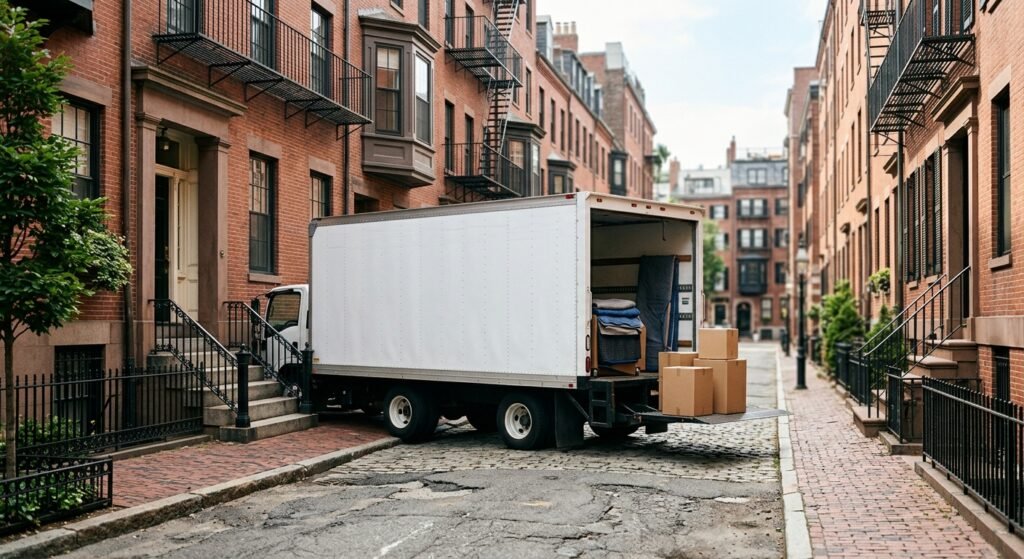
This guide covers what makes city moves structurally different from suburban ones, which items movers won’t transport, how building and elevator requirements affect scheduling, what changes city to city between New York, San Francisco, Boston, and Chicago, and how to budget and vet a mover suited to urban logistics.
What Makes Moving in Dense Urban Cores Different
Dense urban moves are shaped primarily by three constraints: building access, street geometry, and time-restricted permits, each of which barely registers in a suburban move. A single-family home move rarely requires a reserved elevator slot or a loading dock permit, but a high-rise move in Manhattan or the Back Bay almost always does.
Building management in most urban high-rises controls which hours moving trucks can load and unload, and many require advance notice measured in days, not hours. Streets in neighborhoods built before widespread car ownership, common in Boston and parts of SF, were never designed for a 26-foot moving truck, which changes how a crew plans its route and parking.
Building Access Rules (Elevators, COIs, Loading Docks)
Most high-rise buildings require movers to reserve a freight elevator in a specific time block and to submit a certificate of insurance before that reservation is confirmed. Loading docks in commercial-residential hybrid buildings often operate on their own separate schedule from the elevator itself, which means a crew can be on time for the elevator and still wait on dock access.
Narrow Streets and Parking Restrictions
Streets in older urban cores, particularly in Boston’s North End and San Francisco’s Russian Hill, were laid out before modern trucking existed, and they restrict both truck size and parking duration near a building entrance. A moving crew without a temporary parking permit in these areas risks a ticket or a tow mid-move.
Time-Window and Permit Requirements
Many city governments and building associations require a temporary No Parking permit be posted on the street days before the move, and missing that window can push the entire move back a full day. This single requirement causes more schedule slippage than any other factor in dense-core relocations.
Items Movers Cannot Transport in City Moves
Movers are legally and contractually restricted from transporting hazardous materials, perishables, and certain high-value items regardless of which city the move originates in. A hazardous material is any substance capable of causing harm during transport due to its flammable, corrosive, or combustible properties, and professional movers are prohibited by federal and state transport regulations from carrying these items.
These restrictions exist for the safety of the moving crew and the integrity of the truck’s contents, not as an inconvenience to the customer. Understanding them ahead of time means fewer surprises when a crew arrives to load.
Hazardous and Flammable Materials
Propane tanks, aerosol cans, paint thinners, gasoline, and pool chemicals fall under this category because they pose fire or chemical exposure risk in an enclosed truck. Most movers require these items be disposed of, returned, or transported separately by the owner.
Perishables and Plants
Refrigerated and frozen food typically cannot survive a multi-day transit window, and live plants are restricted in several interstate moves due to agricultural regulations between states. Local movers are more flexible here than long-distance carriers, but same-day transport still has limits on temperature-sensitive goods.
High-Value and Irreplaceable Items
Cash, jewelry, legal documents, and family heirlooms are typically excluded from standard mover liability coverage, which means customers are generally advised to transport these personally rather than loading them onto the truck. This isn’t a transport ban so much as a liability boundary movers set to protect both parties.
Packing Requirements for Apartment and High-Rise Moves
High-rise and apartment moves require tighter, more deliberate packing because boxes pass through narrower hallways, smaller elevators, and tighter stairwells than a suburban move ever encounters. Boxes also need clearer labeling since crews often make multiple elevator trips rather than one continuous carry to the truck.
Box Labeling for Elevator Moves
Clear labeling by room and priority matters more in elevator buildings because crews load boxes in batches rather than a single pass, and mislabeled boxes slow down each trip. A simple numbering system tied to a floor plan keeps multi-trip elevator moves organized.
Fragile Item Protocols in Walk-Ups
Walk-up buildings without elevator access put more physical strain on fragile items carried down multiple flights by hand, which raises the standard for cushioning and box integrity. Movers typically recommend doubling up padding on glass and electronics specifically for multi-flight walk-up moves.
Certificate of Insurance (COI) and Building Management Requirements
A certificate of insurance is a document issued by a moving company’s insurer that verifies liability and workers’ compensation coverage to a building’s management or landlord before move day. A COI is a formal proof-of-coverage document that most high-rise and commercial buildings in major cities require before granting elevator or loading dock access.
Building management requests this document to protect against damage claims during the move, and most buildings specify the exact coverage minimums and additional-insured language they require. Movers familiar with a given building or city typically know these requirements before being asked.
Scheduling Around Elevator Reservations and Loading Dock Windows
Elevator reservations in most high-rise buildings are booked in blocks, commonly two to four hours, and missing that window often means rescheduling for another day entirely. Loading dock windows follow a similar logic but are sometimes managed by a separate building department than the elevator itself, which can create scheduling conflicts if not coordinated together.
Buildings with high move volume, like large residential towers in Chicago’s Loop, often fill their reservation calendar a week or more in advance during peak moving season.
Street Parking, Truck Size Limits, and Alley Access Challenges
Dense urban neighborhoods frequently restrict the size of truck permitted on residential streets, which sometimes forces a move to use a smaller shuttle vehicle for a final short-distance transfer. Alley access, where it exists, often has clearance restrictions that rule out larger trucks entirely in cities with older infrastructure.
Securing a temporary parking permit in advance remains the most reliable way to guarantee truck access directly in front of a building on move day.
City-Specific Considerations (NYC, SF, Boston, Chicago)
Each of these four cities layers its own permit system, geography, and seasonal factor on top of the general urban-moving challenges already covered. A crew experienced in Chicago high-rises isn’t automatically prepared for San Francisco’s hill grades, and vice versa.
New York City Moving Regulations
New York City requires most moves in doorman and elevator buildings to be scheduled through building management directly, and many buildings restrict move hours to weekdays only. Alternate side parking rules also affect whether a truck can legally hold a spot near the building entrance for the full loading window.
San Francisco Hill and Permit Considerations
San Francisco’s steep grades in neighborhoods like Nob Hill and Pacific Heights add physical difficulty to hand-carrying items between a truck and a building entrance. The city also requires a temporary parking permit called the General Parking Permit for trucks occupying metered or restricted spaces during a move.
Boston’s Narrow Street and Historic District Rules
Boston’s historic districts, including Beacon Hill and the North End, restrict truck size and sometimes parking hours due to street width and preservation district rules. Movers familiar with these neighborhoods often plan for a smaller shuttle vehicle from a nearby legal parking zone.
Chicago High-Rise and Weather Considerations
Chicago’s lakefront high-rises combine strict building reservation systems with seasonal weather that can affect loading dock access during winter months. Wind off the lake and ice buildup near loading areas are practical factors crews account for between November and March.
Local Moves vs. Long-Distance Moves from Urban Cores
A local move typically stays within the same metro area and is billed hourly, while a long-distance move crosses state lines or covers a significant distance and is billed by weight and mileage. A long-distance move is a relocation that crosses state lines or exceeds a set mileage threshold, which changes both the pricing structure and the regulatory requirements movers must follow.
City-based moves add a layer of complexity to either type because building access and parking restrictions apply regardless of how far the final destination is.
Moving Day Timeline for City Relocations
A typical city move begins earlier in the day than a suburban equivalent specifically to accommodate elevator reservation windows and parking permit time limits. Crews often build in extra time for multiple elevator trips, dock coordination, and potential street-level delays that don’t factor into a single-family home move.
How to Prepare Prohibited and Restricted Items Before Moving Day
Preparing prohibited items ahead of time means sorting them out of general packing boxes well before the crew arrives, not discovering them during the load. Customers typically handle hazardous materials through proper disposal or by transporting select high-value items personally in their own vehicle.
Liability, Insurance Coverage, and Undeclared Items
Standard mover liability coverage generally excludes high-value items that weren’t declared in advance, which means an undeclared piece of jewelry or an unlisted antique typically isn’t covered if damaged or lost. Declaring valuable items before the move, even verbally to the crew lead, creates a clearer record if a claim becomes necessary later.
Cost Factors Unique to Dense Urban Moving
Urban moves often carry additional costs tied to permit fees, elevator reservation fees charged by building management, and extra labor time required for multi-trip carries. These costs sit on top of standard hourly or weight-based pricing and vary significantly by building and neighborhood.
Choosing a Mover Experienced in Urban Core Relocations
A mover experienced in a specific city typically already understands that city’s permit systems, building reservation norms, and seasonal challenges before the move is even scheduled. Asking a moving company directly about their experience with a specific building or neighborhood is one of the fastest ways to gauge this familiarity.
Common Mistakes That Cause Delays on City Moving Day
The most common delay-causing mistakes include failing to secure a parking permit in advance, missing an elevator reservation window, and failing to disclose restricted items before the crew arrives. Each of these mistakes is preventable with the right preparation timeline, typically starting two to three weeks before move day in major cities.
Conclusion
Dense urban moves hinge on building access, permits, and prohibited-item rules that suburban relocations rarely require. Understanding city-specific regulations in New York, San Francisco, Boston, and Chicago prevents delays before they happen.
We help customers plan every detail of a city move, from COI paperwork to parking permits. Reach out to ASHER MOVERS LOCAL & LONG DISTANCE to schedule your move with confidence.
Frequently Asked Questions
What items are movers not allowed to transport?
Movers cannot transport hazardous materials like propane, gasoline, and aerosol cans due to fire and safety regulations. Perishables and certain high-value items are also typically excluded from standard transport.
Do I need a certificate of insurance for a building move?
Most high-rise and commercial buildings require a certificate of insurance before granting elevator or loading dock access. Your moving company typically provides this directly to building management.
How far in advance should I book a mover in a major city?
Booking two to three weeks ahead is standard for dense urban moves, especially during peak season. Buildings with high move volume often require even earlier elevator reservations.
Can movers access narrow streets and alleys in historic districts?
Access depends on truck size limits and parking permit availability in historic districts like Boston’s Beacon Hill. Crews often use a smaller shuttle vehicle when direct truck access isn’t possible.
What happens if a prohibited item is found in my boxes?
Movers typically set the item aside and ask the customer to transport it separately or dispose of it properly. This can cause delays if discovered during loading rather than before.
Is a local move cheaper than a long-distance move from a city?
Local moves are generally billed hourly and cost less than long-distance moves billed by weight and mileage. City-specific fees like permits can apply to either move type.
How do elevator reservations affect my moving day schedule?
Elevator reservations are booked in fixed time blocks, and missing that window often means rescheduling the entire move. Coordinating this with loading dock access is essential for on-time moves.
