
Moving an elderly parent is a physical relocation that also carries emotional weight, medical considerations, and safety risks that a standard household move does not involve. I’ve worked alongside families in Skokie who assumed a senior move would run like any other, only to discover that medication timing, mobility aids, and emotional attachment to belongings all change the plan.
Rushing this process creates real risk. A parent’s comfort, health, and sense of control over their own home are all on the line here.
This guide covers how senior moves differ from standard relocations, how to plan and downsize with a parent’s wellbeing in mind, what movers can and cannot transport, how to handle medications and mobility equipment, and what safety and cost factors to expect on moving day.
What Makes Moving Elderly Parents Different From a Standard Move
Moving an elderly parent differs from a standard move because it combines physical logistics with emotional transition, medical needs, and often reduced mobility or cognitive changes. I’ve seen families treat it like a standard packing job, only to run into resistance, fatigue, or safety issues within the first hour.
A younger adult moving across town rarely thinks twice about donating a couch or tossing old boxes. For an elderly parent, that same couch might be the one they bought with a late spouse decades ago. Downsizing a lifetime of belongings carries weight that boxes and tape can’t account for.
Physical stamina matters too. A senior parent can’t spend eight hours directing movers and sorting closets without rest breaks, hydration, and a seat nearby.
How to Start Planning an Elderly Parent’s Move Early
Planning an elderly parent’s move should start 8 to 12 weeks before the move date, giving enough time for downsizing, medical coordination, and emotional adjustment without rushing. I always tell families that the biggest mistake is waiting until a deadline forces a 2-week scramble.
The early planning window breaks into phases. The first few weeks go toward conversations about the move itself, touring the new space if possible, and identifying what absolutely must come along.
Weeks three through six are when downsizing and sorting happen in earnest. I’ve found this stage moves faster when a parent sorts a little each day instead of facing an entire house at once.
The final two weeks before moving day shift toward logistics: confirming the moving company, packing the essentials box, and arranging for medications and mobility aids to travel safely. Building in buffer days for doctor’s appointments or unexpected fatigue keeps the whole timeline from collapsing under pressure.
Skipping ahead to selecting movers before this groundwork is done usually backfires, since choosing a moving company experienced with senior relocations works best once you already know your timeline and volume of belongings.
Involving Elderly Parents in Moving Decisions
Involving elderly parents in moving decisions reduces resistance and preserves their sense of control over a major life change. I’ve watched moves go smoothly simply because the parent chose which box to pack first, rather than having every decision made around them.
Autonomy matters more than efficiency here. Letting a parent decide where their favorite chair goes in the new space costs you ten extra minutes and saves days of emotional friction.
Short, specific choices work better than open-ended ones. Asking “do you want to keep this lamp or the other one” gets a faster, calmer answer than “what do you want to do with all this stuff.”
Downsizing Before a Senior Move
Downsizing before a senior move means sorting belongings into keep, donate, sell, and discard categories well before moving day, typically starting six to eight weeks out. Families who skip this step end up paying to move boxes that get unpacked once and never touched again.
I sort by category rather than by room when working with older adults, since decision fatigue builds fast when someone has to make fifty small choices in a single afternoon. Clothing, kitchen items, and paperwork each get their own sorting session, spread across several days rather than crammed into one marathon weekend.
Sentimental items deserve their own category entirely. Photo albums, letters, and keepsakes often take the longest to sort through, and rushing that process creates more stress than it saves in time.
| Category | Typical Approach | Time Needed |
| Furniture | Measure new space first, keep only what fits | 1-2 days |
| Clothing | Sort by season, donate unworn items | 2-3 hours |
| Kitchen items | Keep daily-use items, donate duplicates | Half day |
| Sentimental items | Separate sorting session, no rushing | Several sessions |
| Paperwork | Shred outdated documents, keep legal/medical | 1 day |
This table shows how downsizing time typically breaks down across common household categories.
An estimated 27% of moving delays among seniors trace back to incomplete downsizing before moving day, according to a National Association of Senior Move Managers survey. Starting this process weeks ahead, rather than days, prevents that bottleneck entirely.
Packing Considerations for Elderly Parents’ Belongings
Packing for an elderly parent requires extra attention to fragile sentimental items, medical supplies, and mobility equipment that standard packing checklists often overlook. I always set aside separate boxes for anything irreplaceable before the general packing begins.
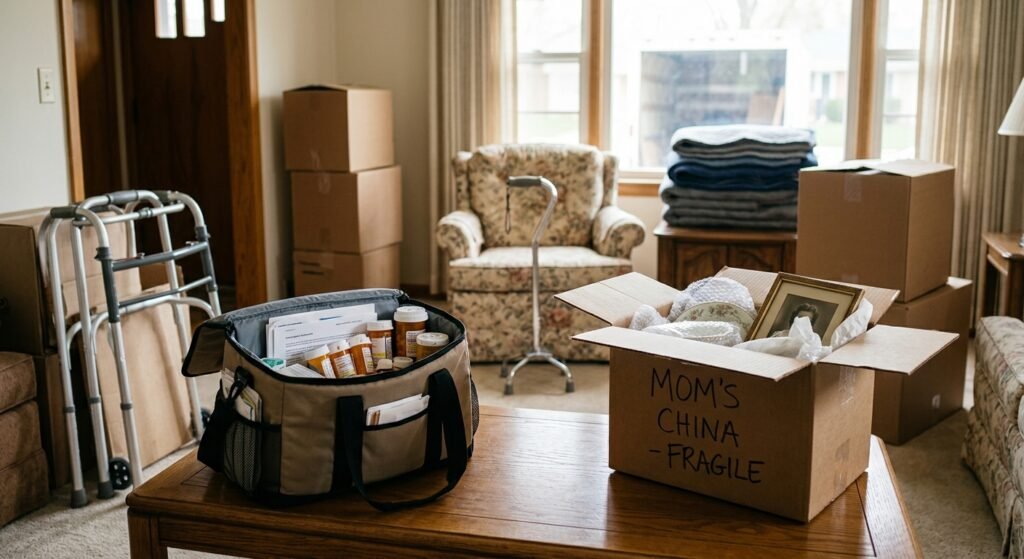
Fragile items like china, glassware, and framed photos need individual wrapping and clear box labeling, since these are the items most likely to carry decades of memory rather than just monetary value. A box labeled simply “kitchen” risks rough handling that a box labeled “fragile – mom’s wedding china” usually avoids.
Medications, medical equipment, and mobility aids need to travel separately from general boxes, since these items can’t sit buried in a moving truck for hours while someone searches for them. I pack these in a bag that travels in the family vehicle, never in the moving truck itself.
Important documents, including medical records, insurance papers, and identification, belong in a single folder that stays with the parent at all times during the move.
Items Movers Cannot Transport During a Senior Relocation
Movers cannot legally transport hazardous materials, perishable food, plants, and certain valuables regardless of whose household is moving, and this rule applies equally to senior relocations. I’ve had to explain this to families more than once when a parent insists on bringing propane tanks or an opened bottle of cleaning chemicals.
Common prohibited items include propane tanks, gasoline, paint thinners, ammunition, fireworks, and aerosol cans, since these pose fire or explosion risks inside a packed truck. Fresh produce and refrigerated food also get left behind, since spoilage during transit creates health risks and truck odor problems.
Plants are typically restricted too, especially for interstate moves, due to agricultural regulations that vary by state. Valuables like cash, jewelry, and irreplaceable documents are usually excluded from the moving contract’s liability coverage, which means they travel with the family rather than the truck.
A U.S. Department of Transportation household goods guide confirms movers are federally restricted from transporting hazardous materials under interstate commerce regulations. Checking this list two weeks before moving day avoids a last-minute scramble to find alternate transportation for excluded items.
Medications, Medical Equipment, and Mobility Aids on Moving Day
Medications and mobility equipment need a dedicated transport plan that keeps them accessible throughout moving day, separate from the general household goods. I treat this as its own category, not an afterthought tucked into a junk drawer box.
Prescription medications should stay in their original labeled containers and travel in a bag that never leaves the family’s direct control. Losing track of a medication box inside a truck full of furniture creates a genuine health risk if a dose gets missed.
Mobility aids like walkers, wheelchairs, and canes need to stay usable right up until the truck pulls away and available again the moment it arrives. I’ve seen movers accidentally pack a walker at the bottom of the truck, leaving a parent without support for hours.
Durable medical equipment, including oxygen concentrators or hospital beds, often requires special handling or even professional disconnection and reinstallation, which is worth confirming with the moving company in advance.
Choosing a Moving Company Experienced With Senior Relocations
A moving company experienced with senior relocations understands the extra time, care, and communication that elderly clients and their families need throughout the process. I look for movers who ask about medical equipment and mobility needs before the walkthrough even starts, since that question signals real experience.
Licensing and insurance verification matters for every move, but it carries extra weight here, since replacing a damaged heirloom isn’t something money alone can fix. Reading reviews that specifically mention senior moves, rather than general five-star ratings, gives a clearer picture of how a company handles this kind of relocation.
Asking direct questions about local vs. long-distance move logistics, crew training, and how they handle fragile or medical items separates experienced movers from companies treating it like any other job.
Local vs. Long-Distance Moves for Elderly Parents
Local moves for elderly parents typically involve shorter timelines and more flexibility, while long-distance moves require additional coordination around medical care transfer, travel logistics, and extended transit time for belongings. I handle these two scenarios very differently when advising families.
A local move within the same city, like Skokie, often allows the parent to visit the new home beforehand, which reduces anxiety significantly. Medical records and prescriptions transfer more easily too, since the same local pharmacy or physician network may still apply.
Long-distance relocations add layers: finding new healthcare providers before arrival, planning for multi-day transit of medications, and coordinating delivery windows that could stretch into several days depending on distance.
Safety Considerations on Moving Day for Seniors
Moving day safety for seniors centers on fall prevention, avoiding overexertion, and keeping walkways clear of boxes and cords throughout the day. I recommend parents stay in one designated room, away from the main traffic path of movers carrying furniture.
Fall risk increases significantly on moving day simply because floors get cluttered with packing materials and furniture gets shifted into unfamiliar positions. Keeping a clear, well-lit path to a bathroom and a seating area reduces that risk substantially.
Overexertion is another common issue, since many parents want to help and underestimate how tiring a full day of activity becomes. Scheduling rest breaks every hour, with water and a snack nearby, keeps energy from crashing mid-afternoon.
Helping Elderly Parents Adjust After the Move
Helping an elderly parent adjust after a move involves recreating familiar routines and placing recognizable belongings where they can see them immediately. I always unpack the bedroom and a favorite sitting area first, before anything else in the house.
Familiar items, like a favorite blanket, framed photos, or a particular chair, placed in visible spots on day one, help a parent’s brain register the new space as home faster than an empty room ever could.
Routine matters just as much as physical objects. Keeping meal times, medication schedules, and daily habits consistent during the first week smooths the emotional transition considerably.
Cost Factors When Moving Elderly Parents
The cost of moving an elderly parent depends on distance, volume of belongings, additional services like packing assistance, and any special handling required for medical equipment. I walk families through these variables early so there are no surprises on the final invoice.
Local moves typically price by the hour and crew size, while long-distance moves calculate cost based on weight and mileage. Specialty services, like white-glove handling for antiques or disassembly of medical beds, add line items that a standard move wouldn’t include.
Packing services, if the family chooses not to handle sorting and boxing themselves, can add a meaningful percentage to the total cost but often save significant time and physical strain during an already demanding week.
Conclusion
Moving an elderly parent blends logistics, safety, and emotional care into one process. Planning early, downsizing thoughtfully, and understanding what movers can transport prevents most moving-day problems.
Every family’s situation looks different, but the fundamentals of timeline, communication, and safety stay consistent across local and long-distance relocations alike.
We at ASHER MOVERS LOCAL & LONG DISTANCE help families navigate every step of a senior relocation with care and experience. Reach out and let’s plan your parent’s move together.
Frequently Asked Questions
What items can’t movers take when relocating a senior?
Movers cannot transport hazardous materials, perishable food, plants, and certain valuables like cash or jewelry. These restrictions apply to every household move, not just senior relocations, and are set by federal transportation regulations.
How far in advance should I plan a parent’s move?
Planning should start 8 to 12 weeks before moving day. This window allows time for downsizing, medical coordination, and emotional adjustment without last-minute pressure.
Do movers handle medical equipment?
Some movers handle durable medical equipment like hospital beds or oxygen concentrators, but it often requires special disconnection and reinstallation. Confirming this with the moving company in advance avoids moving-day surprises.
Is it better to downsize before or after the move?
Downsizing before the move is almost always better, since it reduces moving costs and prevents unpacking boxes that get set aside and forgotten. Starting six to eight weeks ahead gives enough time to sort without rushing.
How do I convince a resistant elderly parent to move?
Involving them in small, specific decisions rather than large open-ended ones reduces resistance significantly. Letting them choose where their favorite items go in the new space helps preserve their sense of control.
What should I pack separately for moving day?
Medications, mobility aids, important documents, and sentimental valuables should all travel separately from the general moving truck. These items need to stay accessible and under direct family control throughout the day.
How much does moving an elderly parent typically cost?
Cost depends on distance, volume of belongings, and any special handling needed for medical equipment or fragile items. Local moves price by hourly crew time, while long-distance moves calculate cost by weight and mileage.
