
A moving container is a portable storage unit delivered to your home, loaded at your own pace, and then transported by the provider to a new location or storage facility. PODS, U-Pack, and 1-800-Pack-Rat are the three dominant providers offering this service across the Chicago area, including Skokie, IL. Each company structures sizing, pricing, and delivery logistics a little differently, and those differences matter once you’re comparing real quotes.
Choosing the wrong container size or provider creates real headaches on moving day. I’ve watched families scramble when a container arrived too small or a pickup window didn’t match their lease dates.
This guide covers how container moving works compared to traditional movers, a full breakdown of PODS, U-Pack, and 1-800-Pack-Rat individually, size and cost comparisons across all three, packing rules and prohibited items, loading safety, delivery logistics, insurance considerations, and how to decide which option fits your Skokie move.
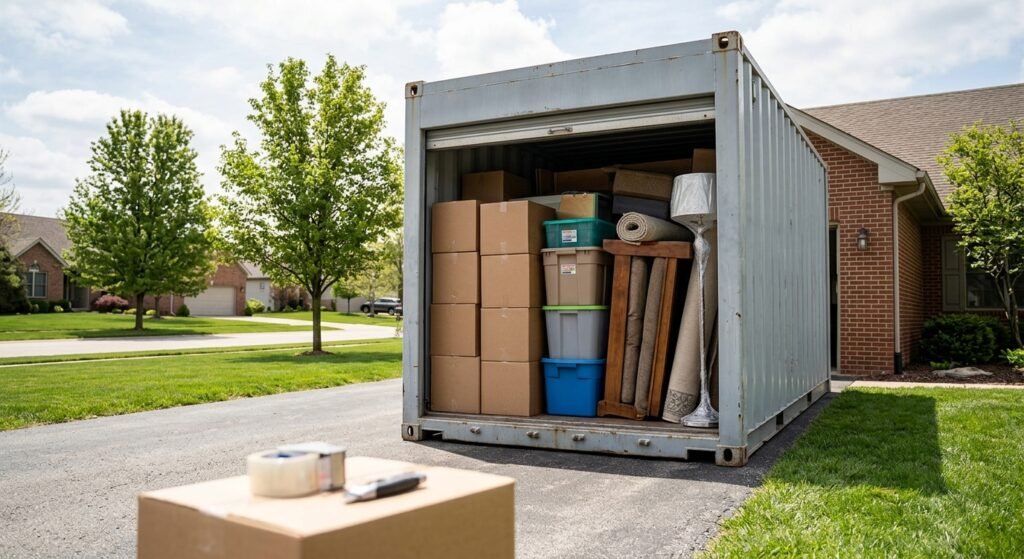
What Are Moving Container Services?
A moving container service delivers a portable storage unit to your driveway, lets you load it on your own schedule, and then transports it to your new address or a storage facility. We see this model appeal most to people who want moving-company convenience without giving up control over packing timing.
The container sits at your property for several days in most cases, giving you flexibility that a single-day moving truck rental doesn’t offer. Once loaded, the company picks it up and either drives it directly to your new home or stores it temporarily.
How Portable Storage Containers Work
The process starts with an online quote, a scheduled delivery date, and a container dropped at your curb or driveway. You load your own belongings, lock the unit, and call the company for pickup. For a long-distance job, the container usually moves onto a truck or rail flatbed rather than being driven as a standalone unit.
Container Moving vs. Traditional Moving Companies
Traditional full-service movers handle loading, driving, and unloading as one bundled service, while container companies split the labor and transport. I find container options cost less upfront because you’re doing the physical loading yourself, but that trade-off only makes sense if you have the time and people to help.
PODS Moving Containers Overview
PODS is a portable storage and moving container company that offers steel-frame units in three sizes, delivered directly to a customer’s property for self-loading. PODS has been operating since 1998 and runs one of the largest container fleets in the country.
We like that PODS offers both moving and long-term storage under one contract, so a Skokie family relocating mid-lease can store a container at a PODS facility until their new place is ready.
PODS Container Sizes and Pricing Structure
PODS offers three container sizes: 7-foot, 12-foot, and 16-foot units. A 2024 industry pricing survey from Move.org found that local PODS moves typically run $600 to $1,200, depending on container size and distance.
PODS Delivery and Pickup Process in Skokie, IL
PODS delivers using a patented lift system that lowers the container onto a driveway without a ramp, which matters on narrower Skokie residential streets. Pickup is scheduled through their app or call center once you’ve finished loading.
U-Pack Moving Containers Overview
U-Pack is a moving container company that offers two transport formats — ReloCube units and shared moving trailers — aimed primarily at long-distance relocations. U-Pack operates under ABF Freight’s logistics network, which gives it wider trailer availability than smaller competitors.
I notice U-Pack tends to win on long-distance pricing because customers only pay for the trailer space they actually use, not a flat container rate.
U-Pack ReloCube vs. Trailer Options
The ReloCube is a smaller, PODS-style unit meant for studio or one-bedroom moves, while the full trailer suits three-plus bedroom households needing more linear footage. Choosing between them comes down to how much your household actually fills.
U-Pack Pricing Model and Distance Factors
U-Pack prices by the linear foot of trailer space used, which means a half-loaded trailer costs less than a full one. A 2023 ABF Freight transport report showed average long-distance U-Pack moves costing $1,800 to $4,500 depending on distance and load size.
1-800-Pack-Rat Containers Overview
1-800-Pack-Rat is a portable moving and storage container provider offering weatherproof steel units in multiple sizes for both local and long-distance relocations. The company has operated since 2003 and positions itself as a mid-market alternative to PODS.
We find 1-800-Pack-Rat’s container doors wider than some competitors, which speeds up loading large furniture pieces.
1-800-Pack-Rat Container Specifications
Units come in 8-foot, 12-foot, and 16-foot lengths, built with a steel frame and weather-sealed roof seams. The wider door clearance makes loading sectional sofas and large appliances noticeably easier than narrower competitor units.
1-800-Pack-Rat Service Availability
Coverage includes most major metro areas, including the greater Chicago region, though rural availability runs thinner than PODS in some states. Checking container availability early matters most during peak moving season.
Comparing Container Sizes Across Providers
Container sizing varies enough between providers that a “12-foot” unit from one company can hold a noticeably different volume than another’s. I always tell people to compare cubic footage, not just the length number printed in marketing material.
| Provider | Small Unit | Medium Unit | Large Unit |
| PODS | 7 ft (1-bed) | 12 ft (2–3 bed) | 16 ft (3–4 bed) |
| U-Pack | ReloCube (studio) | Half trailer (2-bed) | Full trailer (3+ bed) |
| 1-800-Pack-Rat | 8 ft (1-bed) | 12 ft (2–3 bed) | 16 ft (3–4 bed) |
Matching Container Size to Home Size
A one-bedroom apartment typically fills a 7 to 8-foot unit, while a standard three-bedroom house usually needs the largest size each provider offers. Getting this wrong in either direction means paying for unused space or running out of room mid-load.
Cost Comparison: PODS vs. U-Pack vs. 1-800-Pack-Rat
Pricing among the three providers shifts based on distance, season, and container count more than brand alone. For a local Skokie move under 50 miles, container pricing across all three tends to land within a few hundred dollars of each other.
| Factor | PODS | U-Pack | 1-800-Pack-Rat |
| Local move avg. | $600–$1,200 | Less competitive locally | $550–$1,100 |
| Long-distance avg. | $2,000–$5,000 | $1,800–$4,500 | $2,000–$4,800 |
| Storage option | Yes, company-owned facilities | Limited | Yes, company-owned facilities |
Hidden Fees to Watch For
Fuel surcharges, extended driveway permits, and extra-day storage fees are the three charges that most often surprise first-time container renters. I always recommend asking for a full written quote before signing anything, since these add-ons rarely show up in the initial online estimate.
Local Moves vs. Long-Distance Moves with Containers
Container services were originally built for long-distance relocations, but local use has grown because it lets people load over several days instead of racing against a single rental-truck window. For a short move across Skokie or into a neighboring suburb, the container often sits on-site the entire loading period rather than being shipped anywhere.
When Containers Make Sense for Skokie-Area Moves
A Skokie-area move benefits most from a container when the closing dates on an old and new home don’t line up, since the unit can sit at a storage facility in between. We also see this option work well for anyone downsizing and needing a few extra days to sort belongings before the final drop-off.
What You Can and Cannot Pack in a Moving Container
Every container company enforces a list of prohibited items tied to safety and liability regulations, not personal preference. Hazardous materials, perishable food, and live plants top the list of items no container provider will transport.
Prohibited and Restricted Items
Flammable liquids, propane tanks, firearms without proper documentation, and perishable food are restricted across all three providers. Loading any of these without disclosure risks a canceled pickup or a liability dispute if something goes wrong in transit.
Items That Need Special Preparation
Mirrors, artwork, and electronics need extra padding and upright positioning to survive a multi-day container stay, since these units don’t ride with the same climate controls as an enclosed moving truck. Wrapping glass surfaces separately from frames prevents the kind of pressure cracks that show up days later.
Packing and Loading Best Practices for Containers
Loading a container well comes down to weight distribution and gap-filling, since an unevenly packed unit can shift during transport. Heavy items belong on the bottom and toward the front of the unit, closest to the direction of travel.
Weight Distribution and Container Safety
Distributing weight evenly across the floor prevents the container from tilting during lift-and-load operations, which matters most with steel-frame units sitting on a residential driveway. Leaving gaps between stacked boxes is one of the most common mistakes that leads to shifting and damage.
Delivery, Storage, and Pickup Logistics
Most providers schedule delivery a few days before your target load date, giving you a flexible window rather than a single fixed appointment. Container companies typically allow three to five days of on-site loading time before requiring pickup.
On-Site Placement Requirements and Permits
Driveway width, overhead clearance, and local street permits all affect where a container can legally sit, and Skokie’s municipal code requires a placement permit for any unit left on a public street for more than 48 hours. Checking these requirements before delivery day avoids a last-minute placement scramble.
Insurance and Liability Considerations
Container companies generally offer basic damage protection, but coverage limits vary enough that reviewing the policy before loading matters more than most people expect. Standard container insurance typically covers theft and transit damage but excludes items packed improperly by the customer.
What Container Companies Do and Don’t Cover
Theft during the loading window and damage from provider-caused transit accidents are usually covered, while self-inflicted packing damage generally isn’t. I always suggest checking whether an existing homeowner’s or renter’s policy extends to items in transit, since that coverage sometimes fills the gap container insurance leaves open.
Container Moving vs. Hiring Full-Service Movers
Containers save money primarily on labor, but that savings disappears quickly if you need to hire day-labor help anyway to load a large home. Full-service movers handle loading, transport, and unloading as one continuous job, which removes the physical effort entirely.
When a Hybrid Approach Works Best
Some households load heavy furniture with hired labor but handle boxes and smaller items themselves, splitting the cost of a container rental with a few hours of paid help. This approach tends to fit middle-sized moves where full-service pricing feels disproportionate to the actual labor needed.
Common Mistakes to Avoid When Using Moving Containers
Underestimating container size is the single most common mistake we see, followed closely by forgetting to check local placement permits before delivery day. Skipping a written itemized quote also leads to the fuel and storage surcharges that catch people off guard at pickup.
Choosing the Right Option for Your Skokie Move
Deciding between PODS, U-Pack, and 1-800-Pack-Rat comes down to three factors: your home’s size, whether the move is local or long-distance, and whether you need interim storage. A studio or one-bedroom move favors the smallest unit from any provider, while a long-distance three-bedroom move tends to favor U-Pack’s by-the-foot pricing model.
Conclusion
PODS, U-Pack, and 1-800-Pack-Rat each solve the same core problem with different sizing, pricing, and delivery structures. Matching container size, distance, and storage needs to the right provider prevents costly surprises on moving day.
We help Skokie-area families and businesses sort through moving options every week. Contact ASHER MOVERS LOCAL & LONG DISTANCE for a clear, no-pressure moving plan.
Frequently Asked Questions
What is the difference between PODS, U-Pack, and 1-800-Pack-Rat?
PODS and 1-800-Pack-Rat offer fixed-size steel containers for local and long-distance moves, while U-Pack prices by linear trailer footage. All three let you load at your own pace before pickup.
How much does a moving container cost for a local move?
A local move under 50 miles typically costs $550 to $1,200 across PODS and 1-800-Pack-Rat. U-Pack is generally less competitive for short local distances.
Can I pack a moving container myself?
Yes, self-loading is the standard model for all three providers. Hiring optional day-labor help is available through most companies if you need extra hands.
What items are not allowed in a moving container?
Flammable liquids, propane, perishable food, and firearms without documentation are banned across all three providers. These restrictions come from safety and liability regulations, not individual company preference.
How long can I keep a moving container before delivery?
Most providers allow three to five days of on-site loading time before requiring pickup. Extended time typically triggers an additional daily storage fee.
Are moving containers safe for fragile or valuable items?
Yes, when wrapped and positioned correctly, though containers lack the climate control of enclosed moving trucks. Mirrors, artwork, and electronics need extra padding to survive multi-day storage safely.
Is it cheaper to use a moving container or hire full-service movers?
Containers are typically cheaper for households willing to load their own belongings. Full-service movers cost more but remove all physical labor from the move.
