
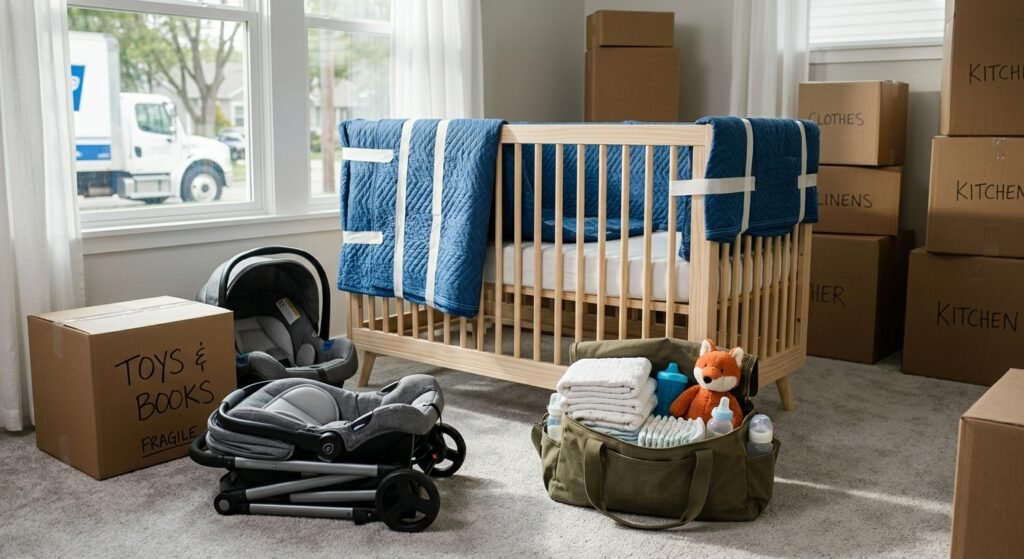
A local move with a newborn or toddler is a household relocation that requires extra planning around nap schedules, safety hazards, and the gear babies and young children depend on every day. I’ve watched enough families move to know the biggest stressor isn’t the boxes it’s keeping a child’s routine intact while everything else changes. Skokie families juggling this exact situation are the reason I put this guide together.
Nothing derails a move faster than a cranky, overtired toddler. Planning around your child’s routine prevents most moving-day meltdowns.
This guide covers how to build a packing timeline around your child’s routine, what movers legally can and can’t transport, how to pack baby gear like cribs and strollers safely, and how to handle moving day itself from childcare arrangements to emotional adjustment at the new home.
How Moving Day Changes When You Have a Baby or Toddler
Moving with a baby or toddler means building the entire process around their sleep, feeding, and safety needs instead of around convenience. A family without young kids can pack a truck in a weekend and crash on a mattress that night. I can’t recommend that same approach to anyone with a baby who naps on a strict schedule.
Toddlers also react to chaos differently than older kids. Boxes disappearing, furniture vanishing, and strange movers in the house can trigger real anxiety in a two-year-old, even when nothing bad is happening.
The fix isn’t avoiding the disruption. It’s sequencing the move so the disruption happens in small, predictable pieces instead of all at once.
Choosing the Right Moving Timeline Around Nap Schedules and Routines
The right moving day for a family with young kids is the one that protects naptime and bedtime as much as possible. I always tell parents to treat their child’s schedule like a fixed appointment the movers have to work around, not the other way around.
A few scheduling moves make a real difference:
- Book movers for a morning slot so the bulk of loading happens before afternoon naptime.
- Avoid moving on a day right after a schedule disruption like a vaccination or a new routine change.
- Keep one familiar caregiver near the child for the first few hours of loading.
- Plan the unload for the new home to finish before the evening wind-down routine starts.
Building a Packing Timeline That Protects Your Child’s Routine
A packing timeline for a family with a baby or toddler starts four to six weeks out and works from least-used rooms to most-used rooms, finishing with the nursery last. I never recommend packing a toddler’s room first, because familiar toys and the crib are what keep a child calm through the rest of the process.
Here’s the sequence that holds up in practice:
- Weeks 6-4 out: pack storage areas, off-season clothes, and rarely used kitchen items.
- Weeks 4-2 out: pack books, decor, and non-essential furniture.
- Week 2 out: pack most clothing, keeping one week’s worth accessible.
- Days 2-1 before the move: pack the nursery, leaving the crib and a few favorite toys until the morning of.
- Moving day morning: break down the crib last and load it onto the truck right before departure.
Toy rotation during packing also helps. Boxing up half the toys two weeks early and keeping them “new” for unpacking day gives a toddler something exciting instead of just loss.
Packing the Nursery or Kids’ Room Without Disrupting Sleep
The nursery should be the last room packed and the first room unpacked at the new home. I treat it as its own category separate from the rest of the house because disrupting it too early directly affects how well a child sleeps during the entire moving window.
A few practical steps protect the sleep environment:
- Keep the crib assembled and in place until the morning of the move.
- Pack a “sleep kit” box labeled clearly, containing the sheet, sound machine, and any comfort object, so it’s the very first box opened at the new place.
- Leave blackout curtains up until the final morning if the new home’s window coverings aren’t ready yet.
The Essentials Bag What to Keep Out of Boxes on Moving Day
The moving-day essentials bag holds everything your baby or toddler needs for the first 24 to 48 hours without digging through boxes, and it should never go on the moving truck. I tell every parent I work with to treat this bag like a carry-on they’d never check at an airport.
A strong essentials bag for a baby includes diapers, wipes, formula or pre-measured bottles, a change of clothes, and any medication. For a toddler, it includes a few favorite toys, snacks, a sippy cup, pajamas, and a comfort item like a blanket.
Pack this bag last and keep it in the family vehicle, not the truck. If the truck is delayed, your child’s immediate needs are still covered.
Items Movers Cannot Transport (Prohibited and Restricted Items)
Moving companies are prohibited from transporting hazardous, perishable, and certain high-value items due to safety regulations and liability limits. This rule exists across the moving industry, not just with one company, so it affects every household regardless of who you hire.
| Category | Examples | Why It’s Restricted |
| Flammable/hazardous materials | Propane tanks, gasoline, paint thinner, aerosols | Fire and explosion risk in enclosed trucks |
| Perishables | Fresh or frozen food, produce | Spoilage risk during transit |
| Plants | Potted plants, houseplants | Temperature sensitivity and some state agricultural restrictions |
| High-value/irreplaceable items | Cash, jewelry, important documents | Liability coverage limits don’t cover full replacement value |
| Pets and live animals | Any live animal | Not covered by moving liability insurance |
Knowing this list before packing day prevents a last-minute scramble when a mover flags a box at load-in.
Baby Gear, Formula, and Medications What’s Allowed and What Needs Special Handling
Movers can transport baby gear like cribs, strollers, and high chairs, but items like formula, breast milk, and medication should travel with the family rather than on the truck. An Ahrefs-style industry source isn’t needed here this is standard mover liability policy, since perishable and temperature-sensitive items fall outside what a moving truck can safely regulate over several hours.
Medication in particular should never go in a moving box. Prescription medication, especially anything time-sensitive, belongs in the same bag as your other essentials, within arm’s reach the entire day.
Safely Packing Cribs, Strollers, Car Seats, and Other Baby Equipment
Baby equipment needs disassembly, padding, and labeling to survive a move without damage or missing hardware. I’ve seen more frustration over a missing crib bolt bag than almost anything else on moving day, and it’s completely avoidable.
- Disassemble the crib following the manufacturer’s steps, and bag all hardware together, taped directly to the crib frame.
- Wrap the stroller frame in a moving blanket and remove any detachable bassinet or car seat attachment.
- Pack the car seat in its original box if you kept it, or wrap it in a blanket and mark it “fragile, this side up.”
- Label every piece of baby equipment clearly so it’s identified and unloaded first at the new home.
Arranging Childcare and Moving-Day Supervision
Moving day runs more smoothly when a baby or toddler has dedicated supervision away from the loading and unloading process entirely. I recommend this over trying to manage a toddler while also directing movers, because neither job gets done well when you’re doing both.
The strongest options, in order of practicality:
- A trusted family member or friend watches the child off-site for the day.
- A babysitter comes to a quiet room in the house, away from the moving path.
- Daycare or drop-in childcare covers the exact hours of loading and unloading.
Childproofing and Safety Hazards During Load-In and Load-Out
Open doors, moving dollies, and stacked boxes create real hazards for a mobile toddler during load-in and load-out. A house mid-move looks nothing like a childproofed home, even if it was one the week before.
A few hazards to watch specifically:
- Open front doors and driveways with moving trucks backing in.
- Loose cords, tape, and packing materials at toddler height.
- Stacked boxes that can tip if climbed on or leaned against.
This is exactly why dedicated supervision away from the work zone matters more on this day than almost any other.
Helping a Toddler Emotionally Adjust to a New Home
Toddlers adjust to a new home faster when familiar routines and objects move with them immediately, rather than being packed away until later. Emotional adjustment isn’t solved by the move itself; it’s solved by what stays consistent through it.
A few things that help:
- Keep bedtime and mealtime routines identical, even if the rooms are unfamiliar.
- Bring a comfort object into the new home before anything else is unpacked.
- Talk through the move in simple, age-appropriate language in the days leading up to it.
Setting Up Baby’s Room First at the New Home
Setting up the nursery before any other room gives a toddler one stable, finished space while the rest of the house is still in boxes. I tell parents to resist the urge to unpack the kitchen first, even though that feels like the practical choice.
- Reassemble the crib immediately upon arrival, before anything else gets unloaded.
- Unpack the sleep kit box and set up the same sheets, sound machine, and lighting as before.
- Arrange a few familiar toys visibly in the room so it looks recognizable right away.
- Save full room organization for later once the sleep environment is functional.
Local Considerations for Families Moving In and Around Skokie, IL
Families moving within or into Skokie, IL deal with seasonal weather shifts, village permit requirements for moving trucks on residential streets, and school or daycare enrollment timing that can affect the ideal moving date. Winter moves in particular call for extra planning around icy walkways and cold-sensitive baby gear.
Checking Skokie’s local parking and street-use rules for moving trucks ahead of time avoids a surprise ticket or towing situation on moving day itself.
Conclusion
Moving with a baby or toddler comes down to sequencing: protect routines, pack the nursery last, and know what movers can’t transport. The right local team handles the logistics so you can focus on your child’s comfort through the transition. We built our process around families like yours reach out to ASHER MOVERS LOCAL & LONG DISTANCE and let’s plan a move that actually works around your child’s schedule.
Frequently Asked Questions
Can movers transport a car seat or crib?
Yes, movers can transport a car seat and crib as standard household goods. Both items just need proper disassembly and padding to prevent damage in transit.
What items are moving companies not allowed to pack?
Moving companies cannot pack hazardous materials, perishable food, plants, and high-value items like cash or jewelry. These restrictions come from safety regulations and liability coverage limits.
How far in advance should I pack when moving with a baby?
Parents should start packing four to six weeks before a move with a baby or toddler. This timeline allows the nursery to stay intact until just before moving day.
Is it safe to move with a newborn?
Moving with a newborn is safe with proper planning around feeding, sleep, and temperature control. Keeping the newborn with a dedicated caregiver away from the loading process reduces risk further.
What should go in my moving-day bag for my toddler?
A toddler’s moving-day bag should include snacks, a sippy cup, a few favorite toys, a change of clothes, and a comfort item. This bag should stay with the family, never on the moving truck.
Do movers transport breast milk or formula?
Movers generally don’t transport breast milk or formula due to temperature control requirements during transit. These items should travel with the family in a cooler bag instead.
How do I keep my toddler safe during the move?
Keeping a toddler safe during a move means arranging dedicated supervision away from the loading and unloading zone. Open doors, cords, and stacked boxes create hazards that are hard to manage while also directing movers.
