
Moving across a bridge or tunnel sounds simple until a toll plaza or a weight-restricted overpass turns into an unexpected delay. A bridge-and-tunnel move is any relocation where the moving truck’s route crosses a tolled highway, a restricted-clearance tunnel, or a weight-limited bridge, which can trigger extra fees, permit requirements, or routing restrictions that a standard in-town move never faces. For anyone relocating in or around Skokie, IL, this distinction matters the moment a truck route touches the Edens Expressway or a Chicago-area crossing.
I’ve seen families assume a “local” move stays simple just because the distance is short. But thirty minutes of toll-road driving changes the entire cost and paperwork picture.
This guide covers how Skokie’s layout interacts with Illinois tollways and permits, what the Illinois tollway system means for moving trucks, the specific permits and size restrictions that apply to bridges and tunnels, how companies calculate and bill these costs, and the practical steps that keep moving day on schedule.
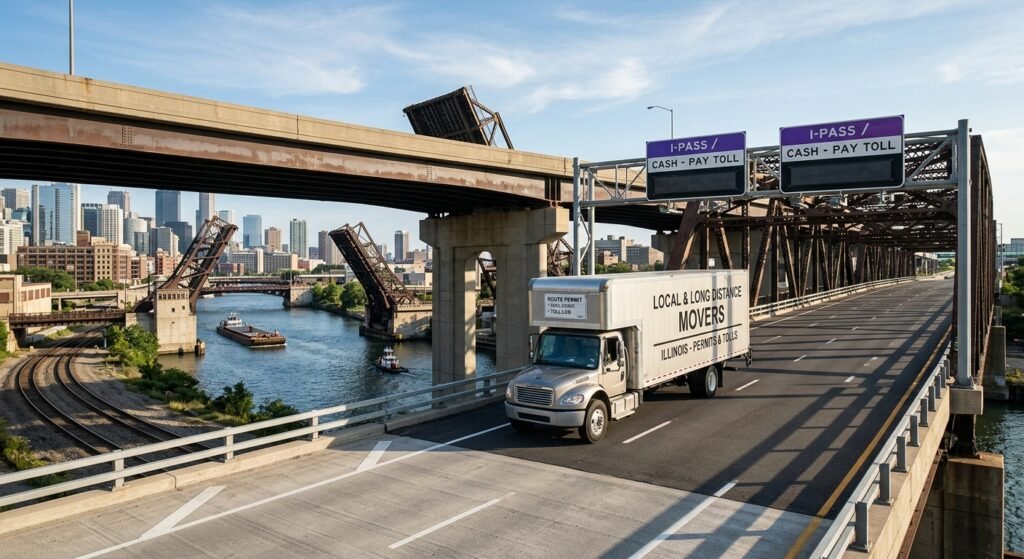
What Counts as a Bridge or Tunnel Move in Skokie, IL
A bridge or tunnel move in Skokie happens whenever the moving truck’s route crosses a tolled expressway segment, a river crossing, or a restricted tunnel between the pickup and drop-off addresses. Skokie sits close enough to several major Chicago-area corridors that even short relocations often brush against one of these structures.
I look at the Edens Expressway corridor first because it’s the most common route movers take through this area. A move from northern Skokie to a neighborhood just a few miles south can still cross tolled sections depending on the exact streets involved.
The Skokie Swift transit corridor and nearby river crossings add another layer, since some routes near the Chicago River involve tunnels with posted clearance limits. Knowing whether your route touches any of these points changes how your mover plans the trip and prices the job.
Illinois Tollway System and How It Affects Moving Trucks
The Illinois Tollway classifies vehicles by axle count and weight, which means a moving truck almost always pays a higher toll rate than a passenger car crossing the same plaza. This classification system directly shapes how much a local move through Skokie actually costs once tolls are added to the estimate.
I-PASS is the electronic toll system most Illinois movers use, and it applies different per-axle rates to commercial vehicles than the flat passenger rate most people are used to paying. A two-axle moving truck typically pays roughly two to three times the standard car toll at plazas like those near the Edens Spur or the Tri-State Tollway, and trucks pulling trailers pay even more per axle.
Cash-paying lanes still exist at some plazas, but they slow down larger trucks significantly and aren’t always available for commercial vehicle classifications. The Illinois Tollway’s official commercial vehicle policy outlines exactly how axle-based pricing works for anyone who wants to verify rates before moving day.
Movers who run routes through this area regularly tend to pre-calculate toll costs into their estimate rather than surprising a customer with a separate toll invoice later. That upfront transparency is one of the clearest signs of a mover who actually knows the local terrain.
Permits Required for Moving Trucks Through Chicago-Area Tunnels
A moving truck needs a special oversized load permit any time its height, width, or weight exceeds the standard limits posted for a specific tunnel or restricted roadway segment. This is separate from tolls entirely — it’s a legal clearance issue, not a billing one.
Chicago-area tunnels and underpasses post clearance limits that most standard moving trucks fit under, but larger commercial trucks or trucks carrying oversized furniture crates can exceed those limits. The Illinois Department of Transportation’s oversize/overweight permit portal issues these permits, and running a restricted route without one risks fines or forced rerouting mid-move.
Municipal permits add a second requirement layer. Skokie and neighboring municipalities sometimes require separate permits for oversized vehicles using certain local roads to reach a tolled highway entrance, which is distinct from anything the state tollway or IDOT requires.
I always tell customers that permit requirements depend on truck size more than distance. A short move with a full-size commercial truck can need more paperwork than a longer move using a smaller box truck.
How Moving Companies Calculate Toll and Permit Costs
Most moving companies handle tolls and permits through one of two billing methods: pass-through charges itemized on the final invoice, or a flat rate that folds estimated toll costs into the total quote. Knowing which method your mover uses prevents confusion when the final bill arrives.
Pass-through billing means the company pays tolls as they drive and charges the exact amount back to the customer, which keeps pricing accurate but means the final number isn’t locked in until the move is complete. A 2024 American Moving and Storage Association cost transparency survey found that 68% of customer complaints about final moving bills involve fees that weren’t clearly itemized upfront, and tolls are a common culprit.
Flat-rate inclusion works differently. The company estimates the likely toll route in advance and bakes that cost into the quoted price, which trades precision for predictability. Permit fees, when they apply, are almost always billed separately from tolls since they come from a different authority and aren’t a per-trip recurring cost.
Asking your mover directly which method they use, before signing anything, avoids the kind of moving-day surprise that turns a smooth relocation into a frustrating one.
Truck Size and Weight Restrictions on Bridges
Certain bridges in the greater Chicago area post weight limits that restrict which truck classes can legally cross them, and this affects route planning more than most people expect. A fully loaded moving truck can weigh significantly more than its empty curb weight suggests, sometimes enough to exceed a bridge’s posted limit.
Experienced dispatchers factor in truck class before confirming a route, not after the truck is already loaded. This is why the size of truck assigned to a job sometimes depends on the bridges along the most direct path rather than on inventory volume alone.
Weight restrictions exist because older bridge infrastructure wasn’t built for modern fully-loaded commercial vehicles, and the posted limits are a legal requirement, not a suggestion a driver can judge on the spot.
Low-Clearance Tunnels and Overpasses Movers Must Avoid
Low-clearance tunnels and overpasses post a maximum vehicle height, and any moving truck exceeding that height physically cannot pass through safely. This sounds obvious, but it’s one of the most common routing mistakes inexperienced movers make.
Standard consumer GPS apps often route trucks the same way they’d route a passenger car, ignoring clearance restrictions entirely. Commercial routing software built specifically for trucking accounts for vehicle height and automatically avoids restricted tunnels, which is why professional movers rely on it instead of a phone’s default maps app.
A driver who hits an unexpected low clearance mid-route has to backtrack, sometimes adding significant time to a move that was supposed to be simple. Confirming that your mover uses commercial-grade routing tools is worth asking about directly.
Timing Your Move Around Toll Rush-Hour Pricing
Illinois tollway pricing changes based on time of day, with peak commuting hours typically costing more per axle than off-peak windows. Scheduling a move outside rush hour can shave a measurable amount off the total toll bill, especially for larger commercial trucks paying multi-axle rates.
Morning and evening rush hours around Chicago also mean heavier traffic congestion on top of higher tolls, which stacks delay risk on top of cost. Movers who schedule departure times around 10 AM or early afternoon tend to avoid both problems at once.
Seasonal timing matters too, since summer moving season brings higher overall traffic volume to every tollway corridor near Skokie, independent of the hour.
Liability and Insurance When Crossing Toll Roads
Standard moving insurance and valuation coverage typically still applies when a truck crosses tolled roads or restricted infrastructure, but the specifics are worth confirming before moving day. Crossing a weight-restricted bridge without the correct permit can technically void certain liability protections if an incident occurs during that illegal crossing.
This is less about the toll itself and more about what happens if a permit requirement gets skipped. A fully permitted and properly routed move keeps standard coverage intact throughout the trip.
Reputable movers confirm permit compliance before departure specifically because it protects both the customer’s belongings and the company’s liability position if anything goes wrong en route.
Documentation and Paperwork for Permitted Routes
Any move requiring a special permit also requires the physical or digital documentation proving that permit is active and matches the truck’s actual route. Trip permits, inspection records, and bill of lading notations all play a role in keeping a permitted move compliant.
A trip permit typically lists the specific route, dates, and truck specifications it covers, meaning a driver can’t simply reroute mid-move without invalidating it. Keeping copies of this paperwork in the truck cab is standard practice for any company handling oversized or restricted loads.
I recommend customers ask to see a copy of any permit obtained for their move, since it confirms the company actually secured proper clearance rather than assuming the route would be fine.
Commercial vs. Residential Moves — Different Permit Rules
Commercial relocations often trigger different permit and routing requirements than residential moves, mainly because office equipment and commercial inventory tend to require larger trucks more frequently. A business move involving multiple truckloads or oversized equipment is more likely to need a formal oversize permit than a typical household move.
Municipal rules in Skokie sometimes treat commercial loading zones and route access differently from residential street permissions, which adds another layer business owners need to plan around. Scheduling a commercial move usually benefits from more advance notice specifically because of this added paperwork.
Residential moves crossing the same bridges and tunnels usually move faster through the permit process simply because standard household trucks rarely exceed the size thresholds that trigger a permit requirement in the first place.
How to Avoid Delays at Toll Plazas on Moving Day
Confirming that the moving truck has a working I-PASS transponder before departure prevents the most common cause of toll plaza delays. Trucks without electronic toll capability sometimes have to detour to cash-only lanes, which adds time and occasionally confusion at unfamiliar plazas.
Checking the planned route the night before, rather than the morning of, gives enough lead time to flag any unexpected construction or lane closures near toll plazas. Chicago-area tollways post real-time lane status that’s worth a quick check before a truck departs.
Building in a buffer window around the estimated crossing time also absorbs minor delays without pushing back the entire moving day schedule.
Questions to Ask Your Moving Company About Tolls and Permits
Asking whether tolls are itemized separately or included in the flat rate is the single most useful question for avoiding bill shock later. A company that hesitates to answer clearly is worth a second look before signing a contract.
I’d also ask directly whether the assigned truck size requires any special permits for the planned route, since this affects both cost and scheduling. A transparent mover answers this without needing to check twice.
Finally, asking who’s responsible if a permit delay pushes the move into overtime hours clarifies liability before it becomes a dispute. Clear answers here are one of the better signs of a company that handles this part of the job regularly.
Conclusion
Bridges, tunnels, tolls, and permits all shape how a local move actually unfolds once the truck leaves the driveway. Skokie’s position near major Chicago corridors makes this more relevant than most homeowners expect going in.
Understanding these pieces now means fewer surprises later, and it connects directly to broader planning around cost estimates, truck sizing, and moving-day scheduling. We’ve built our process around exactly this kind of advanced clarity.
We handle the toll research, permit paperwork, and route planning so your move stays on schedule. Reach out to ASHER MOVERS LOCAL & LONG DISTANCE to get a clear, upfront quote today.
Frequently Asked Questions
Do local movers charge extra for tolls in Skokie, IL?
Yes, most local movers charge for tolls either as a separate line item or folded into a flat-rate estimate. The amount depends on the truck’s axle count and the specific route taken.
What permits are needed to move across Chicago bridges?
Oversized load permits are needed only when a truck’s height, width, or weight exceeds posted limits on a specific bridge or tunnel. Standard-size moving trucks usually don’t require one.
Are moving trucks allowed on all Illinois tollways?
Most Illinois tollways allow moving trucks, but they’re classified and tolled differently than passenger vehicles. Some restricted tunnels or low-clearance segments may still be off-limits to larger trucks.
How much do tolls typically add to a moving estimate?
Tolls typically add a modest amount to a local move’s total cost, varying by axle count, route, and time of day. Rush-hour crossings usually cost more than off-peak ones.
What happens if a moving truck exceeds a bridge weight limit?
A truck exceeding a posted weight limit must reroute to a compliant bridge or secure special clearance beforehand. Attempting the crossing anyway risks fines and safety hazards.
Do I need a permit for a local move within Skokie?
Most local moves within Skokie don’t require a permit since standard trucks fall under posted size and weight limits. Larger commercial trucks or oversized loads may still need one.
Can movers avoid toll roads during a move?
Movers can sometimes route around toll roads, but this often adds significant time and mileage to the trip. Most companies weigh the toll cost against the time savings before choosing a route.
