
Moving with a pet is fundamentally different from moving a box of dishes, because a living animal needs airflow, temperature control, bathroom breaks, and emotional reassurance that no packing material can provide. Dogs, cats, and reptiles each react to relocation stress in distinct ways, and a mover’s truck is rarely an appropriate place for any of them to ride. I’ve worked with enough Skokie, IL families to know that the pet part of a move causes more last-minute panic than the furniture ever does.
Pets can’t go in the moving truck, so transport planning starts early. Skipping this step risks a frightened animal, a damaged carrier, or a missed appointment.
This guide covers how dogs, cats, and reptiles each require different prep, what movers can and can’t legally do with live animals, the paperwork and temperature rules that matter most, and how to manage moving day so no pet gets lost, overheated, or overly stressed in the process.
How Pet Moving Rules Differ From Packing Household Items
A household item gets boxed, labeled, and loaded without needing to breathe, eat, or calm down during the ride. A pet needs all three, which is why movers generally classify live animals as the customer’s responsibility rather than cargo the crew transports.
Why Pets Can’t Be Treated Like Boxed Belongings
Pets can’t be treated like boxed belongings because they require ventilation, temperature regulation, and monitoring that a sealed moving truck cannot provide. A box doesn’t panic when the truck brakes hard. A dog or cat can, and that reaction creates real safety risk during loading and transit.
This distinction is the reason every major moving company separates “what we pack” from “what you transport yourself.” Once that separation clicks, the rest of the planning gets a lot easier for dogs, cats, and reptiles alike.
Moving With Dogs Locally: What to Prepare
Preparing a dog for a local move means securing a well-fitted carrier or crate, keeping identification current, and planning a quiet space away from the loading zone. Dogs read household chaos as a warning sign, and moving day delivers chaos in bulk.
Four things matter most before the truck arrives:
- Confirm the crate or carrier is the right size for the dog to stand, turn, and lie down comfortably.
- Update the microchip and collar tag with the new Skokie address before move day, not after.
- Walk the dog or offer exercise before loading begins to reduce pent-up energy.
- Pack a separate day bag with food, water, a leash, and waste bags that stays with you, not the truck.
Carriers, Leashes, and Restraint Requirements in the Truck
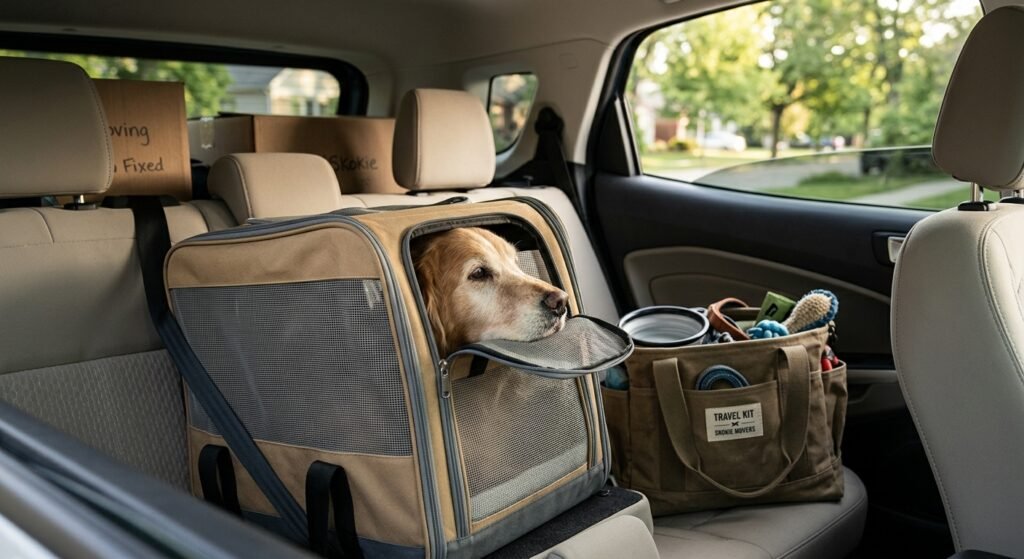
Dogs are never placed loose in the cargo area of a moving truck, and no reputable mover will load an unrestrained animal alongside furniture. A secured carrier in your own vehicle remains the standard, safest method for local relocation.
Managing Anxiety and Escape Risk on Moving Day
Open doors and unfamiliar foot traffic create the single highest escape risk of the entire move. Crating the dog in a closed room with a sign on the door before the crew arrives prevents the most common moving-day pet emergency.
Moving With Cats Locally: What to Prepare
Cats require a secured, quiet room away from the moving activity, since they’re far more prone to bolting and hiding than dogs during a disruptive move. A frightened cat can squeeze through gaps most owners wouldn’t think twice about, which is why containment strategy matters more here than for any other household pet.
Why Cats Need a Separate Safe Room Strategy
A safe room, set up in a bathroom or closed bedroom with litter, water, and a carrier, keeps a cat contained while movers go in and out of the home. This single step prevents the majority of cat-related moving day incidents.
Carrier Acclimation Before Move Day
Cats who’ve never used their carrier outside of vet visits tend to associate it with stress, which makes loading harder on moving day itself. Leaving the carrier out with treats inside for a week or two beforehand reduces that resistance significantly.
Moving With Reptiles: Temperature, Containment, and Timing
Reptiles depend on a narrow external temperature range to regulate their body heat, which makes them the most logistically sensitive pet type in any local move. Unlike dogs and cats, a reptile can’t self-regulate in a cold truck cabin or a hot car interior, so timing and containment both carry higher stakes.
Three transport priorities apply specifically to reptiles:
- Transport reptiles in a secure, ventilated container sized to prevent shifting during the ride.
- Keep the cabin temperature between 75°F and 85°F for most common pet reptiles, since swings outside that range stress their system quickly.
- Schedule reptile transport as the very last step before departure and the very first item unloaded at the new home.
Safe Temperature Ranges During Transport
A reptile transported outside its safe temperature range for more than 30 minutes faces a meaningfully higher risk of lethargy or illness after the move. This window shrinks further during Illinois winters, when a car can lose heat fast once the engine is off.
Secure Containment to Prevent Escape
A reptile’s small size and instinct to hide in tight spaces make secure, latched containment the single most important preparation step. A loose lid or an unsealed tank opening is the most common cause of a reptile going missing mid-move.
Can Movers Legally Transport Live Animals?
Most moving companies do not transport live animals as part of standard service, since animals fall outside the liability coverage that applies to household goods. This isn’t a workaround or a loophole. It’s a standard industry policy built around safety and insurance limitations.
Some movers allow exceptions for short local moves under specific conditions, but the pet owner typically retains responsibility for transporting the animal in their own vehicle.
Liability and Insurance Considerations for Pet Transport
Moving company insurance policies generally exclude live animals, meaning any injury or stress-related incident during transport is not covered under standard moving liability. This gap is exactly why responsibility for pet transport sits with the owner rather than the crew.
Understanding this upfront prevents a frustrating conversation on moving day, when there’s no time left to make alternate arrangements.
Documentation and Health Records You May Need
A local move within Illinois typically requires proof of rabies vaccination for dogs and cats, along with any municipal licensing the new address requires. Reptiles usually don’t need vaccination records, though some owners carry a recent vet checkup note for peace of mind.
Documents worth having on hand before move day:
- Current rabies vaccination certificate
- Municipal pet license or tag, updated for the new address
- Microchip registration confirmation
- A recent veterinary record, especially for older pets or reptiles with health conditions
Local Moves vs. Long-Distance Moves With Pets: Key Differences
A local move keeps pet transport logistics simple since travel time is short, while a long-distance move introduces overnight stays, multi-hour temperature exposure, and interstate documentation that local moves don’t require.
| Factor | Local Move | Long-Distance Move |
| Transport duration | Under a few hours | Often multi-day |
| Documentation needed | Local license, rabies proof | Health certificates, interstate rules |
| Temperature risk | Low to moderate | High, especially for reptiles |
| Overnight stops | Rarely needed | Common, requires pet-friendly lodging |
| Owner transport role | Always required | Always required, plus route planning |
Moving Day Timeline With Pets: Hour-by-Hour Logistics
Pets should be secured in their designated safe space at least one hour before movers arrive, and they shouldn’t be released until the truck is fully loaded and the home is empty of foot traffic. A loose structure here is where most pet-related moving day problems start.
A workable sequence looks like this:
- One hour before arrival: move pets into their crate, carrier, or safe room.
- During loading: keep the door to that room closed and clearly marked.
- Once the truck is loaded: transport pets in your own vehicle, not the moving truck.
- At the new home: set pets up in one quiet room before unpacking begins around them.
Where Pets Should Be During Loading
The safest place for any pet during loading is a closed room the crew doesn’t need to enter, ideally with a sign on the door so nobody opens it by mistake. This single habit prevents the vast majority of moving-day escape incidents.
Packing a Pet Travel Kit: Food, Water, Medication, Comfort Items
A dedicated travel kit keeps a pet’s essentials out of the general packing chaos and within arm’s reach during transport. Pack it last and keep it in the vehicle, not the moving truck.
- Enough food and water for the full moving day plus one extra day
- Any medications in their original labeled containers
- A familiar blanket, toy, or bedding item for comfort
- Waste bags, litter, or reptile substrate depending on species
- A recent photo of the pet in case of an escape during transit
Items Movers Won’t Transport Related to Pet Care
Beyond the animals themselves, movers typically won’t transport certain pet-adjacent items due to leakage, spoilage, or safety concerns. Live bait, perishable pet food, and pressurized aquarium equipment commonly fall into this category.
Knowing this ahead of time prevents a surprise refusal on moving day, when there’s little time left to make other arrangements for those items.
Temperature Control and Vehicle Safety for Animals
A parked vehicle’s interior temperature can rise or drop far faster than the outside air, which makes an idle car dangerous for any pet left inside during loading breaks. This applies to dogs and cats in extreme heat just as much as it applies to reptiles in Illinois winter cold.
Running the vehicle’s climate control before loading the pet, and never leaving an animal unattended in a parked car, removes most of this risk entirely.
Moving Multiple Pets or Multiple Species at Once
Households moving a dog, a cat, and a reptile at the same time face a logistics problem more than a transport problem, since each species needs separate containment and separate temperature handling. Staggering departure times for each pet, rather than loading them all at once, reduces stress across the board.
Keeping species separated during transport also prevents predator-prey stress responses that can spike cortisol levels in both animals, even when there’s no real danger present.
Reducing Pet Stress Before, During, and After the Move
Pets pick up on household stress days before the move happens, often showing changes in appetite, sleep, or clinginess as moving day approaches. Recognizing this early gives owners time to adjust routines gradually rather than all at once.
A few habits that reduce stress across the whole timeline:
- Keep feeding and walking schedules consistent through the final week before the move.
- Introduce packing boxes gradually instead of filling the home with them overnight.
- Maintain one familiar, unpacked room until the very last day.
- Avoid scheduling vet visits, grooming, or other disruptions during the same week as the move.
Settling Pets Into a New Home After a Local Move
A new home should be pet-proofed and set up in one contained room before the animal is released to explore the rest of the space. Rushing this step is the most common reason pets hide, act out, or attempt to escape within the first few days.
Settling-in priorities worth following in order:
- Set up food, water, and a litter box or enclosure in one designated room first
- Keep the pet confined to that room for the first day while boxes get unpacked elsewhere
- Gradually open access to additional rooms over the following days
- Watch for appetite or bathroom changes that signal lingering stress
Finding a Vet and Pet Resources Near Your New Skokie Home
Lining up a local veterinarian before the move, rather than after an emergency happens, removes one more unknown from an already busy week. Skokie, IL has several established veterinary practices and pet supply resources worth researching ahead of the move date.
Registering with a new vet early also makes transferring prior health records simpler, especially for pets with ongoing medications or chronic conditions.
Conclusion
Moving dogs, cats, and reptiles locally takes species-specific prep, clear documentation, and a plan for moving day. Every pet in your household deserves a transport plan suited to its own needs, not a generic checklist. We handle the household goods so you can focus on your pets, and ASHER MOVERS LOCAL & LONG DISTANCE is ready to make your Skokie move easier.
Frequently Asked Questions
Do movers transport pets in Skokie, IL?
Most moving companies, including standard local movers, don’t transport live animals as part of their service. Pet owners typically handle transport themselves in their own vehicle.
How do I pack a reptile for a local move?
Reptiles should travel in a secure, ventilated container kept within a safe temperature range. Transport them last and unload them first at the new home.
Can I leave my pet’s carrier in the moving truck?
No, pet carriers with animals inside should never ride in the moving truck. They belong in your own vehicle where temperature and airflow can be monitored.
What documents do I need for pets during a move?
Dogs and cats typically need rabies vaccination proof and updated municipal licensing. Reptiles usually don’t require documentation, though a recent vet note helps.
How long can a pet safely stay in a crate during a move?
Most pets handle 2 to 4 hours in a crate comfortably during a local move. Longer periods require water breaks and bathroom access.
Should I board my pet on moving day?
Boarding isn’t required but can reduce stress for anxious pets or multi-species households. It removes the animal from the loading chaos entirely.
What temperature is safe for transporting reptiles?
Most common pet reptiles need a cabin temperature between 75°F and 85°F during transport. Temperatures outside this range for more than 30 minutes increase health risks.
