
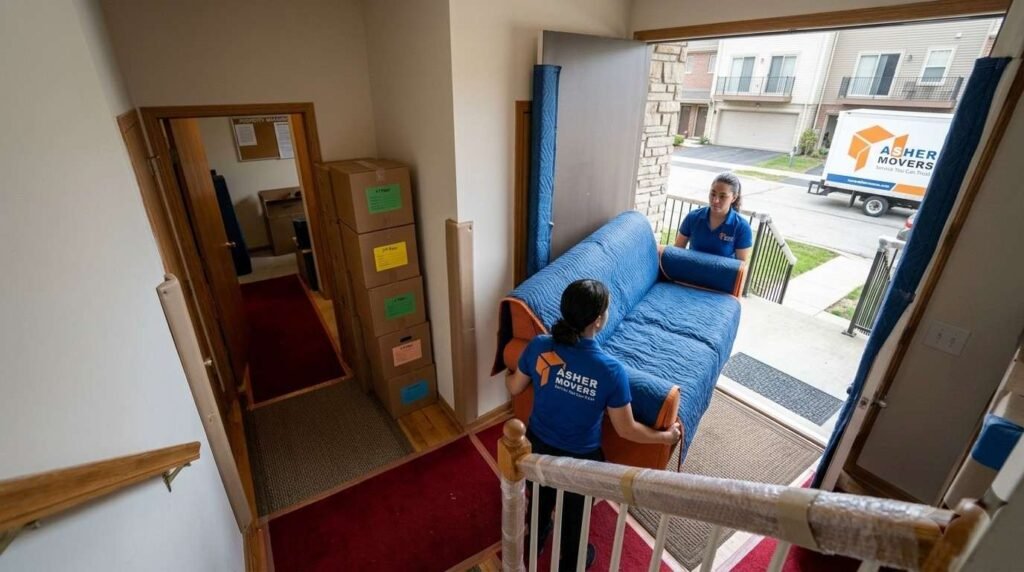
A townhouse move brings a mix of house-style square footage and apartment-style access restrictions, and that combination changes almost everything about how I plan a job. Stairs, shared walls, HOA rules, and narrow entry points all show up in ways a single-family home move rarely deals with.
Skokie has a good number of townhouse communities with tight parking and shared driveways. That layout reality creates packing and access challenges homeowners do not always see coming until moving day arrives.
I walk through how townhouse layouts change the move, what packing looks like across multiple floors, how HOA and shared-space rules factor in, the safety and liability points worth knowing, and how to actually prepare for the day itself.
How a Townhouse Move Differs From a House or Apartment Move
A townhouse sits in a strange middle ground. It has the multiple floors of a single-family home but the shared walls, common areas, and sometimes the parking restrictions of a condo or apartment building.
That mix means movers plan for two sets of problems at once instead of one.
Multi-Level Layouts and Shared Walls
Most townhouses run two or three stories, with bedrooms upstairs, living space in the middle, and sometimes a finished basement or garage below. Every extra level adds more stairs, more turns, and more chances for furniture to get stuck on a landing.
Shared walls also mean noise and vibration during the move affect neighbors directly. A townhouse is a multi-story attached residential unit that shares one or more walls with adjoining properties. That shared-wall design is exactly why movers slow down on stairwells and landings a dropped dresser doesn’t just damage your unit, it can rattle the wall your neighbor is sitting against.
Stairs, Narrow Hallways, and Access Points
Interior stairs in townhouses tend to be steeper and narrower than a standard single-family staircase. Hallways connecting rooms are often tighter too, especially near the kitchen or a second-floor laundry closet.
I measure doorways and stair turns before moving day whenever possible. It saves time and prevents scraped walls or damaged furniture corners once the truck is loaded and the clock is running.
Packing Considerations Unique to Townhouses
Packing for a townhouse isn’t just about box count. It’s about sequencing everything so the right items come down the right staircase at the right time.
Fragile and Bulky Items in Tight Spaces
Townhouses often have narrower staircases than detached homes, which makes moving large furniture and fragile items genuinely harder. Mirrors, glass tabletops, and framed art need extra padding because they get turned sideways more often going down tight stairwells.
I pack bulky furniture last and break it down wherever possible. A disassembled bed frame clears a narrow stairwell corner. A fully assembled one does not.
Multi-Floor Packing Strategy
I label every box with its destination floor, not just the room name. “Second Floor Bedroom 2” moves faster through a stairwell than a vague “Bedroom” label does, especially when three bedrooms sit on the same level.
Packing floor by floor, top to bottom, keeps boxes from piling up at the base of the stairs. That single habit cuts a lot of the bottleneck problems townhouse moves tend to create.
Navigating Shared Spaces, HOA Rules, and Parking Restrictions
Townhouse communities are usually governed by an HOA, and that governance often extends to move-in and move-out logistics. Ignoring those rules causes delays nobody planned for.
Elevator and Stairwell Booking
Some townhouse complexes with attached common buildings require booking a shared elevator or loading stairwell in advance. Skipping that step can mean showing up on moving day with a full truck and no legal way to get furniture inside.
I always confirm booking requirements with the HOA or property manager days ahead of time. It’s a five-minute phone call that prevents a multi-hour delay.
Moving Truck Parking and Loading Zones
Many Skokie townhouse developments have narrow streets, shared driveways, or designated visitor parking only. A moving truck that can’t get close to the front door adds a long carry distance for every single box.
I check parking rules and reserve loading zones ahead of the move date whenever the community requires it. Reserved parking directly outside the unit turns a slow move into a fast one.
Safety and Liability Factors in Townhouse Moves
Shared walls and common areas raise the stakes on damage. A scuff on a hallway wall in a shared entryway isn’t a private matter it can involve the HOA, a neighbor, or a liability claim.
Protecting Walls, Railings, and Common Areas
I use furniture pads, corner guards, and floor runners on staircases and in shared hallways before any large item moves through. That protection matters more in a townhouse than a detached house simply because more surfaces belong to someone else too.
Railings take a beating during moves. Wrapping them before the first box goes down the stairs prevents a scratch that turns into an awkward conversation with a neighbor later.
Prohibited and Restricted Items to Prepare For
Movers can’t legally transport certain items regardless of home type, and townhouse residents run into this the same as anyone else. Propane tanks, aerosol cans, paint thinners, and other flammable materials are commonly restricted by moving companies due to safety regulations.
I go through a prohibited items list with every customer before packing day. Finding out on move-day that a box of pool chemicals can’t go on the truck creates a scramble nobody wants.
How to Prepare for Moving Day in a Townhouse
Preparation for a townhouse move looks a little different because timing and coordination matter more than they do in a detached single-family home.
Timing, Scheduling, and Coordinating With Neighbors
I recommend telling immediate neighbors the move date ahead of time, especially in attached units. It gives them a heads-up about noise and lets everyone plan around shared driveway or parking access that day.
Scheduling the move for a weekday morning, when possible, tends to reduce competition for shared parking and loading zones. That small scheduling choice often makes the biggest difference in how smoothly the whole day goes.
Conclusion
Townhouse moves combine multi-level layouts, shared walls, and HOA rules into one relocation. Packing strategy, access planning, and liability awareness all shift because of that mix.
Skokie’s townhouse communities add their own parking and access quirks on top of the usual moving-day pressure. Planning around those specifics prevents most of the common delays.
We at Asher Movers Local & Long Distance handle townhouse moves across Skokie every week, and we plan around stairs, HOA rules, and tight parking before the truck ever shows up. Reach out and we’ll map out your move the right way from day one.
Frequently Asked Questions
What makes a townhouse move different from a regular house move?
A townhouse move deals with multi-level layouts, shared walls, and often HOA-managed common areas that a detached house doesn’t have. Stairs, narrow hallways, and neighbor coordination all factor in more heavily.
Do townhouse moves take longer than apartment moves?
Townhouse moves often take longer than single-floor apartment moves because of multiple staircases and floor-by-floor packing. The added levels mean more trips up and down for the same number of boxes.
Do I need to notify my HOA before moving day?
Many HOAs require advance notice for moves, especially if shared elevators, loading docks, or reserved parking are involved. Checking HOA rules a few days ahead prevents last-minute access problems.
What items can’t movers transport during a townhouse move?
Movers commonly restrict flammable, hazardous, or pressurized items like propane tanks, aerosol cans, and paint thinners regardless of home type. Confirming the prohibited items list before packing day avoids delays.
How do I protect my walls and stairs during a townhouse move?
Furniture pads, corner guards, and floor runners on stairs and hallways protect shared walls and railings during the move. Wrapping tight corners and steep stairwells before loading day prevents most common damage.
Should I tell my neighbors before a townhouse move?
Telling immediate neighbors ahead of time is a smart move in attached units, since noise and shared driveway access affect them directly. It also helps avoid parking conflicts on moving day.
