
I’ve packed more moving trucks than I can count, and the single biggest regret I hear from clients always sounds the same. A first night essentials box is a separate, clearly labeled container that holds everything a household needs for the first 24 to 48 hours in a new home, packed so it never goes into deep storage inside the moving truck. Without one, you’re digging through forty sealed boxes at midnight looking for a toothbrush.
Skipping this step turns an exciting moving day into an exhausting scavenger hunt. I’ve watched families in Skokie, IL arrive at 9 PM with nowhere to sleep comfortably because the sheets were buried under three other boxes.
This guide covers what actually belongs in your box, room-by-room essentials from toiletries to electronics, special considerations for kids and pets, what movers legally cannot transport, and how to label and time your packing so moving day goes smoothly. We built this around real move patterns, not generic checklists.
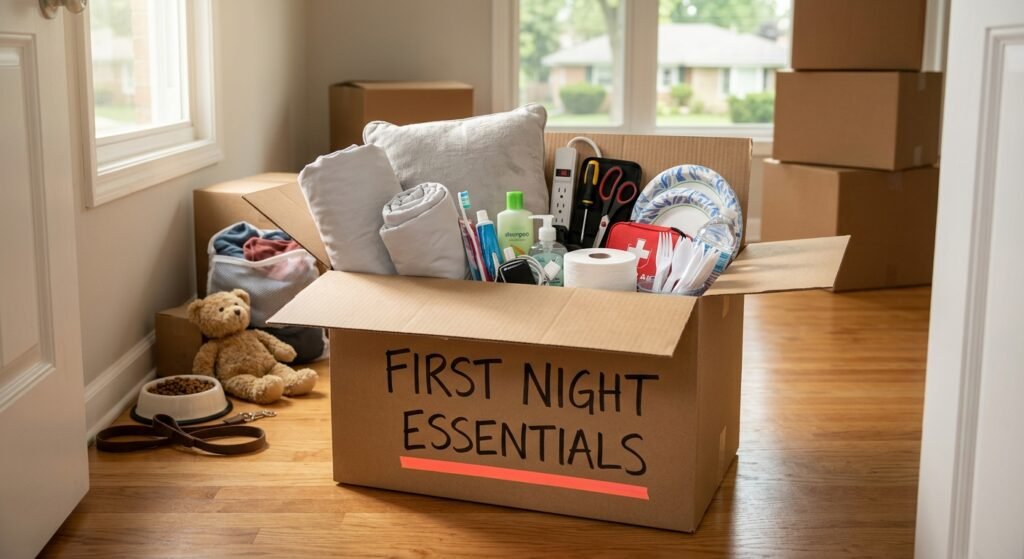
What Is a First Night Essentials Box?
An essentials box is a dedicated container packed last and unloaded first, holding only what your household needs before the rest of your belongings get unpacked. I always tell clients to treat it like a 48-hour travel bag, not a moving box. It stays with you in the car or gets flagged clearly for movers to place at the front of the truck.
Why Movers Recommend Packing One Separately
Movers load trucks in reverse order of how you’ll unload them, which means anything packed first gets buried deepest. Keeping your essentials box out of that sequence, and ideally transported separately, guarantees it’s the first thing you touch at the new address.
Why You Need an Essentials Box for Moving Day
Moving day rarely goes exactly on schedule, and an essentials box protects you from the gap between arrival and full unpacking. Households that pack a dedicated first night box report far less stress and far fewer late-night store runs on moving day, based on patterns I’ve seen across hundreds of local and long-distance moves. The logic is simple: you’re guaranteed to be exhausted, your new kitchen is in boxes, and your bathroom has nothing in it.
I’ve seen moves delayed by hours because a client couldn’t locate the box with phone chargers, and the driver couldn’t legally wait around while they searched the truck. Every item buried in a sealed box becomes inaccessible until full unpacking begins, sometimes days later for long-distance moves with storage-in-transit.
What Happens When You Don’t Pack One
Without a dedicated box, families end up unsealing random boxes labeled “bedroom” or “kitchen” looking for essentials, which creates unnecessary mess during an already overwhelming evening. This single mistake accounts for more first-night complaints than almost any other packing error.
Essential Toiletries and Personal Care Items
A functional toiletries kit covers the basics: toothbrush, toothpaste, soap, shampoo, deodorant, and a small towel for each household member. I recommend travel-sized versions if you’re flying for a long-distance move, and full-sized bottles for local moves where space isn’t as tight.
Contact lens solution, glasses, and any daily personal care items belong here too, since these are easy to forget until the exact moment you need them. Toilet paper for the new bathroom is a small detail people consistently overlook.
Bedding and Sleep Items for Night One
Pack one full bedding set per person, including sheets, a pillow, and a blanket or light comforter depending on the season. I tell clients in Skokie, IL to think about late-fall and winter moves specifically, since an unheated truck can leave bedding cold even on a short drive.
Air mattresses are worth packing if your bed frame won’t be assembled the same night, especially for long-distance moves where furniture arrives separately from boxes. A rolled sleeping bag works as a lightweight backup for kids who fall asleep before the real beds get set up.
Clothing to Pack for the First 24–48 Hours
Pack a full change of clothes per person for two days, plus pajamas and a light jacket regardless of season, since moving trucks and new homes are unpredictable temperature-wise. Include any work or school clothes needed the next morning if your move happens midweek.
I always suggest a separate small bag for this inside the essentials box, so clothing doesn’t get crushed under heavier items like shoes or electronics. Comfortable shoes for moving day itself, not the shoes you plan to unpack later, belong in this same bag.
Kitchen and Food Essentials Box Checklist
A kitchen essentials box needs paper plates, plastic utensils, cups, a few snacks, bottled water, and a basic coffee or tea setup if that’s part of your morning routine. This isn’t about cooking a full meal; it’s about not relying on delivery apps for three straight days while the kitchen gets unpacked.
I recommend packing a single pot, one knife, a can opener, and a dish towel even in the essentials box, since these small tools solve surprisingly common first-night problems. A trash bag or two for immediate cleanup also belongs here, because moving always generates unexpected garbage before bins get unpacked.
Pet food and bowls deserve their own small section inside this box if you’re bringing animals, since pets get just as disoriented by a new home as people do. Baby food and bottles follow the same logic for households with infants.
| Kitchen Essentials Box Contents | Why It Matters |
| Paper plates, cups, plastic utensils | Avoids unpacking full kitchen sets night one |
| Snacks and bottled water | Covers hunger before groceries are stocked |
| Coffee/tea basics | Maintains routine, reduces stress |
| One pot, one knife, can opener | Handles basic food prep needs |
| Trash bags | Manages immediate cleanup |
Important Documents to Keep With You, Not the Movers
Lease agreements, closing documents, passports, birth certificates, insurance paperwork, and your mover’s bill of lading should travel with you personally, never inside the truck. I’ve seen clients panic on move-in day because a critical document was packed in a box destined for storage three states away.
Why Movers Won’t Transport These Items
Moving companies classify important original documents as items the customer should retain direct control over, since the moving industry generally excludes cash, jewelry, and irreplaceable documents from liability coverage inside the truck, according to Federal Motor Carrier Safety Administration guidance. This isn’t a transport restriction so much as a liability and practicality standard most reputable movers follow.
Electronics, Chargers, and Tech Essentials
Phone chargers, laptop chargers, a portable battery pack, and headphones belong in the essentials box, packed somewhere easy to locate rather than buried with other electronics. I’ve watched grown adults nearly cry over a missing charger at 11 PM in an unfamiliar house.
A small power strip is worth including too, since new homes rarely have outlets exactly where you need them on night one. If you rely on a specific device for work the next morning, pack it here rather than trusting it survives in a labeled “office” box somewhere in the truck.
Medications and Health Essentials
Every prescription medication, along with a basic first aid kit containing bandages, pain relievers, and any allergy medication, needs to travel in the essentials box or with you directly. I tell every client this is non-negotiable, regardless of move distance.
Prescription Handling Rules During a Move
Movers typically will not accept liability for prescription medications transported inside the truck, which means these items should always stay in a personal bag rather than a cardboard box. This matches the same liability logic applied to important documents and valuables.
Tools and Quick-Fix Items for Moving Day
A basic tool kit with a screwdriver, box cutter, scissors, tape, and a flashlight solves most small problems that come up during unpacking. I include zip ties and a permanent marker too, since relabeling or securing a loose box happens more often than people expect.
Batteries in a few common sizes round this out, since flashlights and remote controls have a way of running dry exactly when you need them most.
Essentials for Packing Kids’ and Pets’ First Night Needs
Kids need a familiar comfort item, a favorite toy, pajamas, and any bedtime routine essentials packed where you can reach them without digging through boxes. Moving disrupts a child’s sense of stability more than most parents anticipate, and familiar objects genuinely help.
Pets need food, a bowl, a leash, waste bags, and any medication, along with a familiar blanket or toy that smells like home. I recommend keeping pets in a single room with their essentials box during the actual move-in, since open doors and unfamiliar furniture movement create real escape risks.
For families managing both kids and pets simultaneously, I suggest two separate smaller boxes rather than combining everything into one, since searching through pet supplies while a toddler needs something immediately creates unnecessary chaos.
| Household Member | Core Essentials | Packing Priority |
| Children | Comfort item, pajamas, bedtime routine items | High |
| Pets | Food, bowl, leash, waste bags, medication | High |
| Infants | Diapers, formula, bottles, familiar blanket | Critical |
Cleaning Supplies for Your First Night in a New Home
A roll of paper towels, basic all-purpose cleaner, dish soap, and a sponge handle most immediate messes that show up before the full cleaning supply box gets unpacked. I always recommend wiping down kitchen counters and bathroom surfaces before using them, regardless of how clean the home looked during the walkthrough.
Hand soap for the bathroom sink is a small detail that gets overlooked constantly, right alongside toilet paper.
How to Label and Color-Code Your Essentials Box
I recommend bright-colored tape or a visible marker label reading “OPEN FIRST” on every side of the box, not just the top, since boxes get stacked and rotated constantly during loading. Some households use a specific color, like neon orange, reserved exclusively for essentials boxes so movers and family members both recognize it instantly.
Why Labeling Prevents Moving Day Delays
Unlabeled boxes get treated like every other box in the truck, which means they get loaded first and unloaded last. A clearly labeled essentials box signals to your moving crew that it needs placement at the truck’s rear or, better yet, transport in a personal vehicle instead.
Items Movers Cannot Pack or Transport (Non-Allowables)
Professional movers are prohibited from transporting hazardous materials, flammable liquids, perishable food, live plants, and certain chemicals due to federal transportation safety regulations. This includes items like propane tanks, paint thinner, aerosol cans, and fireworks, which fall under DOT hazardous materials regulations.
| Category | Examples | Why Excluded |
| Flammables | Propane, gasoline, paint thinner | Fire/explosion risk in transit |
| Perishables | Fresh/frozen food, refrigerated items | Spoilage, no climate control |
| Hazardous chemicals | Pool chemicals, pesticides, ammunition | Safety regulation compliance |
| Live items | Plants, animals | Welfare and liability concerns |
How This Affects What Goes in Your Essentials Box
Since movers won’t transport these categories at all, your essentials box becomes the natural home for any small quantities of personal care items that might otherwise raise questions, like nail polish remover or aerosol hairspray, provided they’re in reasonable personal-use quantities.
One Box or Several? How to Organize Your Essentials Boxes
For a single person or couple, one well-organized box usually covers everything. Families of four or more typically need two to three smaller boxes, separated logically, like one for toiletries and clothing, one for kitchen and cleaning items, and one dedicated to kids or pets.
I generally advise against one giant box, since it becomes just as hard to search through as any other moving box once it’s full. Smaller, clearly labeled boxes beat one oversized container every time.
Essentials Box Packing Timeline — When to Pack It
I recommend packing your essentials box last, the night before or morning of the move, so it captures items you’ve been using right up until moving day. Packing it too early means you’ll end up pulling items back out, which defeats the entire purpose.
Set it aside in a clearly marked spot, like by the front door, so it doesn’t accidentally get loaded with everything else. This single habit prevents more moving day frustration than almost any other step in this guide.
Common Essentials Box Mistakes to Avoid
The most frequent mistake I see is packing the essentials box too early and then adding it to the truck anyway, where it gets buried like everything else. A close second is forgetting to tell every household member where the box is located, leading to confused searching exactly when everyone’s most tired.
Overpacking the box until it’s too heavy to carry comfortably is another common issue, along with forgetting a can opener, which sounds minor until you’re staring at an unopenable can of soup at 10 PM.
Conclusion
Your first night essentials box bridges the gap between loading the truck and settling into your new home comfortably. We’ve walked through toiletries, bedding, kitchen basics, documents, and the items movers legally can’t transport.
Packing deliberately, labeling clearly, and timing it right turns a chaotic first night into a manageable one. We’re here at ASHER MOVERS LOCAL & LONG DISTANCE to help you plan every part of your move with confidence.
Frequently Asked Questions
What should be in a first night box when moving?
A first night box should include toiletries, bedding, a change of clothes, phone chargers, medications, and basic kitchen items like paper plates and snacks. These cover the first 24 to 48 hours before full unpacking begins.
How big should my essentials box be?
One medium-sized box per person is usually sufficient, though families often split essentials into two or three smaller boxes by category. Avoid oversized boxes that become too heavy to carry easily.
Should each family member have their own essentials box?
Individual bags for clothing and personal items work well within one shared household essentials box. Larger families sometimes separate kids’ and pets’ essentials into their own smaller boxes for easier access.
Can movers transport my essentials box with everything else?
Movers can transport your essentials box, but it should be clearly labeled and loaded last so it’s unloaded first. Valuables, medications, and important documents should travel with you personally instead.
What should I pack for kids on moving night?
Pack a comfort item, pajamas, a favorite toy, and any bedtime routine essentials for each child. Familiar objects help reduce the stress moving causes for younger household members.
Do I need an essentials box for a local move too?
Yes, even short local moves benefit from an essentials box since unpacking rarely finishes the same day. The box guarantees access to basics regardless of how long full unpacking takes.
What items should never go inside the moving truck?
Flammable materials, perishable food, hazardous chemicals, and valuables like cash or jewelry should never go in the moving truck. These items should travel with you directly or be disposed of before moving day.
