
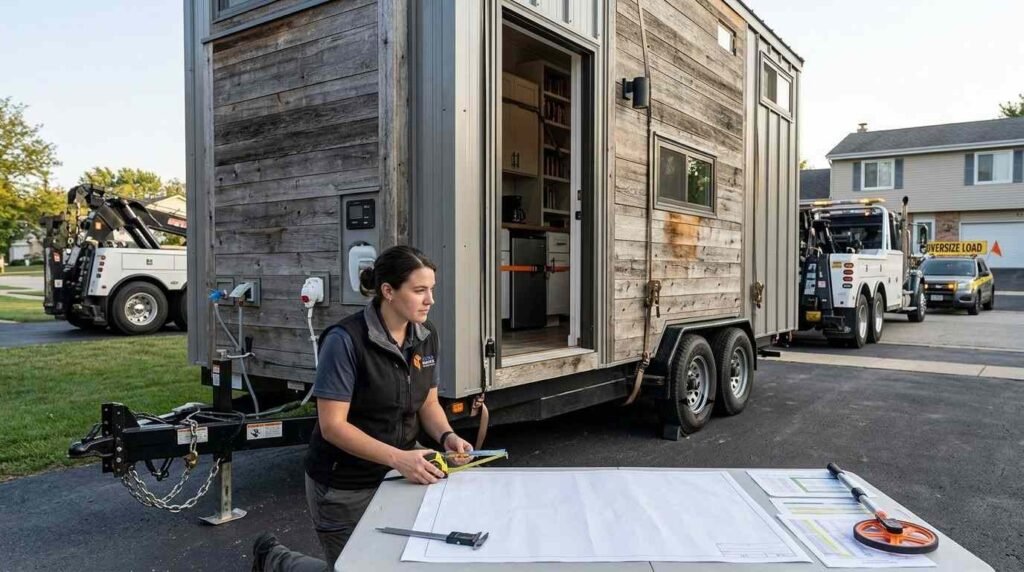
A tiny house move in Skokie isn’t just a bigger version of a regular local move. I look at weight distribution, road permits, and utility disconnection before a rig ever leaves the driveway. Standard moving trucks don’t apply here, and the rules shift the moment a structure sits on wheels.
Skokie’s narrow residential streets and older bridge clearances complicate a move that already carries structural risk. Skipping a single inspection step can delay transport day for hours or trigger a fine from local authorities.
I walk through what separates a tiny house move from a typical relocation, how to prepare the structure for transport, which items movers won’t load, the equipment and route planning that keeps the trip legal, and the insurance details that protect the home once it’s rolling.
What Makes a Tiny House Move Different From a Standard Local Move
A tiny house move involves relocating an entire structure on a trailer chassis, not just packing boxes into a truck. The distinction matters because weight, height, and road classification all come into play before the vehicle moves an inch.
Most tiny homes sit between 8 and 13 feet tall once loaded on their trailer. That height puts them close to or over standard clearance limits on older Skokie streets, so I check clearance data before mapping any route.
Weight Distribution and Structural Stress on the Move
Weight distribution is the balance of load across a tiny house trailer’s axles during transport. Uneven weight causes trailer sway, tire blowouts, and stress cracks in the home’s framing.
I check appliance placement, water tank levels, and furniture anchoring before transport day. A washing machine sitting too far toward the rear axle shifts the whole trailer’s center of gravity and makes highway speeds unsafe.
Empty water tanks and secured cabinetry reduce shifting weight during transit. This single step prevents most of the structural damage tiny house movers report after a rushed loadout.
Permits, Escorts, and Skokie Road Regulations
Illinois requires oversize load permits for structures exceeding standard width and height thresholds, and Skokie enforces local road restrictions on top of state rules. A tiny house wider than 8.5 feet or taller than 13.5 feet typically needs a permit before it touches public roads.
I confirm permit requirements with local authorities ahead of every move, since thresholds shift based on trailer configuration. Missing this step on moving day means turning the rig around, and that costs both time and money.
Preparing a Tiny House for Transport Day
Transport day prep determines whether the structure arrives intact or shows up with cracked drywall and shattered dishes. I treat this stage as the single highest-leverage part of the entire move.
Every loose item inside the house becomes a projectile once the trailer hits a pothole. Securing the interior isn’t optional it’s the difference between a smooth delivery and a damage claim.
Securing Interior Belongings and Fixed Furniture
I anchor furniture, appliances, and cabinetry with ratchet straps and corner braces before the tow vehicle starts moving. Loose furniture inside a tiny house shifts violently during turns and sudden stops, and that shift stresses interior walls that weren’t built for repeated impact.
Dishware, decor, and small appliances get packed into boxes and wedged tight, not left on open shelves. Open shelving looks fine parked in a driveway, but it fails within the first mile of transit.
Utility Disconnection and Hitch Inspection
Water lines, propane connections, and electrical hookups all need full disconnection before the house leaves its foundation. A connection I miss here becomes a leak, a spark, or a hitch failure once the trailer is moving at speed.
I inspect the hitch, safety chains, and brake lights as a final step before departure. This inspection catches wiring and coupling issues while the house is still stationary, not after it’s merging onto a Skokie arterial road.
Items Movers Cannot Transport With a Tiny House
Certain items are legally restricted or too dangerous to transport inside a moving tiny house, regardless of how carefully the home is loaded. I flag these categories early so customers aren’t caught off guard on transport day.
Skipping this step creates real safety risk given how compact tiny house interiors already are. A single prohibited item can void insurance coverage or delay the entire move.
Hazardous Materials and Flammable Items
Hazardous materials are substances capable of combustion, chemical reaction, or toxic exposure during transport. Paint thinners, aerosol cans, cleaning chemicals, and pool supplies all fall under this restriction across most moving companies.
I ask customers to dispose of or separately transport these items well before moving day. A cracked aerosol can inside a jostling trailer creates a real fire hazard, and no mover accepts that liability.
Propane Tanks and Fuel-Powered Appliances
Propane tanks and any appliance running on stored fuel stay off the transport list entirely. Many tiny houses run on propane for cooking and heating, which means the tank itself needs disconnection and separate transport, not a ride inside the moving structure.
I coordinate with customers to arrange proper propane tank handling ahead of time. This keeps the move compliant with Illinois transport regulations and avoids a last-minute scramble at the loading point.
Choosing the Right Equipment and Route for a Local Tiny House Move
The right equipment and a carefully mapped route prevent the two most common tiny house moving failures: mechanical breakdown and route obstruction. I treat equipment selection and route planning as one connected decision, not two separate steps.
A tow vehicle rated below the trailer’s actual loaded weight strains under highway conditions and risks transmission damage. Matching capacity to load weight isn’t a suggestion it’s a hard requirement.
Trailer Rigs, Pilot Cars, and Local Escort Requirements
Heavier or oversized tiny house loads often require a pilot car to precede the rig and flag hazards in real time. Illinois regulations set specific thresholds where an escort vehicle becomes mandatory rather than optional.
I confirm escort requirements against the exact dimensions of each tiny house before quoting a local move. This keeps the move compliant and avoids fines that stack up fast on oversize loads.
Mapping Low-Clearance Bridges and Narrow Streets in Skokie
Skokie’s residential grid includes several older overpasses and narrow side streets that weren’t built with oversize trailers in mind. I map the full route in advance and cross-reference clearance heights against the loaded trailer’s exact dimensions.
A single missed low-clearance bridge turns into a hard stop mid-route, sometimes with no way to back out safely. Route mapping happens before the tow vehicle starts the engine, not after.
Insurance, Liability, and Damage Prevention for Tiny House Moves
Insurance coverage for a tiny house move works differently than standard household goods coverage, mostly because the “cargo” is also a structure. I walk customers through what’s actually covered before the trailer leaves the driveway.
Standard released-value coverage often falls short for a structure worth tens of thousands of dollars. Understanding the gap now prevents a painful conversation after a damage claim.
What Standard Moving Insurance Covers vs. Excludes
Basic mover liability typically covers a fraction of a home’s actual value per pound, which works fine for furniture but falls short for a full tiny house structure. I recommend supplemental coverage specifically rated for structural transport whenever the home’s value exceeds standard liability limits.
Full-value protection costs more upfront but closes the gap between what a mover owes and what repairs actually cost. That difference matters when the “item” being moved is someone’s entire home.
Pre-Move Documentation and Photo Inspection
I photograph every exterior panel, window, and structural joint before the tiny house leaves its current location. This documentation becomes the reference point for any damage claim filed after delivery.
A pre-move inspection report protects both the customer and the moving company from disputed claims. Skipping this step leaves both sides guessing about what damage existed before transport even started.
Conclusion
A tiny house local move in Skokie demands more precision than a standard relocation, from weight distribution and permits to prohibited items and route mapping. Each specialty consideration protects the structure and the people driving it.
Insurance and pre-move documentation close the loop, giving both the homeowner and the mover a clear record if anything goes wrong. Preparation at every stage prevents the delays that catch people off guard.
We handle these specialty moves at ASHER MOVERS LOCAL & LONG DISTANCE with the equipment, permits, and inspection process this kind of move requires. Reach out before transport day and we’ll map the whole process with you.
Frequently Asked Questions
Do I need a special permit to move a tiny house locally in Skokie?
Yes, tiny houses exceeding standard width or height thresholds need an oversize load permit in Illinois. I confirm exact requirements against Skokie’s local road regulations before every move.
Can movers transport a tiny house with propane still connected?
No, propane tanks and fuel-powered appliances must be disconnected and transported separately from the structure. This keeps the move compliant with transport safety regulations.
What items are movers not allowed to pack inside a tiny house during transport?
Movers cannot transport hazardous materials, aerosol cans, flammable liquids, or fuel tanks inside a moving tiny house. These items create fire and safety risks in a compact, jostling structure.
Does standard moving insurance cover a tiny house’s full value?
Standard released-value coverage typically covers only a fraction of a tiny house’s actual worth. I recommend supplemental structural coverage rated for the home’s full value.
How far in advance should I prepare a tiny house for a local move?
I recommend starting utility disconnection, interior securing, and permit confirmation at least one to two weeks before transport day. This buffer allows time to resolve any permit or route issues.
Why does route mapping matter more for tiny house moves than regular moves?
Tiny houses on trailers often exceed standard height and width limits, making low-clearance bridges and narrow streets a real obstruction risk. I map the full route in advance to avoid mid-move stops.
Is a pilot car required for every local tiny house move?
Not always pilot car requirements depend on the trailer’s exact width, height, and length against Illinois thresholds. I check these dimensions against local regulations before confirming escort needs.
