
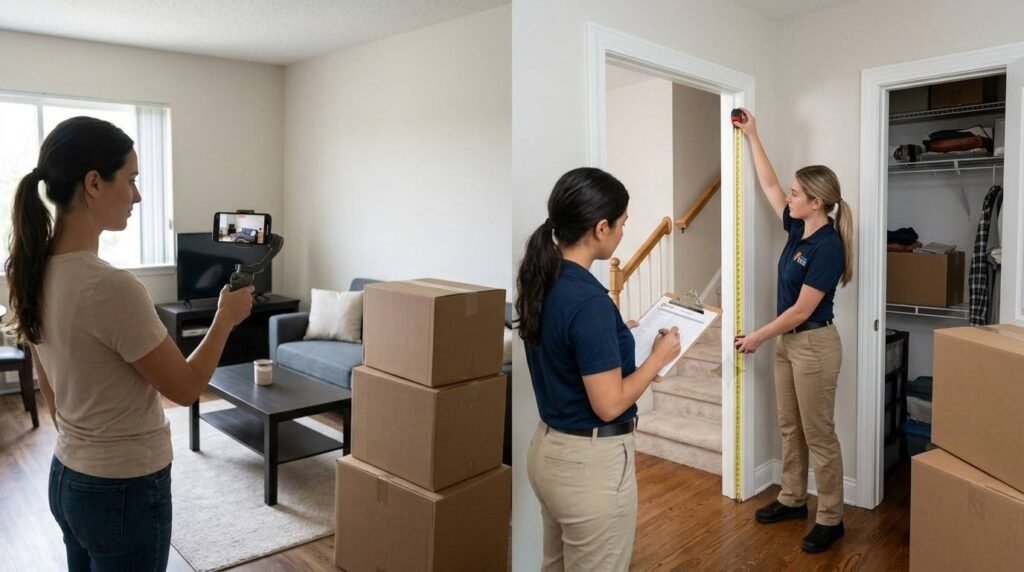
A virtual estimate uses video or photos to price your move, while an in-home estimate sends a person to walk through your home in person. Both get you a number. Only one of them tends to get you the RIGHT number, and which one that is depends heavily on what you’re actually moving.
I’ve watched customers pick the faster option and regret it on moving day when the truck showed up too small. And I’ve watched other customers wait around for an in-home visit they honestly didn’t need. Neither mistake is fun, and both are avoidable once you know how each estimate type actually works.
Here’s what I’m covering: how a virtual estimate works and what it actually involves, how an in-home estimate compares, where accuracy tends to break down between the two, and which one fits your specific move better. I’ll also walk through how local movers in Skokie, IL typically handle this decision.
What a Virtual Estimate Actually Involves
A virtual estimate is a remote moving quote where you show your belongings to a moving company representative through video call, photos, or a self-guided app walkthrough instead of an in-person visit. The estimator asks questions, notes furniture and box counts, and flags anything unusual as you go.
Most virtual estimates take 15 to 30 minutes. You walk room to room with your phone camera, and the estimator tags items as you show them.
I like virtual estimates for their speed. You don’t schedule around someone else’s calendar, and you get a quote back same-day in most cases. The tradeoff is that the estimator can’t open closets you forget to show, can’t feel the weight of that “small” dresser that’s actually solid oak, and can’t catch the extra boxes stacked behind your couch.
Common virtual estimate formats:
- Live video call walkthrough
- Pre-recorded video upload
- Photo-based inventory submission
- Self-service app with guided prompts
What an In-Home Estimate Actually Involves
An in-home estimate is an on-site visit where a company representative physically walks through your home, inspects each room, and builds a moving quote based on direct observation of your belongings. This includes attics, basements, garages, and storage areas that often get missed on a video call.
The estimator measures, counts, and asks about anything packed away that a camera wouldn’t catch. They’ll ask about stairs, narrow hallways, and parking access too, because those affect labor time and truck placement.
This process runs 30 to 60 minutes depending on home size. It costs you a scheduled appointment, sure. But the walkthrough catches things a phone camera just doesn’t see clearly, like the actual density of a packed closet or the true weight of that “one more box” in the garage.
Accuracy Differences Between the Two Estimate Types
In-home estimates are generally more accurate because the estimator directly inspects every item, closet, and storage area rather than relying on what the customer chooses to show on camera. This matters most for larger households, homes with a lot of storage, or moves involving specialty items like pianos or gun safes.
Virtual estimates work fine for smaller, simpler moves. A studio apartment with standard furniture rarely hides surprises that a video call would miss.
The real accuracy gap shows up in what I’d call “hidden volume.” Attics, crawl spaces, and garages get skipped constantly during video walkthroughs, not because customers are hiding anything, but because nobody thinks to show the movers a shelf of holiday decorations tucked in the rafters.
Binding vs non-binding matters here too. A binding estimate locks in your price regardless of what happens on move day, and it typically requires the more thorough in-home process to qualify. A non-binding estimate can shift once movers see your actual inventory, which is more common with virtual quotes.
When a Virtual Estimate Makes Sense for Your Move
Virtual estimates make the most sense for studio apartments, one-bedroom homes, and moves with standard furniture and no unusual storage situations. If your move is straightforward, a camera captures everything an estimator needs.
They’re also the better fit when your schedule is tight. Not everyone can carve out an hour for someone to walk through their home mid-week, and a 20-minute video call solves that problem completely.
I recommend virtual estimates for:
- Studio or one-bedroom apartments
- Minimal furniture, no specialty items
- Renters without attics, basements, or storage units
- Anyone needing a fast quote turnaround
When an In-Home Estimate Is the Better Choice
Larger households, homes with attics or basements full of stored items, and moves involving specialty items like pianos, safes, or fine art all benefit from an in-home estimate. The physical walkthrough catches volume and complexity that a screen just can’t communicate accurately.
Multi-story homes also do better with in-home visits. Stairs, narrow doorways, and tricky parking situations all affect labor time, and an estimator standing in your driveway sees that instantly.
I push customers toward in-home estimates when:
- The home has 3+ bedrooms or significant storage
- Specialty or high-value items are involved
- Access is tricky (stairs, tight hallways, limited parking)
- A binding, guaranteed price matters more than speed
How Skokie Movers Handle Estimates for Local Moves
Local movers serving Skokie, IL typically offer both estimate types and help customers choose based on home size and moving complexity during the initial phone conversation. Most companies default to virtual for smaller apartments and recommend in-home visits once a customer mentions storage areas or specialty items.
Skokie’s mix of apartment buildings and single-family homes means both estimate types stay in regular use here. A move out of a North Shore apartment building looks nothing like a move out of a four-bedroom house near Skokie’s residential streets, and the estimate process should reflect that difference.
We walk every customer through both options before booking anything. Getting the estimate type right upfront avoids the price surprises that come from an inventory that grew between the quote and the actual moving day.
Conclusion
Virtual and in-home estimates solve the same problem through different levels of detail. Smaller, simpler moves lean virtual, while larger homes and specialty items call for an in-home walkthrough.
Picking the right one upfront protects your budget and your moving day timeline. Accuracy here saves real headaches later.
We help Skokie movers choose the right estimate type from the first phone call. Contact Asher Movers Local & Long Distance today to book an estimate that actually matches your move.
Frequently Asked Questions
Is a virtual estimate as accurate as an in-home estimate?
A virtual estimate can be accurate for small, simple moves, but it’s generally less precise than an in-home visit. Hidden storage areas and specialty items are the biggest accuracy gaps.
How long does an in-home estimate take?
An in-home estimate typically takes 30 to 60 minutes depending on your home’s size. Larger homes with more storage areas take longer to walk through.
Can I get a binding price from a virtual estimate?
Some companies offer binding virtual estimates, but it’s less common than with in-home visits. In-home walkthroughs give estimators the full picture needed to guarantee a price confidently.
What should I show during a virtual estimate?
Walk through every room, including closets, attics, basements, and garages. Skipping storage areas is the most common reason virtual estimates end up inaccurate.
Do in-home estimates cost extra?
No, in-home estimates are typically free just like virtual ones. You’re only trading a scheduled appointment for a more accurate quote.
Which estimate type is better for a studio apartment?
A virtual estimate usually works well for studio apartments since there’s less to inspect and fewer hidden storage areas. It also gets you a quote faster.
What happens if my inventory changes after the estimate?
Your final price can shift if you add or remove items after the estimate, especially with non-binding quotes. Tell your moving company about any changes as soon as possible to avoid moving-day surprises.
