
A DIY local move is a relocation where I handle the packing, loading, driving, and unloading myself instead of hiring a full-service moving company. It works best for small households, short distances, and movers with flexible schedules and physical capacity for heavy lifting.
Skokie renters and homeowners ask this question every spring and fall. Getting the answer wrong costs real money and real time.
This guide covers how to tell if your move is a good DIY candidate, what it actually costs compared to hiring movers, the packing rules you’re responsible for, truck rental sizing, and the specific situations where doing it yourself stops making sense.
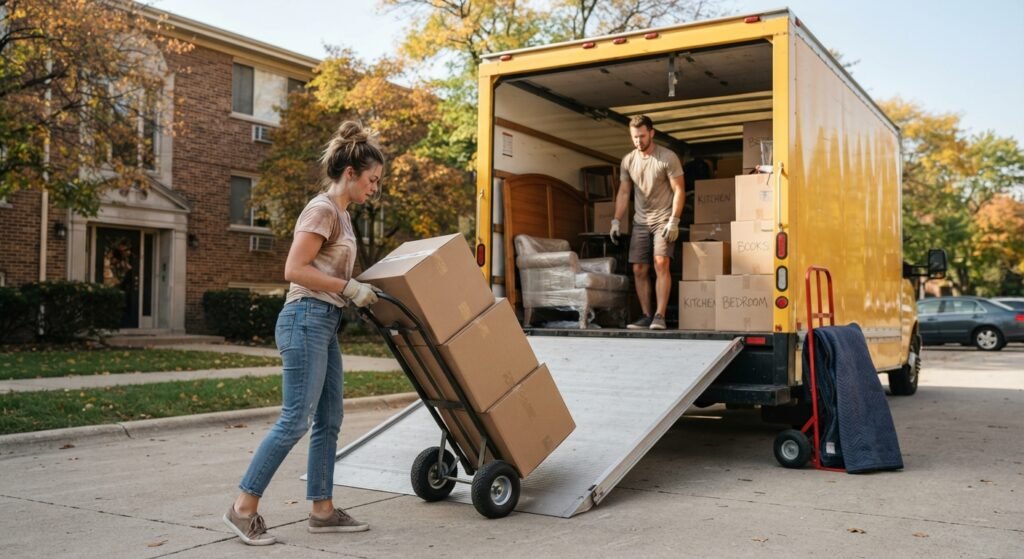
What Counts as a “Local Move” in Skokie, IL
A local move is generally defined as a relocation within the same metro area, typically under 50 miles and completed within a single day. In Skokie, that covers most moves to nearby suburbs like Evanston, Niles, or Morton Grove, plus moves within the village itself.
Distance matters because it determines pricing structure. Local movers usually charge by the hour, while a move crossing that 50-mile threshold often shifts to weight-based or mileage-based pricing instead.
Local vs. Long-Distance Move Thresholds
Illinois movers generally classify anything over 50 miles, or any move crossing state lines, as long-distance. A move from Skokie to a nearby Chicago neighborhood stays local. A move from Skokie to Milwaukee does not.
This distinction changes insurance requirements, paperwork, and how DIY feasibility scales. Short local hauls are far more forgiving of mistakes than multi-day drives.
How to Know If Your Move Is a Good DIY Candidate
A DIY move makes sense when your inventory is small, your distance is short, and you have at least two physically capable people to help load and unload. Studio and one-bedroom moves within Skokie are the most common successful DIY candidates.
Home Size and Inventory Volume Signals
Studio and one-bedroom apartments typically fill a 10 to 15-foot truck in a single trip, which keeps a DIY move realistic for one day. Two-bedroom homes and larger start requiring multiple trips or a bigger rental truck, and that’s where the math starts to shift.
Inventory volume also affects how much packing material you need, since more rooms mean more boxes, more padding, and more time spent wrapping fragile items before loading day even starts.
Timeline Flexibility and Moving Date Pressure
A DIY move needs flexible scheduling because things take longer than expected almost every time. A lease end date, a closing date, or a tight work schedule removes the buffer room you need if the truck rental runs late or friends cancel.
An American Moving and Storage Association survey found that first-time DIY movers underestimate total moving time by roughly 35% on average, mostly due to loading and unloading taking longer than planned.
The Real Cost Comparison: DIY vs. Hiring Movers
A DIY local move in Skokie typically costs between $150 and $500 in truck rental, gas, and supplies, compared to $600 to $1,800 for professional local movers handling the same job. The gap narrows fast once hidden costs and time value get factored in.
Truck Rental, Fuel, and Equipment Costs
Truck rental for a local one-day move generally runs $20 to $40 per day in base rate, plus mileage fees and fuel. Equipment rental, including furniture dollies and moving blankets, adds another $30 to $75 depending on what you already own.
Dolly and ramp rentals matter more than most first-time movers expect, since lifting equipment reduces injury risk and speeds up loading significantly compared to carrying items by hand.
Hidden Costs People Forget to Budget For
Damage to walls, floors, or furniture during a DIY move isn’t covered by any insurance unless you specifically purchase a damage waiver from the truck rental company. Lost workdays, replacement costs for items broken in transit, and last-minute supply runs all add up outside the initial truck rental quote.
A Consumer Reports analysis of moving costs found that DIY movers spend an average of 18% more than their original budget estimate once these hidden costs are included.
Physical and Logistical Demands of a DIY Move
A DIY move requires sustained heavy lifting, stair navigation, and precise truck-loading skills that most people don’t practice regularly. Physical readiness matters as much as cost when deciding whether to handle a move alone.
Heavy Lifting and Injury Risk
Back injuries are the most common moving-day injury, typically caused by lifting heavy furniture with bent knees instead of proper form, or twisting while carrying a load. Mattresses, dressers, and major appliances each present their own lifting challenges that require at least two people working together.
OSHA’s manual material handling guidelines note that improper lifting technique accounts for over 32% of workplace back injuries, a risk that applies directly to unpracticed DIY movers handling furniture.
Packing Requirements You’re Responsible for in a DIY Move
Packing requirements in a DIY move fall entirely on you, since there’s no moving crew double-checking box integrity or weight distribution before loading. Proper boxing, padding, and labeling directly determine how much gets damaged in transit.
Boxes, Padding, and Labeling Standards
Dish boxes, wardrobe boxes, and mirror cartons each serve a specific purpose, and using the wrong box size for fragile items is one of the most common DIY packing mistakes. Labeling every box by room and contents saves hours during unloading and prevents fragile items from getting stacked under heavier boxes.
Box weight limits matter for both safety and box integrity, since overpacked boxes split open mid-carry and under-packed boxes shift and crush contents during transport.
Items Movers Won’t Transport (and Why It Matters for DIY)
Professional movers refuse to transport hazardous materials, perishables, live plants, and pets due to liability regulations and safety standards. A DIY move doesn’t eliminate these restrictions, since many of these items are also unsafe or illegal to transport in a standard moving truck regardless of who’s driving.
Hazardous and Flammable Materials
Propane tanks, paint thinner, aerosol cans, and gasoline are classified as hazardous materials that create fire or explosion risk in an enclosed truck during transport. These restrictions exist under U.S. Department of Transportation hazardous materials regulations, not just individual moving company policy.
The U.S. DOT’s household goods moving guidelines list more than a dozen specific hazardous material categories prohibited from standard moving transport, including corrosives, compressed gases, and certain cleaning chemicals.
Perishables, Plants, and Pets
Frozen and refrigerated food typically doesn’t survive a same-day local move without a cooler, and most movers won’t transport perishables due to spoilage liability. Live plants are sensitive to temperature changes inside a closed truck, and pets require separate transport in a vehicle with climate control and supervision.
Renting the Right Truck Size for a Local Move
Truck size depends directly on your home’s square footage and room count, with a 10-foot truck suited to studios and a 26-foot truck needed for four-bedroom homes. Renting a truck too small means a second trip; renting one too large wastes money on fuel and rental fees.
A truck size chart typically breaks sizing down by bedroom count: 10 feet for studios, 15 feet for one-bedrooms, 20 feet for two to three bedrooms, and 26 feet for larger homes with a garage or basement full of extra items.
Recruiting Help: Friends, Family, and Day Labor Options
A successful DIY move generally requires at least three to four people for a one-bedroom or larger home, since two-person teams struggle with heavy furniture and large appliances. Day labor services offer an alternative when friends and family aren’t available on your specific moving date.
Labor-only moving help costs significantly less than full-service movers since you’re only paying for loading and unloading assistance, not transportation or packing materials.
Navigating Skokie Apartment and Condo Moving Rules
Many Skokie apartment buildings and condos require advance elevator reservations and designate specific loading dock hours for move-in and move-out activity. Skipping this step can delay your entire moving day or result in a fine from building management.
Elevator Reservations and Loading Dock Access
Elevator reservation windows typically run two to four hours, which creates real time pressure for a DIY move that’s already running behind schedule. Building management usually requires 48 to 72 hours of advance notice to book a freight elevator or reserve loading dock access.
Certificate of insurance requirements come up often in condo and high-rise buildings, since many property managers require proof of liability coverage before allowing any move-in or move-out activity, DIY or professional.
Insurance and Liability Gaps When You Move Yourself
Standard renters and homeowners insurance policies generally don’t cover damage that happens during a DIY move, leaving a real liability gap most people don’t discover until something breaks. Truck rental companies sell optional damage waivers, but these typically cover the vehicle, not your belongings.
The Insurance Information Institute reports that most standard homeowners policies exclude property damage that occurs during transport, regardless of whether a moving company or the policyholder is driving.
Time Commitment: What a DIY Move Actually Takes
A DIY local move typically takes a full day for a one-bedroom home and two full days for a three-bedroom or larger home, once packing, loading, driving, and unloading are all accounted for. Most first-time movers underestimate this timeline by several hours.
Loading alone takes two to four hours for a one-bedroom apartment when working with a three or four-person team, and unloading usually takes just as long once you’re tired from the first half of the day.
Situations Where DIY Moving Stops Making Sense
DIY moving stops making sense once your home exceeds three bedrooms, your move involves multiple flights of stairs without elevator access, or your inventory includes specialty items like pianos, antiques, or safes. These factors multiply both time and injury risk beyond what a typical DIY team can safely manage.
Stairs, Distance, and Specialty Items
Stairs dramatically slow down loading time and increase injury risk, especially for heavy furniture pieces that require careful maneuvering around tight turns. Specialty items like pianos and gun safes often require specific equipment and technique that falls well outside typical DIY capability.
Signs You Should Call Professional Movers Instead
Professional movers make more sense when your timeline is tight, your home has more than two bedrooms, or your available help can’t commit to a full day of heavy physical labor. Watching for these signs early prevents a stressful moving day scramble.
At what point does hiring movers cost less than doing it yourself? Once hidden costs, lost workdays, and potential damage expenses get factored in, professional movers often close the cost gap for homes with three or more bedrooms.
DIY Moving Checklist for Skokie Residents
A complete DIY moving checklist covers truck reservation, packing supply shopping, elevator booking, and a labor plan, ideally started two to three weeks before moving day. Missing any one of these steps is what typically causes last-minute scrambling.
Moving day timeline planning helps keep the entire process on track, since breaking the day into loading, driving, and unloading blocks makes it easier to spot where delays are happening in real time.
Conclusion
A DIY move works when your home is small, your distance is short, and your team is ready for genuine physical labor. Larger homes, tight timelines, and specialty items shift the math toward professional help.
We’ve walked through the cost comparisons, packing rules, and warning signs that determine which path fits your situation best.
When your move outgrows DIY territory, ASHER MOVERS LOCAL & LONG DISTANCE is ready to step in with experienced local crews who keep moving day on schedule.
Frequently Asked Questions
Is it cheaper to move yourself in Skokie, IL?
DIY moves are usually cheaper for small households moving short distances, typically costing $150 to $500 versus $600 to $1,800 for professional movers. The savings shrink once hidden costs like damage and lost workdays are included.
What size truck do I need for a 2-bedroom local move?
A 20-foot truck fits most two-bedroom homes comfortably, including furniture, boxes, and major appliances. Homes with extra storage items or a garage may need the next size up.
Can I move a mattress without professional help?
Yes, a mattress can be moved without professional help using a mattress bag and at least two people to carry and maneuver it safely. Queen and king sizes require extra care navigating doorways and stairs.
What items are movers not allowed to transport?
Movers are not allowed to transport hazardous materials like propane, paint thinner, and aerosols, along with perishables, live plants, and pets. These restrictions come from federal transport safety regulations, not individual company preference.
How many hours does a DIY local move usually take?
A DIY local move typically takes 6 to 10 hours for a one-bedroom home, including loading, driving, and unloading. Larger homes often stretch across two full days.
Do I need insurance for a self-service move?
Standard homeowners and renters insurance usually doesn’t cover belongings during a self-service move, creating a real coverage gap. Truck rental damage waivers typically protect the vehicle only, not your items.
When should I hire movers instead of doing it myself?
Hiring movers makes more sense once your home exceeds two to three bedrooms, involves multiple flights of stairs, or includes specialty items like pianos or safes. A tight moving timeline is another strong signal to bring in professional help.
