
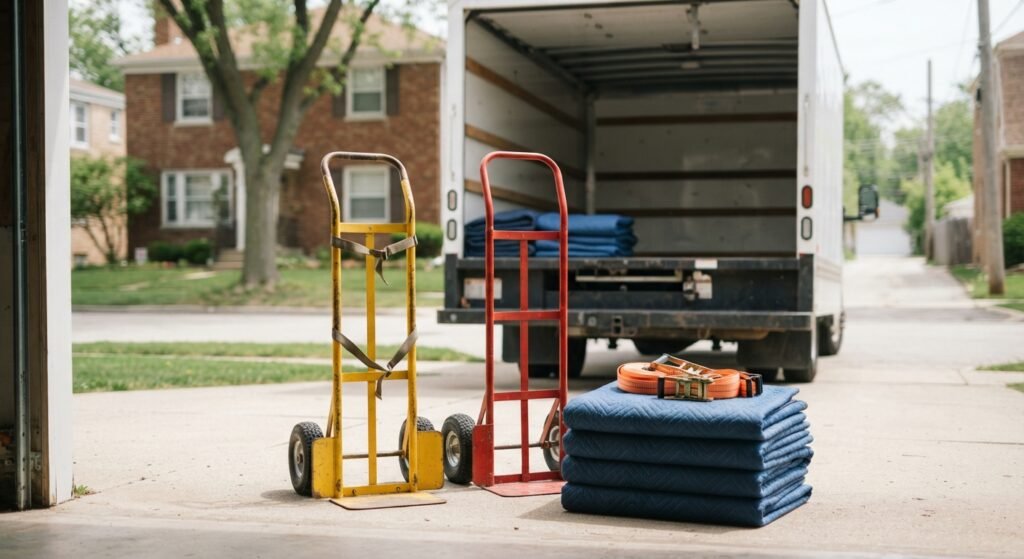
A DIY local move relies on four equipment categories working together: a rental truck sized to your home, a dolly or hand truck for heavy furniture, moving blankets to protect surfaces, and tie-down straps to secure the load. Skipping any one of these categories is the single most common reason DIY moves run over time, damage furniture, or require a second trip. I’ve watched plenty of moving days go sideways over a missing furniture dolly, not a missing truck.
Skokie residents moving locally face tight timelines and narrow streets. Renting the wrong equipment costs real time and real money fast.
This guide covers the core equipment categories and what they actually hold, truck sizing and local Skokie pricing, protective and lifting gear, where to rent locally, and what to do when a job calls for more than equipment alone. I’ll walk through each piece in the order you’ll actually need it.
What Equipment You Actually Need for a DIY Local Move
A DIY local move requires four core equipment categories: a rental truck, a furniture dolly or hand truck, moving blankets, and tie-down straps. Each category solves a different physical problem on moving day, and missing one usually means improvising with something worse.
The truck moves volume. The dolly moves weight without you straining your back. Blankets stop scratches and dents during transport. Straps keep everything from shifting once the truck starts moving.
Most first-time DIY movers underestimate the blankets and straps, assuming the truck and dolly are the only real expenses. A Consumer Reports analysis of moving-related injuries found that improper lifting technique, not heavy furniture alone, causes the majority of reported moving-day injuries. Equipment that reduces manual strain protects you as much as it protects your belongings.
I think of the four categories as a kit, not a checklist. Missing one usually means the other three work harder than they should.
Moving Truck Rental Sizes and What They Hold
Moving truck sizes range from 10-foot cargo vans for studio apartments to 26-foot trucks for four-bedroom homes. The size you need depends on bedroom count more than square footage, since furniture density matters more than floor plan.
| Truck Size | Typical Home Size | Approximate Capacity |
| 10 ft | Studio or 1-bedroom | 1–2 rooms of furniture |
| 15 ft | 1–2 bedroom apartment | 2–3 rooms of furniture |
| 17 ft | 2–3 bedroom home | 3–4 rooms of furniture |
| 26 ft | 4+ bedroom home | Full house, including appliances |
This chart shows typical capacity ranges, not exact fits a heavily furnished 2-bedroom apartment can still need a 17-foot truck. I always tell people to round up one size when unsure, since an extra few feet costs less than a second trip.
Truck rental size decisions connect directly to local pricing, which varies by rental duration and mileage allowance in the Skokie market.
Local Truck Rental Costs in Skokie, IL
Local truck rental in Skokie, IL typically runs $30 to $150 per day depending on truck size, with mileage fees added on top of the base rate. A 10-foot truck sits at the low end of that range, while a 26-foot truck pushes toward the high end before fuel and insurance.
Weekday rentals run cheaper than weekend rentals in most of the Chicago metro area, since demand spikes around the first and last weekends of each month. Booking a Tuesday or Wednesday move can save a meaningful amount compared to a Saturday booking.
Insurance add-ons typically cost $15 to $30 per day and cover damage to the truck itself, not your belongings. Separate coverage protects your furniture and boxes during transport.
Once the truck and its cost are locked in, the next equipment layer is what actually moves the furniture inside it dollies and hand trucks.
Furniture Dollies and Hand Trucks Types and Rental Options
A furniture dolly is a flat, wheeled platform that carries heavy items like dressers and sofas, while a hand truck is an upright, wheeled frame built for stacked boxes and appliances. Both reduce the physical strain of moving heavy objects across flat ground.
Four-wheel furniture dollies handle wide, flat items best, since the weight distributes evenly across the platform. Two-wheel hand trucks work better for narrow, tall items like refrigerators or stacked boxes, where a tipping angle helps with leverage on stairs.
Rental counters typically price dollies separately from the truck itself, usually $10 to $25 per day, and renting one alongside the truck avoids a second pickup trip.
Moving Blankets and Furniture Pads
Moving blankets are thick, quilted covers that protect furniture surfaces from scratches, dents, and moisture during transport. They wrap around wood furniture, electronics, and mirrors to prevent direct contact with truck walls or other items.
Rental counters often bundle a dozen blankets with the truck rental at a flat add-on rate, which costs less than buying blankets outright for a one-time move. Twelve blankets usually covers a 2-bedroom move; larger homes need closer to twenty.
Skipping blankets on a short local move feels tempting, but a single scratched dresser or dented appliance costs more than the rental fee ever would.
Moving Straps, Ratchet Tie-Downs, and Lifting Harnesses
Moving straps secure furniture inside the truck and distribute lifting weight across the mover’s shoulders instead of the lower back. Ratchet tie-downs tighten and lock items in place so nothing shifts during transport, while shoulder lifting harnesses let two people carry heavy items using body leverage instead of arm strength alone.
A National Safety Council review of material handling injuries found that proper lifting technique combined with support equipment reduces strain-related injury risk significantly compared to manual lifting alone. Straps and harnesses are the cheapest equipment category on this list and the one most often skipped by first-time DIY movers.
Ratchet straps run $10 to $20 for a multi-pack, and most truck rental counters stock them at the same counter as the blankets.
Packing Supplies Boxes, Tape, and Wrapping Materials
Packing supplies include moving boxes in multiple sizes, packing tape, bubble wrap, and paper padding for fragile items. These materials protect belongings before they ever reach the truck, which matters just as much as the equipment that moves them.
Small boxes suit books and dense items, medium boxes fit kitchenware, and large boxes work best for lightweight bulky items like linens. Using the wrong box size for heavy items is a common cause of box failure mid-move.
Most truck rental locations sell packing supplies at the same counter, which saves a separate stop for anyone renting last-minute.
Specialty Equipment for Large or Fragile Items
Specialty moving equipment includes appliance dollies with ratchet straps built in, stair rollers for navigating multi-level homes, and custom crating for artwork or fragile electronics. These tools solve problems that standard dollies and blankets can’t handle alone.
Appliance dollies feature a wider base and built-in straps specifically rated for refrigerators and washing machines, since standard furniture dollies aren’t rated for that concentrated weight. Stair rollers attach to a dolly’s wheels and let heavy items glide down stairs instead of being carried step by step.
Homes with basement stairs or narrow stairwells in older Skokie housing stock often need this specialty tier even for an otherwise simple local move.
Where to Rent Moving Equipment in Skokie, IL
Moving equipment in Skokie is available through national truck rental chains, local hardware and tool rental stores, and dedicated moving supply retailers. Each option serves a different combination of truck access and specialty equipment needs.
National chains typically offer the widest truck size selection and the most consistent availability during peak weekends. Local hardware rental counters often carry dollies, hand trucks, and furniture pads at lower daily rates than national chains, though truck availability tends to be limited or nonexistent at these locations.
Dedicated moving supply retailers stock the full specialty tier appliance dollies, stair rollers, and crating materials that general rental counters often skip. Calling ahead to confirm same-day availability matters most during the first and last weekends of the month, when demand peaks across the Chicago metro area.
Renting everything from one location saves pickup time, but comparing two counters for truck versus equipment pricing often saves more money overall.
Renting vs. Buying Moving Equipment Which Makes Sense
Renting moving equipment makes more financial sense than buying for anyone moving once or twice in several years, since purchase costs for a truck alone far exceed any rental fee. Buying only makes sense for frequent movers, landlords managing multiple units, or small businesses relocating equipment regularly.
Dollies, straps, and blankets cost relatively little to buy outright, so some movers choose to purchase these smaller items while still renting the truck itself. This hybrid approach keeps reusable gear on hand for future moves without the overhead of truck ownership.
Items Movers Won’t Transport (and Why Equipment Alone Isn’t Enough)
Professional movers are prohibited from transporting hazardous materials, perishable food, firearms without proper documentation, and certain high-value items like cash or irreplaceable documents. These restrictions exist for safety and liability reasons that apply whether you hire movers or rent equipment yourself.
Hazardous materials include propane tanks, paint, cleaning chemicals, and aerosol cans, all of which pose fire or leak risks inside a closed truck. Perishable food items spoil during transport and can damage surrounding belongings before the truck even reaches its destination.
Renting the right equipment solves the physical challenge of moving, but it doesn’t solve the regulatory and safety questions around what shouldn’t go in the truck at all. That distinction matters most when a DIY move includes items that fall into a restricted category.
Common DIY Equipment Rental Mistakes That Cause Moving Day Delays
The most common DIY equipment rental mistakes are underestimating truck size, skipping moving blankets to save money, and reserving equipment too close to moving day. Each mistake creates delays that cost more time than the equipment would have cost upfront.
Reserving a truck that’s one size too small forces a second trip, which can add hours to a day that was supposed to end by early afternoon. Walk-in rentals during peak weekends often mean no truck availability at all, since reservations typically fill a week or more in advance.
When to Call Professional Movers Instead of Renting Equipment
Professional movers make more sense than DIY equipment rental when a move involves heavy specialty items, tight timelines, multiple flights of stairs, or items that fall into a restricted transport category. Equipment rental solves physical logistics, but it doesn’t add trained labor or liability coverage for damaged goods.
Businesses relocating offices, families with large furniture collections, or anyone moving during a high-demand weekend often find that labor costs outweigh the savings of a DIY rental once time and injury risk factor in.
We built ASHER MOVERS LOCAL & LONG DISTANCE around exactly this kind of judgment call. Reach out to us when your move needs more than a truck and a dolly, and we’ll handle the parts that equipment alone can’t.
Frequently Asked Questions
How much does it cost to rent a moving truck for a day in Skokie?
Local truck rental in Skokie typically costs $30 to $150 per day depending on size. Mileage fees and insurance add-ons apply on top of that base rate.
Do I need a special license to drive a rental moving truck?
No special license is required for trucks up to 26 feet in most states. A standard driver’s license covers nearly all consumer rental truck sizes.
What size truck do I need for a 2-bedroom move?
A 15-foot or 17-foot truck typically fits a 2-bedroom move. Heavily furnished apartments may need the larger 17-foot option to avoid a second trip.
Can I rent furniture dollies without renting a truck?
Yes, most hardware and tool rental stores rent dollies and hand trucks separately. This works well if you already have your own vehicle or trailer.
What items are movers not allowed to transport?
Movers cannot transport hazardous materials, perishable food, and certain high-value or undocumented items. These restrictions apply for safety and liability reasons industry-wide.
Is it cheaper to rent equipment or hire movers for a local move?
Renting equipment is usually cheaper for small, simple moves without heavy specialty items. Hiring movers often costs less overall once labor time and injury risk are factored in for larger moves.
How far in advance should I reserve moving equipment?
Reserve equipment at least one to two weeks ahead, especially for weekend moves. Peak demand around month-end can leave walk-in rentals unavailable entirely.
