
Moving day is a logistics event, and what you wear and carry with you determines how smoothly it goes. I’ve found that moving day success depends less on packing boxes and more on having the right clothing, documents, and essentials within arm’s reach when the truck pulls up. Skokie families and business owners who skip this step end up scrambling for chargers, medications, or cash at the worst possible moment.
Most moving-day stress comes from items packed in the wrong place. A few smart choices now prevent hours of frustration later.
This guide covers what to wear for safety and comfort, which documents and valuables to keep on your person, what movers can and cannot legally transport, and how to prepare an essentials bag, a kids-and-pets plan, and a day-of checklist so nothing gets left behind.
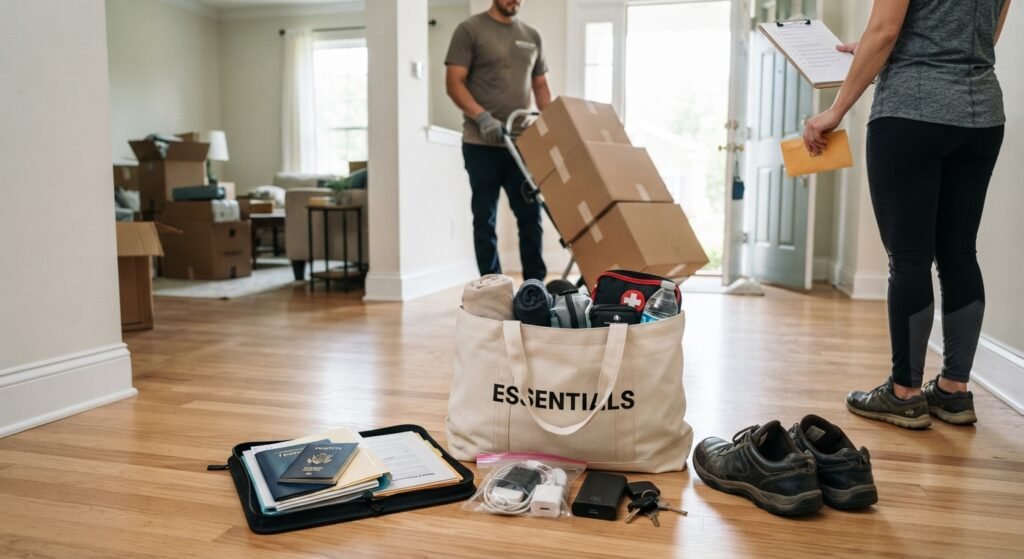
What Should You Wear on Moving Day?
The best moving day outfit is closed-toe shoes, fitted athletic clothing, and layers you can remove as the day warms up. Loose sleeves catch on boxes, sandals offer no protection from dropped furniture, and cotton soaks through fast once the lifting starts.
Best Clothing Choices for Lifting and Carrying
Fitted t-shirts and stretch-fit pants let you bend, twist, and climb stairs without fabric snagging on door frames or box corners. Moisture-wicking athletic fabric handles the physical exertion of a move far better than cotton, which clings once you start sweating. I always tell clients to skip anything with loose drawstrings or long, dangling sleeves near a loaded dolly.
Footwear That Prevents Slips and Injuries
Closed-toe shoes with non-slip soles are non-negotiable on moving day. Driveways, ramps, and truck beds get slick fast, and a dropped box on an exposed toe turns a moving day into an ER visit. Sneakers or work boots with good tread outperform sandals, flip-flops, or dress shoes every time.
Weather-Specific Clothing Adjustments
Skokie’s seasonal swings mean a move in January calls for different layering than one in July. Cold-weather moves need thermal layers that can come off as the body warms from exertion, while summer moves call for breathable fabric and sun protection during repeated trips outside.
Essential Items to Keep With You on Moving Day
Certain items should never go on the truck — they belong in a bag you carry personally from the old address to the new one. Losing track of these items, even temporarily, creates far more disruption than a late delivery.
Important Documents to Carry Personally
Passports, birth certificates, lease agreements, and moving contracts should travel with you, not in a moving box, because they’re difficult or impossible to replace quickly if lost. I recommend a single folder or document pouch that stays in your bag or vehicle at all times during the move.
Valuables and Irreplaceable Items
Jewelry, family heirlooms, and small valuables belong in a bag you personally transport. These items carry sentimental or financial weight that a standard moving company’s liability coverage may not fully reflect, so keeping them with you removes the risk entirely.
Electronics and Chargers You Shouldn’t Pack in the Truck
Laptops, phones, tablets, and their chargers should stay out of the moving boxes. You’ll need working devices throughout the day to coordinate timing, confirm addresses, and handle any last-minute questions from the moving crew.
What Movers Can Legally Transport
Movers can transport furniture, boxed household goods, appliances, and most personal belongings that aren’t classified as hazardous, perishable, or restricted under transportation regulations. This covers the vast majority of what’s inside a typical home or office.
Reputable moving companies follow federal and state guidelines on what can go in the truck, which protects both the customer and the crew from safety incidents during transport. Anything outside that scope gets flagged during the initial walkthrough, so surprises on moving day are rare when a home has been properly inventoried in advance.
Items Movers Are Not Allowed to Move
Movers cannot transport hazardous materials, perishable food, or live plants and animals due to safety regulations and liability restrictions. These categories create fire risk, spoilage, or welfare concerns that standard moving insurance doesn’t cover.
Hazardous and Flammable Materials
Propane tanks, gasoline, paint thinner, and aerosol cans are classified as hazardous materials and cannot legally travel inside a moving truck under Federal Motor Carrier Safety Administration regulations. These items pose fire and explosion risks in an enclosed, often non-ventilated cargo space.
Perishable Food Items
Perishable food, including refrigerated and frozen items, doesn’t survive a multi-hour or multi-day move without spoiling, and it isn’t accepted on the truck. Non-perishable, shelf-stable food is generally fine, but anything requiring refrigeration needs a cooler in your own vehicle.
Plants and Live Animals
Live plants and animals require consistent temperature, airflow, and care that a cargo truck can’t provide, so movers exclude them from standard transport. Pets and houseplants need to travel in a personal vehicle, with pets ideally secured in a carrier for the drive.
How to Pack a Moving Day Essentials Bag
An essentials bag should hold everything you’ll need in the first 24 hours at your new address before the moving boxes get unpacked. This single bag prevents the common scramble of digging through sealed boxes looking for a phone charger or toothbrush.
Pack a change of clothes, toiletries, medications, phone chargers, basic tools, and any paperwork related to the move itself. Label the bag clearly and keep it in your personal vehicle rather than the moving truck, since it needs to be the first thing you unload.
Tools and Supplies to Keep Accessible
A small tool kit with a screwdriver, box cutter, tape, and furniture sliders saves time on both ends of the move. Furniture often needs quick reassembly or disassembly, and having tools on hand avoids delays waiting for a toolbox buried somewhere in the truck.
Keep this kit in your personal bag alongside a notepad or phone for tracking box numbers against your inventory list.
Safety Gear to Bring for a DIY or Hybrid Move
Work gloves, a back support belt, and furniture straps reduce injury risk for anyone lifting boxes or furniture personally. Lower back strain is one of the most common moving-day injuries, and a support belt distributes weight more evenly across the torso during repetitive lifting.
Gloves also improve grip on boxes with awkward or unbalanced weight distribution, which lowers the chance of dropping something fragile or heavy.
Snacks, Water, and Comfort Items for a Long Moving Day
Moving day often runs six to ten hours, and low blood sugar or dehydration slows everyone down. Pack portable snacks, a refillable water bottle, and a basic first aid kit for cuts, blisters, or headaches.
A fully charged portable phone battery also keeps communication running if outlets aren’t accessible during loading and unloading.
What to Bring for Kids and Pets on Moving Day
Kids and pets need their own separate bag of comfort items, food, and entertainment to stay settled during a long and disruptive day. Moving disrupts routine for children and animals alike, and a familiar toy or blanket reduces anxiety during the chaos.
Pack enough pet food, water, and a leash or carrier for the full day, since feeding schedules and bathroom breaks don’t pause for a move. For kids, bring snacks, a tablet or books, and any comfort object they rely on at bedtime, since the new home won’t feel settled for the first night or two.
Cleaning Supplies to Pack Separately
Basic cleaning supplies should stay out of the moving boxes so you can wipe down surfaces at both the old and new address without unpacking everything first. A small caddy with all-purpose cleaner, paper towels, and trash bags handles most immediate needs.
This separate kit also helps with final walkthroughs at a rental property, where move-out cleaning requirements are often tied to deposit returns.
Cash, Tips, and Payment Items to Have Ready
Cash on hand covers moving crew tips, last-minute food orders, or parking fees that come up during the day. Many movers recommend tipping 5% to 10% of the total moving cost, split among crew members, though this varies by job size and service quality.
Keep a separate envelope with small bills so you’re not relying on a card reader or ATM mid-move.
A Moving Day Checklist: What to Have by the Door
Before the truck arrives, stage a designated area by the door with your essentials bag, documents folder, valuables, chargers, and any items movers won’t transport. This staging step prevents last-minute searching once the crew starts loading.
A quick walkthrough of each room against your inventory list confirms nothing gets left behind or accidentally loaded that shouldn’t be.
Common Moving Day Packing Mistakes to Avoid
The most common moving day mistake is packing essential documents, medications, or chargers into sealed boxes that end up buried in the truck. This forces people to dig through dozens of boxes at the new address just to find basic necessities.
Another frequent error is wearing inappropriate footwear, which increases injury risk when navigating stairs, ramps, or uneven driveways while carrying heavy items. Overpacking the essentials bag is also common — the goal is a lean kit for the first 24 hours, not a duplicate of the entire move.
Failing to separate hazardous items ahead of time causes delays too, since the crew has to stop and set aside anything they can’t legally load once they discover it mid-move.
How Weather and Season Affect What You Should Bring
Seasonal conditions directly affect what belongs in your moving day bag, from sunscreen and extra water in summer to ice scrapers and traction mats in winter. A winter move in Skokie calls for salt or sand for icy walkways, while a summer move benefits from extra hydration and sun protection during repeated outdoor trips.
Checking the forecast a few days ahead lets you adjust clothing and supplies before the move, rather than reacting to conditions on the spot.
Preparing an Overnight Bag for Long-Distance Moves
Long-distance moves that span more than a day require an overnight bag separate from the essentials bag, packed for one or more nights away from both the old and new home. This bag should include a full change of clothes, toiletries, sleepwear, and any medications needed on a strict schedule.
Keep this bag accessible in your personal vehicle rather than the moving truck, since long-distance transport often means the truck arrives on a different timeline than you do.
Conclusion
Moving day runs smoother when clothing, documents, and essentials are planned ahead of the truck’s arrival. Understanding what movers can and cannot transport prevents last-minute surprises and delays.
Every move looks different, but the same preparation principles apply whether you’re moving locally or across state lines. Thoughtful prep reduces stress for the whole household.
We handle the heavy lifting so you can focus on getting settled. Contact ASHER MOVERS LOCAL & LONG DISTANCE today to plan a move that goes smoothly from the first box to the last.
Frequently Asked Questions
What should I wear on moving day?
Closed-toe shoes with non-slip soles and fitted, breathable clothing are the safest choice for moving day. Loose sleeves and open-toe footwear increase the risk of slips, trips, and dropped-item injuries.
What items are movers not allowed to transport?
Movers cannot transport hazardous materials, perishable food, or live plants and animals due to safety and liability regulations. These items need to travel separately in a personal vehicle.
Should I carry my important documents or pack them?
Important documents like passports, leases, and moving contracts should always travel with you personally, not in a moving box. This prevents loss or delay if a box gets misplaced during transport.
What should I pack in my moving day essentials bag?
A moving day essentials bag should include a change of clothes, toiletries, medications, chargers, and basic paperwork for the first 24 hours. This keeps you from digging through sealed boxes right after arrival.
Can I bring my pets in the moving truck?
Pets cannot travel in the moving truck and should instead ride in a personal vehicle, ideally secured in a carrier. Moving trucks lack the climate control and safety needed for live animals.
What should I do with perishable food before moving?
Perishable food should be consumed, donated, or discarded before moving day since movers cannot transport refrigerated or frozen items. Non-perishable, shelf-stable food can typically still be packed.
Do I need cash on moving day?
Cash on hand is useful for tipping the moving crew, covering last-minute expenses, or handling parking fees. Many people set aside a small envelope of bills specifically for this purpose.
