
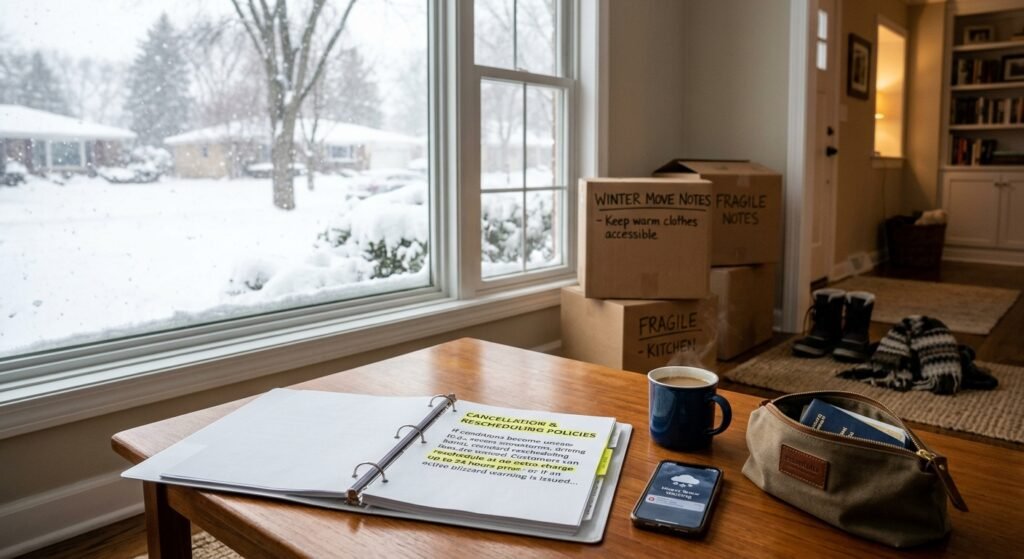
A snow storm cancellation policy spells out when a moving company can postpone your move, what fees apply, and how much notice you get. I’ve seen plenty of families in Skokie scramble on moving day because nobody read the fine print before winter hit.
Severe weather doesn’t ask permission before it shows up on a scheduled move date. Icy roads, blocked driveways, and whiteout conditions turn a routine local move into a safety risk fast, and that’s exactly why cancellation policies exist in the first place.
I’ll walk through how movers typically handle weather cancellations, what rights you have as a customer, and how to prepare before a storm ever threatens your date. Then I’ll cover what happens if you’re the one who needs to cancel, plus the most common questions people ask when snow and moving day collide.
What Happens When a Snow Storm Hits on Your Moving Day
Snow storms affect local moves in ways that go beyond “the truck might be late.” Road closures, parking restrictions, and frozen walkways change the entire math of a move. I’ve watched a two-hour job turn into an all-day ordeal because a single unplowed street blocked the truck’s only access point.
Most moving companies watch weather forecasts closely in the days leading up to a scheduled move. A winter storm warning issued by the National Weather Service often triggers an internal review of every move scheduled during that window.
Safety drives the decision more than convenience does. Heavy furniture on icy front steps creates real injury risk, and no mover wants that liability hanging over a job that could’ve waited one day.
How Moving Companies Set Cancellation and Rescheduling Policies for Severe Weather
A weather cancellation policy is a written set of rules a moving company uses to determine when a scheduled move gets postponed, delayed, or rescheduled due to unsafe conditions. Most reputable movers build this into their standard moving contract, not as a hidden clause.
The policy usually covers three things: the conditions that trigger a cancellation, how much advance notice the company provides, and whether rescheduling carries any fee. I always tell customers to ask about all three before signing anything, not just the price per hour.
Timing matters here. A company that cancels the night before gives you far more flexibility than one that calls two hours before the truck arrives.
Good weather policies typically include:
- A clear weather threshold (ice, snow accumulation, wind chill) that triggers review
- A notice window, often 12–24 hours before the scheduled time
- No-penalty rescheduling tied directly to severe weather
- A named point of contact for last-minute updates
Reputable local movers in Skokie plan around seasonal risk from the start. That’s one reason I recommend reviewing a local moving company’s weather policy before booking anything scheduled between November and March.
Your Rights and Responsibilities When a Mover Cancels or Reschedules
You have the right to clear, timely communication the moment a mover decides to postpone your move. A company that goes silent and leaves you guessing isn’t following a professional weather policy, it’s just disorganized.
You also have the right to know whether a storm-related delay comes with any added cost. Many contracts explicitly waive rescheduling fees when the postponement is weather-driven and initiated by the company, not the customer.
Your responsibility is staying reachable and flexible around the new proposed date. Movers juggling an entire week’s schedule around one storm need customers who can confirm quickly, not disappear for two days.
What you should expect from a mover during a weather delay:
- Advance notice as soon as the decision is made, not after
- A revised date offered within the same communication
- No pressure to accept unsafe conditions just to “stick to schedule”
- Transparency about any schedule or crew changes
I’ve found that movers who put this in writing upfront almost always handle the actual event more smoothly. It’s the companies that leave it vague who tend to create confusion once the snow actually falls.
How to Prepare for a Possible Weather Cancellation Before Moving Day
Preparation starts the moment you book a move during storm season, not the day before the forecast turns ugly. I always recommend confirming the cancellation policy in writing before the move, even if the salesperson already explained it verbally.
Building in a buffer day between your move and any hard deadline, like a lease end date, gives you room to absorb a one-day postponement without real consequences. That single buffer day solves more moving-day headaches than almost any other precaution.
Packing a few essentials separately also helps. A bag with medications, chargers, important documents, and a change of clothes keeps you covered even if the full move shifts by a day or two.
Steps to protect your move date:
- Get the weather cancellation clause in writing
- Ask specifically what conditions trigger a delay
- Build a buffer day into your moving timeline when possible
- Keep moving day essentials packed separately
- Save direct contact info for your moving coordinator, not just a general line
Reviewing a moving day checklist before a scheduled winter move helps you catch gaps like this well before the storm forecast even appears.
What to Do If You Need to Cancel or Postpone Your Own Move
Sometimes the customer, not the moving company, needs to call off the move because of weather. Maybe your new building’s parking lot isn’t plowed, or your own street is impassable, even though the mover is still willing to come.
Most contracts treat a customer-initiated weather cancellation differently than a mover-initiated one. Some companies waive the fee if the cancellation happens because of documented severe weather, while others apply a standard rescheduling charge regardless of the reason.
Calling as early as possible always works in your favor. A coordinator with 24 hours’ notice can usually slot you into a new date without friction, but a call two hours before the truck leaves the lot puts everyone in a tough spot.
I tell every customer the same thing here: read the cancellation section of your contract before the storm ever shows up on the forecast, not during it.
Conclusion
Snow storm cancellation policies protect everyone involved, the crew handling heavy furniture on icy steps and the customer counting on a safe, smooth move. Understanding the notice windows, fees, and communication standards before booking removes most of the stress a winter move can bring.
Weather will always be unpredictable in Skokie’s moving season, but your moving plan doesn’t have to be. A little preparation turns a potential storm-day disaster into a minor, manageable delay.
We built our weather policies around exactly this kind of clarity. Reach out to ASHER MOVERS LOCAL & LONG DISTANCE and we’ll walk you through our cancellation terms before you ever need them.
Frequently Asked Questions
Do moving companies charge a fee for weather-related cancellations?
Most reputable movers waive fees when they initiate the cancellation due to severe weather. Fees are more likely if the customer cancels and the mover was still willing and able to complete the job.
How much notice do movers typically give before canceling for snow?
Many companies aim for 12 to 24 hours’ notice before a scheduled move when storms are forecasted. Shorter notice sometimes happens with fast-moving or unexpected weather systems.
Can I still move if there’s light snow but no storm warning?
Light snow alone rarely cancels a local move, since crews are trained to handle typical winter conditions. A cancellation usually requires a specific trigger like ice accumulation, a storm warning, or unsafe road closures.
What happens to my moving date if the company cancels for weather?
Your mover should offer a revised date as part of the same cancellation notice, not leave you to chase them down. Most companies prioritize rescheduled customers within the following few days.
Should I buy moving insurance that covers weather delays?
Moving insurance typically covers damage to belongings, not scheduling delays themselves. Ask your mover directly whether their weather policy includes any compensation for delay-related costs, like temporary storage.
Is it safe to move during a snow storm if the mover agrees to come?
Safety depends heavily on road conditions, driveway access, and the specific storm’s severity at the time. A professional mover will tell you honestly if conditions look unsafe rather than risk the crew and your belongings.
What should I pack separately in case my move gets postponed?
Pack medications, chargers, important documents, and a few days of clothing in a bag you keep with you. This keeps you covered no matter how many days a storm pushes your move back.
