
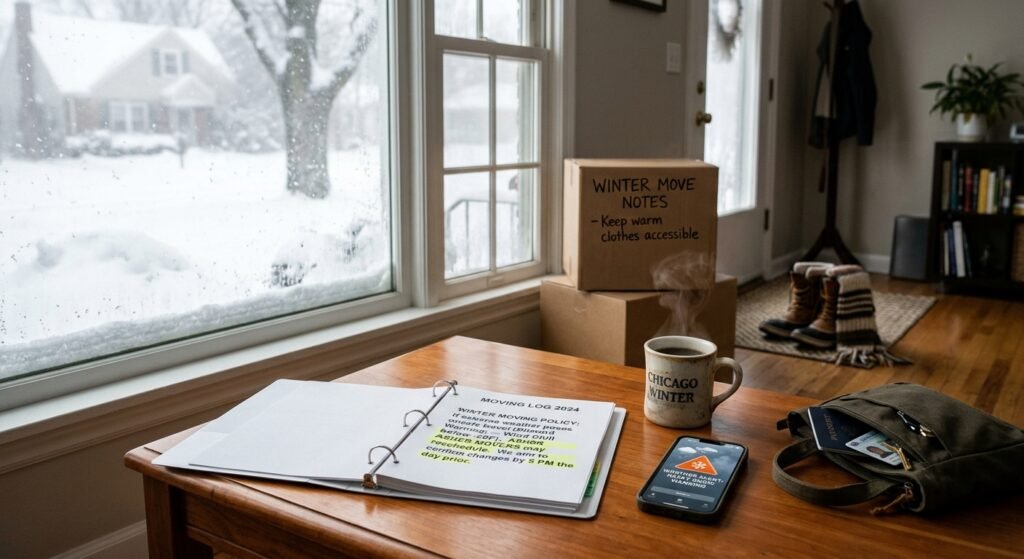
Cold weather changes almost everything about how I approach a local move. Ice on the driveway, frozen electronics, and temperature-sensitive packing materials all turn a routine moving day into something that needs real planning. I’ve seen simple moves get delayed by hours because nobody checked the forecast first.
Skokie winters bring snow, ice, and temperatures that drop fast once the sun goes down. A move that would take three hours in July can stretch into a six-hour ordeal when sidewalks ice over and boxes sit in a cold truck too long.
I walk through how winter weather affects your belongings, what to do with your home and walkways before the truck arrives, which items need special packing attention, what movers legally cannot transport in freezing conditions, and how to communicate with your moving company to keep the whole day on schedule.
Why Winter Weather Changes the Rules for Local Moves
Winter moving is a distinct category of relocation that requires different precautions than moves conducted in moderate temperatures. Cold air, moisture, and ice each create separate risks for belongings, movers, and the property itself.
I think of winter moves as having three compounding risk factors instead of one. Temperature affects materials. Moisture affects traction and equipment. And shorter daylight hours compress the whole timeline.
A move that starts at 8 a.m. in December loses usable daylight by 4:30 p.m. That’s a tighter window than most people plan around, and it changes how I sequence loading and unloading.
Cold Temperatures and Their Effect on Belongings
Extreme cold makes certain materials brittle, slows electronics, and thickens liquids past their normal consistency. Wood furniture can crack if moved straight from a warm house into a freezing truck without acclimation time.
Electronics are particularly sensitive. Condensation forms inside devices when they move from cold to warm environments too quickly, and that moisture can damage internal components before you even notice a problem.
I always recommend letting electronics sit at room temperature for a few hours before powering them on again after a winter move.
Preparing Your Home and Pathways Before Moving Day
Safe footing matters more in winter than any other packing consideration. Movers carrying heavy boxes down an icy driveway face real injury risk, and a fall can damage your belongings along with the person carrying them.
I treat walkway prep as a non-negotiable step, not an optional nicety. Salt the driveway the night before. Shovel a clear path from the door to the truck. Lay down mats or cardboard runners if the walkway stays wet.
Property damage claims spike during winter months specifically because of slips on untreated surfaces. The National Safety Council reports that winter weather contributes to thousands of preventable fall injuries every year, and moving day multiplies that exposure because people are carrying loads instead of walking freely.
Clearing Walkways, Driveways, and Entry Points
Start clearing pathways at least 24 hours before the move so ice has time to melt or refreeze into a more manageable layer. Entry points need the widest clearance since that’s where the truck ramp meets your property.
I also tell clients to check their HOA or local snow removal ordinances. Skokie has specific sidewalk clearing requirements, and a blocked public walkway can slow down your moving crew just as much as your own driveway.
Packing Guidelines for Cold-Weather Protection
Packing materials behave differently in cold weather. Tape loses adhesion below certain temperatures, and cardboard can become brittle after sitting in an unheated garage or truck overnight.
I use heavier-duty tape in winter for this exact reason. Standard packing tape that holds fine in summer sometimes peels at the corners once the box sits in freezing air for a few hours.
Climate-sensitive items need a different packing approach entirely. Wrap them in moving blankets, pack them last so they spend the least time in the cold truck, and unload them first at the new location.
Items That Need Extra Insulation or Climate Control
Liquids, musical instruments, artwork, and anything with a battery fall into this category. Paint, cleaning supplies, and certain cosmetics can freeze and separate, ruining the product even if the container survives intact.
Musical instruments made of wood are especially vulnerable. Extreme cold causes wood to contract, which can crack a guitar body or warp a piano’s internal components within a single exposure.
I pack these items in insulated containers whenever a client has them, and I always recommend transporting especially valuable pieces in a personal vehicle instead of the moving truck during peak cold snaps.
Items Movers Cannot Transport in Winter Conditions
Every moving company maintains a list of prohibited items, and winter conditions add a few seasonal entries to that standard list. Propane tanks, aerosol cans, and certain batteries become higher-risk cargo when temperatures swing between freezing outdoor air and a heated truck cabin.
I never load anything flammable or pressurized into a truck during winter moves. The temperature differential between outside air and truck interior creates pressure changes that increase rupture risk in aerosol containers specifically.
Perishable food also falls into this category during winter moves, not because of spoilage risk from heat, but because freezing temperatures can destroy texture and quality in items like produce or dairy before they even reach the new home.
Temperature-Sensitive and Prohibited Items
Standard prohibited items include propane, gasoline, paint thinner, and compressed gas cylinders year-round. Winter adds frozen food, live plants, and anything in a glass container that could crack from thermal shock.
Live plants rarely survive an unheated truck ride in freezing weather. I tell clients to transport plants personally, in a warm car, rather than risk losing them during a cold-weather relocation.
Scheduling and Communication Tips for a Smooth Winter Move
Winter moves need more buffer time built into the schedule than any other season. Weather delays, shorter daylight, and slower loading on icy surfaces all add time that a summer move wouldn’t need.
I always confirm a backup date with clients scheduling a winter move. A snowstorm can push a move by a full day, and having that conversation before moving day avoids a last-minute scramble.
Clear communication with your moving company also means asking specific questions. Does the crew have snow removal equipment? What happens if a storm hits mid-move? Getting these answers in advance prevents surprises.
Working With Your Moving Company on Timing
I recommend scheduling winter moves for midday rather than early morning, since temperatures are highest and ice has the most time to melt before the crew arrives. Early morning moves in Skokie often start with a frost-covered driveway that needs extra clearing time.
A good moving company checks the forecast with you a few days out and adjusts the plan if conditions look rough. That proactive communication is the difference between a smooth winter move and a stressful one.
Conclusion
Winter moving demands more preparation than any other season, from protecting temperature-sensitive belongings to clearing safe pathways for your crew. Every precaution here exists to prevent delays, damage, and avoidable safety risks on moving day.
Skokie winters are unpredictable, but a well-planned move doesn’t have to be. Knowing what movers can and cannot transport keeps your relocation on schedule even when the weather doesn’t cooperate.
We at ASHER MOVERS LOCAL & LONG DISTANCE plan every winter move around these exact precautions, so reach out to us and let’s get your relocation scheduled safely and on time.
Frequently Asked Questions
Can movers transport propane tanks in the winter?
No, propane tanks are prohibited year-round due to fire and explosion risk. Winter temperature swings between outdoor air and a heated truck increase that risk even further.
How early should I clear my driveway before a winter move?
Clear your driveway and walkways at least 24 hours before moving day. This gives ice time to melt or refreeze into a safer, more manageable surface for the crew.
Do electronics need special packing in cold weather?
Yes, electronics need insulated packing and should sit at room temperature for a few hours after the move before you power them on. Rapid temperature changes cause condensation that can damage internal components.
What happens if it snows on my scheduled moving day?
Most moving companies, including ASHER MOVERS LOCAL & LONG DISTANCE, build weather contingency plans into winter bookings. I recommend confirming a backup date with your mover before the move so a storm doesn’t derail your schedule.
Can I move houseplants in the winter?
Houseplants rarely survive an unheated truck ride in freezing temperatures. Transport them yourself in a warm vehicle instead of loading them with the rest of your belongings.
Why does tape fail more often during winter moves?
Cold temperatures reduce the adhesive strength of standard packing tape, causing boxes to come loose. I switch to heavier-duty, cold-rated tape specifically for winter relocations.
