
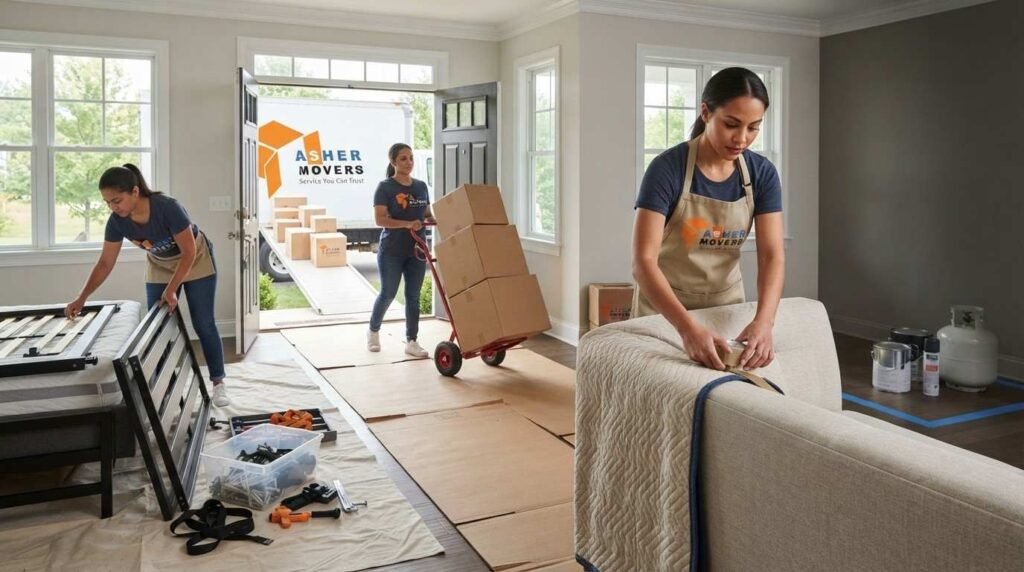
A standard local move is a residential relocation that stays within roughly the same metro area, usually under 50 miles, and covers loading, transport, unloading, and basic furniture handling. I’ve walked enough clients through moving day to know the confusion almost never comes from the big stuff. It comes from the gray areas what’s packed, what’s excluded, and what quietly adds cost.
That confusion turns into delays if nobody catches it before the truck shows up. Missing a prohibited-items list or skipping an inventory walkthrough is how moving day turns into moving afternoon-into-evening.
Here’s what I’m covering: how a standard local move is actually defined, the core services and equipment included in that scope, how packing services work, and which items movers won’t put on the truck. Then I’ll get into what tends to add cost or time and how to get your home ready before the crew arrives.
What Counts as a “Standard Local Move”
A local move is a relocation between two points within the same general metro area, typically completed in a single day by one crew and one truck. This distinguishes it from a long-distance move, which crosses state lines or covers several hundred miles and often takes multiple days to complete.
Most moving companies define “local” using a distance threshold commonly under 50 to 100 miles rather than a strict city boundary. I’ve seen movers in Skokie treat a move to a nearby Chicago suburb as local even when it technically crosses a town line, because the drive time and crew hours stay the same.
Local Move Definition vs. Long-Distance Move
The core difference isn’t really the number of miles. It’s billing structure. Local moves are usually priced hourly, based on crew size and truck time, while long-distance moving services are priced by weight and distance together.
That pricing difference matters because it shapes what “included” even means. Hourly local pricing means every extra minute on stairs or in traffic adds to the bill directly.
Typical Distance and Time Thresholds
Most standard local moves wrap up in four to eight hours, depending on home size and crew count. A one-bedroom apartment with a two-person crew often finishes in half a day, while a four-bedroom house needs a full crew working a full day.
Core Services Included in a Standard Local Move
A standard local moving package includes loading, transport, unloading, and basic assembly of furniture that was disassembled for the move. This is the baseline every reputable moving company builds its quote around, and it’s what separates a full-service mover from a truck-rental-only setup.
I always tell clients to picture it in three stages: the crew loads the truck at the origin, drives to the new address, then unloads and places furniture in the rooms you specify. That placement service walking boxes and furniture into specific rooms rather than dropping everything at the door is part of the standard package, not an upsell.
Loading, Transport, and Unloading
The crew wraps and secures furniture, loads boxes and items methodically to protect them in transit, then drives the truck to your new address. On the other end, they unload everything and place large furniture where you want it.
Basic Furniture Disassembly/Reassembly
Beds, large tables, and modular shelving typically get disassembled before loading and reassembled at the destination. This is standard for common furniture types, though highly specialized or antique pieces sometimes need a separate specialty-handling conversation before moving day.
Standard Equipment (Dollies, Blankets, Straps)
Movers bring dollies, furniture pads, moving blankets, and tie-down straps as part of the standard service. You are not expected to supply any of this equipment, and a legitimate mover never asks you to.
Packing Services and What They Cover
Packing services cover wrapping, boxing, and labeling household items so they survive transport without damage. Whether packing is included by default or offered as an add-on depends entirely on the service tier you book.
Full-service packing means the crew arrives, packs your entire household, and the cost reflects that labor and the boxes and materials used. Self-packing means you’ve already boxed everything before the crew arrives, and they only handle loading and transport.
Full-Service Packing vs. Self-Packing
Full-service packing is worth it for fragile items, large kitchens, and households short on time before the move date. Self-packing saves money but puts the responsibility for proper wrapping and box integrity on you, which matters for anything breakable.
Households weighing this tradeoff often benefit from reading through full-service packing options before deciding which tier fits their timeline and budget.
Packing Materials Included
A full-service package generally includes boxes in multiple sizes, packing paper, bubble wrap, tape, and specialty cartons for wardrobes or dishware. Self-pack customers can usually still purchase these same materials from the mover ahead of time.
Items Movers Typically Will Not Transport
Movers will not transport hazardous materials, perishable food, live plants, pets, or certain high-value items due to safety regulations and liability limits. This isn’t a company preference it’s largely dictated by transportation safety regulations that apply across the moving industry.
The Federal Motor Carrier Safety Administration restricts the transport of specific hazardous materials in commercial vehicles, and household moving trucks fall under those same safety rules. That’s why propane tanks, paint, and cleaning chemicals routinely get flagged during pre-move walkthroughs.
Hazardous and Flammable Materials
Propane tanks, gasoline, paint thinners, aerosol cans, fireworks, and pool chemicals fall into this excluded category. These items pose a fire or explosion risk in an enclosed truck, which is why no reputable mover will load them regardless of how the request is framed.
Perishables, Plants, and Pets
Movers do not transport perishable food, refrigerated items, live plants, or animals of any kind. Plants in particular struggle with the temperature swings inside a closed truck, and most movers exclude them purely for liability reasons, not just preference.
High-Value and Irreplaceable Items
Cash, jewelry, important documents, and irreplaceable family heirlooms are typically excluded from standard transport coverage. I always recommend clients keep these items with them personally rather than placing them on the truck, since standard valuation coverage rarely reflects their true worth.
What Can Add Cost or Time to a Standard Local Move
Stairs, long carry distances, bulky furniture, and limited elevator access all add labor time to an hourly-priced local move. None of these situations are unusual, but each one extends the clock, and hourly pricing means extended time shows up directly on the final invoice.
Stairs, Long Carries, and Elevator Access
A third-floor walkup with no elevator takes noticeably longer than a ground-floor unit with a loading dock. Long carry distances meaning the truck can’t park close to the door stretch the job the same way stairs do, because every trip takes longer.
Bulky or Specialty Items
Pianos, safes, pool tables, and oversized furniture often require extra crew members or specialty equipment. Flagging these items when you book the move lets the company staff the job correctly instead of scrambling on moving day.
How to Prepare Your Home for Moving Day
Preparing an inventory, packing early, and setting aside personal essentials keeps a standard local move running on schedule. A little prep the week before saves real time and money once the crew is actually on the clock.
Preparing an Inventory List
Walking through each room and listing major items before moving day helps the crew quote accurately and helps you confirm nothing goes missing. I suggest doing this room by room rather than all at once, since it’s easy to forget garages, closets, and attics otherwise.
Setting Aside a Personal “Essentials” Box
Pack a separate box with medications, chargers, basic toiletries, and a change of clothes, and keep it with you instead of on the truck. This one habit solves the single most common first-night complaint I hear from movers: not being able to find anything.
Conclusion
A standard local move covers loading, transport, unloading, and basic assembly, while excluding hazardous materials, perishables, and certain high-value items. Understanding that scope ahead of time prevents surprises on moving day and keeps the schedule intact.
Packing choices, home layout, and specialty items all shape the final cost and timeline. Planning around them early makes the difference between a smooth day and a stressful one.
We at Asher Movers Local & Long Distance walk every Skokie customer through this scope before booking, so there are no surprises on move day. Reach out and we’ll map out exactly what your move includes.
Frequently Asked Questions
What is considered a standard local move?
A standard local move is a relocation within the same metro area, usually under 50 miles, completed in a single day. It typically includes loading, transport, unloading, and basic furniture assembly.
Does a standard local move include packing?
Packing is included only if you book full-service packing; otherwise, you’re expected to pack before the crew arrives. Materials for self-packing are usually still available for purchase from the mover.
What items will movers not take?
Movers won’t transport hazardous materials, perishables, live plants, pets, or certain high-value items like cash and jewelry. These exclusions come from safety regulations and liability limits, not company preference.
How long does a standard local move take?
Most standard local moves take four to eight hours depending on home size and crew count. A small apartment often finishes in half a day, while a larger home needs a full crew and a full day.
Do movers supply boxes and packing materials?
Yes, movers bring their own dollies, blankets, straps, and boxes as part of the standard service and full-service packing tier. You aren’t required to source any of this equipment yourself.
What adds extra cost to a local move?
Stairs, long carry distances, limited elevator access, and bulky specialty items like pianos or safes all add labor time. Since local moves are typically billed hourly, added time shows up directly on the final cost.
How far in advance should I prepare for a local move?
Building your inventory list and starting to pack about one to two weeks ahead keeps the process manageable. Setting aside your essentials box the night before moving day is the last step worth doing early.
