
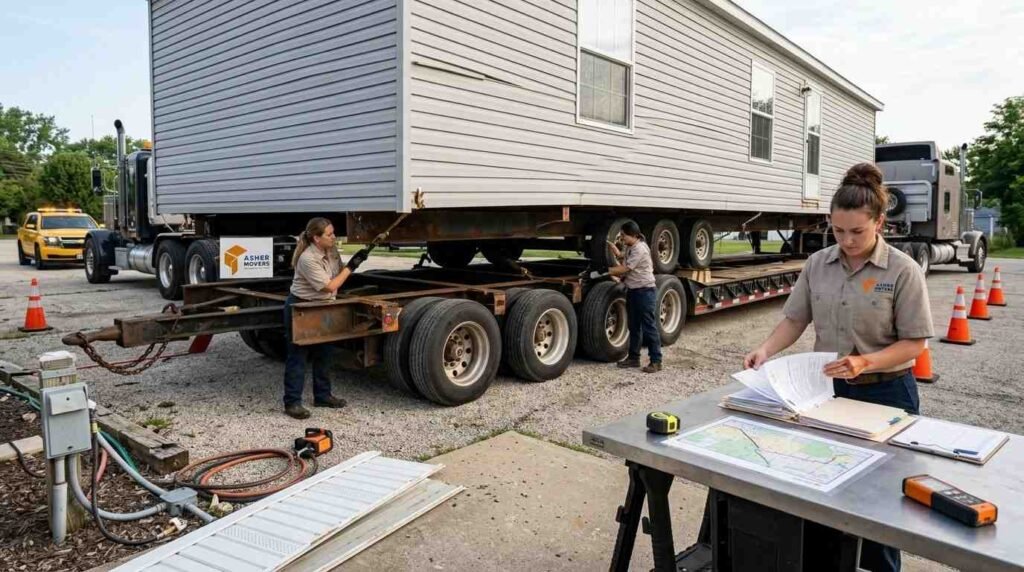
Mobile home relocation is a process that transports a manufactured or mobile housing unit from one site to another using specialized towing equipment and structural support. Local moves in Skokie generally cover distances inside Cook County or neighboring municipalities.
The permitting side surprises a lot of people. Skokie requires a moving permit before a mobile home can be relocated on public roads, and the unit typically needs a structural inspection first.
Permits, Inspections, and Skokie-Area Requirements
Illinois classifies mobile home transport under oversize load regulations once the unit exceeds standard width limits. Most single-wide units qualify as oversize loads requiring escort vehicles and route approval.
I always tell customers to start the permit process two to three weeks out. Local municipalities process these requests on their own timeline, and rushing it creates the exact delay you’re trying to avoid.
Inspections check the frame, axles, and tie-down points. A home that fails inspection needs repairs before transport gets approved.
How Local Moves Differ From Long-Distance Transport
Local relocation within Skokie usually means shorter permit windows and fewer state-line regulatory hurdles. Long-distance moving crosses multiple jurisdictions, each with its own permit rules and escort requirements.
Local moves still need the same structural prep. Distance changes the paperwork, not the physical readiness the home needs.
Preparing Your Mobile Home Before Moving Day
Preparation makes or breaks a mobile home move. I focus on three things first: utilities, structure, and interior security.
Skipping prep steps causes the most common moving-day failures I see. A loose skirting panel or an active gas line turns a routine move into a delayed one.
Utility Disconnections and Skirting Removal
Every utility connection gets disconnected before transport. That includes electrical, water, sewer, and gas lines, and gas disconnection specifically requires a licensed technician in most cases.
Skirting comes off entirely. It’s lightweight material that wasn’t built to survive towing, and leaving it attached risks damage to the panels and the home’s undercarriage during the move.
Securing Interior Items and Loose Fixtures
Cabinets, drawers, and closet doors need securing with tape or temporary latches before the home moves. Movement during transport shifts unsecured contents hard enough to crack cabinetry.
I recommend removing wall-mounted mirrors and heavy artwork entirely. Anything not built into the structure travels separately, in a residential packing service, not inside the towed unit.
What Movers Can and Cannot Transport
This is where I get the most questions, and for good reason. Moving companies operate under liability rules that restrict certain categories of items regardless of how the customer feels about it.
Restricted and Prohibited Items
Propane tanks, gasoline, and other flammable liquids never travel inside or attached to a mobile home during transport. Neither do firearms without proper documentation, perishable food, or live plants in most cases.
Movers also won’t transport hazardous cleaning chemicals or aerosols. These items react to temperature changes and vibration in ways that create real safety risks on the road.
I ask every customer to pack these items separately and transport them personally, or dispose of what isn’t needed before the move.
Special Handling for Appliances and Fragile Belongings
Refrigerators and washing machines need bracing and, in some cases, removal from the home entirely depending on the towing company’s policy. Fragile items like glassware and electronics get padded and boxed, never left loose inside cabinets during the tow.
Ask your mover directly about appliance policy before the move. Some companies handle appliances as part of the relocation; others require them boxed and hauled separately.
Choosing the Right Local Moving Team for a Mobile Home
Not every moving company handles mobile home relocation, and that distinction matters more than most people realize going in. Standard household movers use box trucks, not the towing rigs and escort coordination a mobile home requires.
Equipment and Experience to Look For
Look for a mover with hydraulic axles, a properly rated tow hitch, and documented experience with manufactured housing specifically. Ask how many mobile home relocations they’ve completed in Skokie or greater Cook County over the past year.
A team with local experience already knows the permit offices and inspection contacts. That familiarity alone shaves days off your timeline.
Questions to Ask Before You Book
Ask who pulls the permits, whether inspection is included in the quote, and what happens if the home fails inspection on the scheduled move date. Get their insurance coverage details in writing before you sign anything.
I also recommend asking for references from a recent mobile home move, not just general moving jobs. The two services aren’t the same, and the experience gap shows on moving day.
Avoiding Delays and Common Moving-Day Complications
Most delays I’ve seen trace back to three causes: weather, incomplete paperwork, and unclear insurance coverage. Each one is preventable with the right prep.
Weather, Route, and Timing Considerations
High winds ground mobile home transport entirely in most jurisdictions, since the wide, flat surface acts like a sail on the road. I check the seven-day forecast before locking in a move date and build in a backup day when the season calls for it.
Route planning matters just as much. Low bridges, narrow streets, and tight turns near older Skokie neighborhoods can force a longer route than the direct path suggests.
Insurance and Liability Basics
Standard mover’s insurance rarely covers a mobile home’s full replacement value automatically. Ask about moving insurance coverage specifically rated for manufactured housing transport before the move date arrives.
Liability splits between the moving company and the homeowner depending on what caused any damage. Get that split defined in writing, not verbally, before the truck shows up.
Conclusion
Mobile home relocation blends structural prep, permitting, and careful transport into one coordinated event. Skokie’s local requirements add a layer most standard moves skip entirely.
Getting prep right, right down to prohibited items and utility disconnection, keeps your move on schedule and your belongings intact.
We handle mobile home relocations across Skokie with the equipment and permitting experience this job demands. Reach out to ASHER MOVERS LOCAL & LONG DISTANCE and let’s get your move planned right.
Frequently Asked Questions
Do I need a permit to move a mobile home in Skokie?
Yes, Skokie requires a moving permit before a mobile home travels on public roads. Most movers coordinate this permit directly as part of the relocation service.
Can movers transport propane tanks with my mobile home?
No, propane tanks and other flammable materials never travel with the towed unit. Transport these items separately or arrange proper disposal before moving day.
How far in advance should I schedule a mobile home move?
I recommend starting the permit and inspection process two to three weeks before your target move date. Local processing times vary and rushing often causes delays.
What happens if my mobile home fails inspection?
The home needs repairs to the frame, axles, or tie-downs before transport gets approved. Your mover should outline this possibility and any added cost upfront.
Does regular moving insurance cover my mobile home during transport?
Not automatically, since standard coverage rarely matches a mobile home’s full replacement value. Ask about supplemental coverage rated specifically for manufactured housing.
Do I need to disconnect utilities myself before the move?
No, but gas disconnection specifically requires a licensed technician in most cases. Electrical, water, and sewer disconnections are typically handled by your moving team or a coordinated contractor.
