
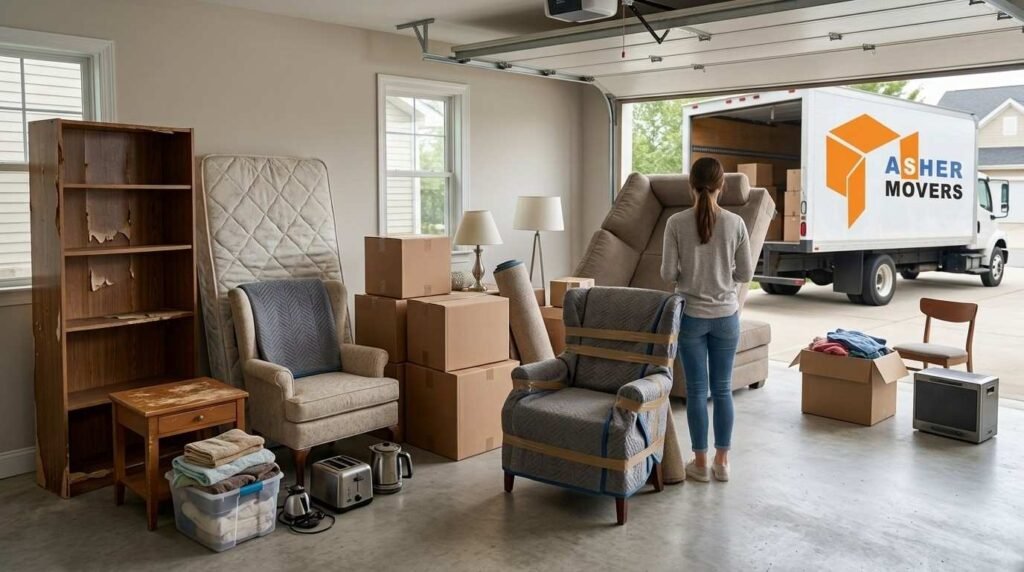
Some items cost more to move than they’re worth keeping. I’ve watched people spend hours wrapping a wobbly bookshelf that would’ve cost less to replace than to transport. Knowing what to leave behind saves money, time, and a lot of unnecessary stress.
Moving day gets expensive fast when every box and piece of furniture rides on the truck. Sorting out the dead weight now protects your budget and your back later.
I’ll walk you through what typically isn’t worth moving, why it matters, and what to do with it instead.
How Do You Decide If Something Is Worth Moving?
I think about this in terms of a simple trade-off. Does the item cost more to move than it would cost to replace or repair at the new place?
That’s the real question behind every “should I keep this” decision.
The Cost-vs-Value Test
Movers typically charge by weight, distance, or hourly labor, depending on the job. A worn-out couch that costs $150 to replace new isn’t worth $200 in moving labor and truck space.
I run the math on bulky, heavy, or fragile items first. Small items rarely change the equation much, but large furniture and appliances always do.
Quick Signs an Item Should Stay Behind
An item is probably not worth moving if it’s broken, barely used, or replaceable for less than the cost to transport it. Items you’ve been meaning to toss for months fall into this category too.
I also flag anything that won’t physically fit or work in the new home. That includes oversized furniture and appliances built for a different power setup.
Furniture That Usually Isn’t Worth the Move
Furniture takes up the most truck space and the most labor hours on moving day. It’s usually the first category worth trimming down.
Damaged or Low-Quality Furniture
Particleboard furniture, sagging mattresses, and cracked frames rarely survive a move well anyway. Moving them just delays the inevitable trip to the curb.
I tell people to be honest about furniture that was already on its way out before the move got announced. That IKEA bookshelf with the wobbly leg isn’t getting sturdier after a truck ride.
Furniture That Won’t Fit the New Space
A sectional sofa that filled a spacious living room can overwhelm a smaller Skokie apartment or condo. Measuring doorways, stairwells, and room dimensions before moving day prevents this exact problem.
Furniture that technically fits but blocks walkways or crowds a room isn’t doing you any favors either. It’s worth measuring twice and moving once.
Appliances That Cost More to Move Than Replace
Older appliances often aren’t built for a second move. Refrigerators, washers, and dryers need proper disconnection, and transporting them wrong risks damage or leaks.
I always ask clients how old the appliance is and what condition it’s really in. A refrigerator nearing the end of its typical 10 to 18 year lifespan, according to Energy Star’s appliance lifespan data, usually isn’t worth the disconnection and reinstallation costs.
Built-in or landlord-owned appliances shouldn’t move at all in most rental situations. Checking the lease terms first avoids an awkward conversation with the new tenant or property manager.
Old or Expired Household Items to Leave Behind
Pantry items, expired medications, and old cleaning supplies add weight without adding value. These are easy categories to clear out before boxes get taped shut.
Cleaning supplies past their expiration date lose effectiveness and sometimes become unstable. Tossing them before the move is safer and lighter.
Expired medications belong at a pharmacy take-back location, not in a moving box. Most Skokie pharmacies participate in disposal programs that handle this safely.
Clothing, Linens, and Miscellaneous Items to Reconsider
Clothes you haven’t worn in over a year rarely get worn again after the move either. I encourage people to sort clothing into keep, donate, and toss piles well before packing starts.
Worn-out towels, mismatched linens, and old pillows take up box space for little return. Replacing a flat pillow costs less than the box, tape, and truck space it occupies.
Duplicate kitchen tools and gadgets fall into this same pile. Most households only use a fraction of what’s stored in a kitchen drawer.
Items That Are Restricted or Unsafe to Move
Some items aren’t just low-value, they’re actually prohibited from riding on a moving truck at all. This is where personal preference gives way to safety regulation.
Hazardous Materials Movers Won’t Transport
Propane tanks, paint thinners, aerosol cans, and gasoline are classified as hazardous materials by moving carriers nationwide. The Federal Motor Carrier Safety Administration regulates what can legally travel on a commercial moving truck, and household hazardous materials are typically excluded.
Fireworks and ammunition also fall under this restriction. Local Skokie fire and safety departments usually offer disposal guidance for these items.
Perishables and Plants
Frozen and refrigerated food doesn’t survive a long-distance move, and most movers won’t transport it anyway. Local moves sometimes allow short transport, but it’s still risky without proper temperature control.
Plants face a similar issue, especially for interstate moves. Many states restrict plant transport to prevent the spread of pests, so checking state agricultural guidelines before a long-distance move matters.
What to Do With Items You Decide Not to Move
Deciding something isn’t worth moving is only half the job. What happens to it next matters just as much.
Donate, Sell, or Recycle
Furniture and clothing in decent condition can go to local donation centers around Skokie. Selling higher-value items online recoups some cost before the move happens.
Electronics and appliances often qualify for recycling programs rather than landfill disposal. Many municipalities, including options in the greater Chicago area, run e-waste collection events throughout the year.
Conclusion
Sorting what’s worth moving saves money, truck space, and moving-day stress. Furniture, appliances, and hazardous items all deserve a second look before packing begins.
Every item left behind is one less thing weighing down your move and your budget.
We at Asher Movers Local & Long Distance help Skokie residents sort, pack, and move only what truly belongs in the new home.
Frequently Asked Questions
What items do movers refuse to transport?
Movers refuse hazardous materials like propane, gasoline, paint thinners, and ammunition. These items violate federal transport safety regulations on commercial trucks.
Should I move old furniture to a new home?
Damaged, low-quality, or ill-fitting furniture usually isn’t worth moving. Replacement often costs less than the labor and truck space required.
Is it worth moving an old refrigerator?
Refrigerators nearing the end of their typical lifespan rarely justify disconnection and reinstallation costs. Checking the appliance’s age helps make that call.
Can I move plants during a long-distance move?
Interstate plant transport faces state agricultural restrictions in many cases. Checking destination state rules before moving day prevents issues.
What should I do with items I’m not moving?
Donate usable furniture and clothing, sell valuable items, and recycle old electronics and appliances. Local Skokie donation and recycling centers handle most categories.
Do movers charge for moving heavy but low-value items?
Yes, movers typically charge by weight or labor time regardless of an item’s actual value. Heavy, low-value furniture often costs more to move than to replace
