
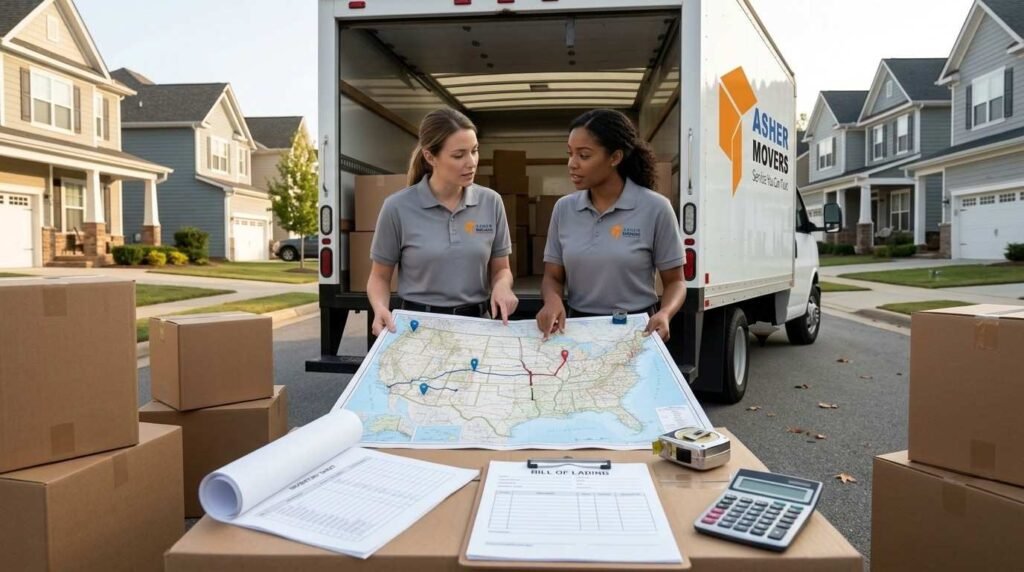
A local move is a relocation that stays within a short distance, usually under 50 to 100 miles, and typically remains inside the same state. I get asked about this distinction constantly, and it matters because it changes how your move gets priced, scheduled, and regulated.
What Defines a Local Move? (Distance, Time & Location Rules)
Most moving companies classify a move as local based on two things: mileage and time. If the whole job gets done in one day and stays under roughly 50 to 100 miles, it counts as local.
The Standard Mileage Threshold Movers Use
The 50-mile mark is the industry’s rough dividing line, though some companies stretch that to 100 miles depending on local traffic and drive time. I always tell people to ask their mover directly, because the exact cutoff varies by company and by state.
Distance alone doesn’t tell the whole story though. A move that’s only 40 miles but crosses into another state gets treated differently.
Why State Lines (Not Just Distance) Can Change the Classification
Crossing a state line pulls a move into federal jurisdiction, even when the mileage is short. The Federal Motor Carrier Safety Administration oversees interstate household goods moves and requires movers to provide specific consumer protection paperwork for any move that crosses state boundaries. So a 30-mile move from one city to another in the same state stays local. That same 30-mile move crossing into a neighboring state gets reclassified as interstate, with different rules attached.
Local Move vs. Long-Distance Move: Scope, Cost & Regulation Differences
Local moves get billed by the hour. Long-distance moves get billed by weight and distance combined, which is a completely different pricing model, and understanding long distance moving requirements helps you plan for that shift in advance.
How Local Moves Are Billed Compared to Long-Distance Moves
I quote local jobs based on crew size, truck count, and estimated hours on site. Long-distance moves work off a binding or non-binding estimate tied to your shipment’s total weight and the mileage between origin and destination.
The paperwork differs too. Interstate moves require a bill of lading and inventory list under federal rules, while local moves generally follow state-level requirements that are lighter in scope.
Conclusion
A local move comes down to two things: staying under the mileage threshold and staying inside state lines. Once you know which category your move falls into, pricing and planning get a lot simpler.
Frequently Asked Questions
What is considered a local move?
A local move is a relocation completed within one day, usually under 50 to 100 miles, and within the same state. Mileage and same-state travel are the two deciding factors movers use.
Does a short move across state lines still count as local?
No, crossing a state line reclassifies the move as interstate regardless of how short the distance is. Federal regulations then apply instead of state-level rules.
