
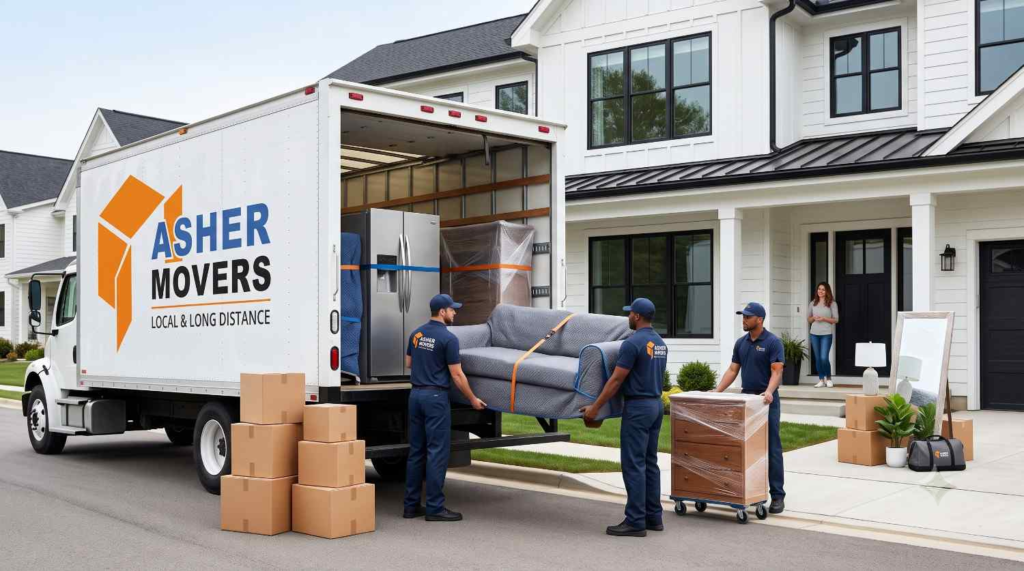
Movers load the largest, heaviest items first sofas, bed frames, dressers, and major appliances go straight to the back wall of the truck before anything else gets touched.
Loading order is not a preference. It is a system built around weight distribution, road safety, and protecting every item in the truck from the moment the doors close to the moment they open at your new home.
This article walks through the full loading sequence professional movers follow, explains why each stage happens in that order, and tells you exactly what to expect on moving day.
Why Loading Order Matters on Moving Day
Most people think loading a truck is just a matter of fitting things in. It is not. The sequence items enter the truck determines how stable the load is during transport, how much damage risk every item carries, and how fast the unload goes at the other end.
Get the order wrong and the truck becomes a problem. Boxes shift. Furniture tips. Fragile items absorb impact from things that should never have been near them.
A deliberate loading sequence solves all of that before the truck leaves the driveway.
Weight Distribution and Truck Stability
Heavy items loaded at the back of the truck closest to the cab keep the center of gravity low and forward. That matters on highways, sharp turns, and sudden stops.
A rear-heavy or top-heavy load creates a truck that handles unpredictably. The driver feels it. The items inside feel it more.
Professional movers think about axle weight and load balance the same way a freight driver does. The physics are identical, just at a smaller scale.
Protecting Your Belongings From Damage
When heavy items go in first and sit against the walls, everything loaded after them has a stable surface to brace against. Furniture blankets and padding go on before lighter items stack up alongside them.
A fragile box sitting next to a properly padded dresser is safe. That same box sitting next to an unsecured bookshelf that can shift is not.
Loading order creates the protective structure that keeps everything in place for the entire drive.
The First Items Movers Load: Large Furniture and Appliances
The first wave into the truck is always the largest, heaviest pieces in the home. These items form the structural foundation of the entire load everything else builds around them.
They go against the front wall of the cargo area, floor to ceiling, packed tightly so there is no room to shift.
Furniture That Goes In First
Sectional sofas, bed frames, dressers, armoires, dining tables, and wardrobes are the first items on the truck. These pieces are heavy enough to anchor the load and tall enough to use the full vertical space of the cargo area.
Movers stand them upright against the walls wherever possible. A dresser loaded flat wastes space and creates a surface that other items slide off of. Loaded upright and flush against the wall, it becomes part of the structure.
Bed frames get disassembled before loading in most cases. The headboard, footboard, and rails load flat against the wall and take up almost no floor space.
Large Appliances and How They Are Positioned
Refrigerators, washing machines, and dryers go in during this first phase. They are among the heaviest items in any home and belong at the foundation of the load.
Refrigerators always travel upright. Laying one on its side risks compressor oil migrating into the cooling lines a problem that can permanently damage the appliance. Movers use an appliance dolly to move them safely and position them against the truck wall.
Washing machines and dryers load the same way: upright, against the wall, secured so they cannot rock during transport.
What Gets Loaded Next: Medium Items and Boxes
Once the large furniture and appliances are in and secured, the second phase begins. Medium-sized furniture, bookshelves, and the heaviest boxes come next.
This layer fills in the gaps around the large items and starts building the stacking structure that lighter boxes will sit on top of.
Stacking Boxes the Right Way
Heavy boxes books, tools, kitchen equipment go directly on the floor or on top of large furniture surfaces. They form the base of every stack.
Lighter boxes go on top of heavier ones. Never the reverse. A heavy box of books sitting on top of a box of glassware is a guarantee of broken glass.
Boxes stack against the walls and against each other for mutual support. A freestanding stack in the middle of the truck will shift. A stack braced against the truck wall and neighboring items stays put.
Mattresses, Mirrors, and Flat Items
Mattresses travel in mattress bags and load vertically standing on edge along the side wall of the truck. Laying a mattress flat turns it into a platform that other items get stacked on, which compresses the mattress and risks damage to whatever is underneath.
Mirrors and framed artwork load the same way: vertical, in mirror boxes or wrapped in furniture blankets, positioned between mattresses or padded furniture pieces that hold them in place.
Flat items loaded horizontally almost always end up damaged. Vertical is the rule.
Last In: Lightweight, Fragile, and Frequently Needed Items
The final phase of loading is the most careful. Fragile items, lamps, small electronics, plants, and anything that cannot absorb impact go in last.
Last in means first out. These items sit closest to the truck doors and come off the truck before anything else gets unloaded. That is intentional it protects them from being buried under heavier items and makes them easy to access the moment the truck arrives.
Items You Will Need Immediately at Your New Home
One box or bag should be set aside before loading begins and loaded absolutely last or kept in your personal vehicle entirely. This is your essentials kit.
It holds the things you need within the first hour at your new home: phone chargers, medications, a change of clothes, toiletries, bedding for the first night, and any documents you need on hand.
Movers call this the overnight essentials strategy and it is one of the simplest ways to make the first night in a new home feel manageable instead of chaotic.
How Professional Movers in Skokie, IL Approach Loading
Every crew is different, but the loading sequence above is standard practice across professional moving companies. What varies is how efficiently a crew executes it.
At Asher Movers, the crew does a walk-through of the home before a single item gets touched. They identify the largest pieces, map the loading order mentally, and flag anything that needs special handling appliances that need disconnecting, furniture that needs disassembly, or items the customer wants loaded last for easy access.
What to Expect When the Crew Arrives
The crew arrives, introduces themselves, and walks through the home with you. This takes five to ten minutes and prevents surprises during the load.
They confirm which items are going, which stay, and whether anything needs special treatment. If you have an essentials box or items you want loaded last, tell them during the walk-through not after loading has started.
From there, the crew works systematically. Large items first, medium items and boxes next, fragile and lightweight items last. A well-organized local moving crew in Skokie can load a standard two-bedroom home in two to three hours when the sequence is followed correctly.
FAQ: What Do Movers Load First?
Do movers always load the heaviest items first?
Yes. Heavy furniture and appliances go in first, every time. This keeps the truck’s weight distribution stable and gives lighter items a secure structure to load against.
How do movers decide what order to load the truck?
Movers follow a weight-based sequence: heaviest and largest items first, medium items and boxes second, fragile and lightweight items last. The walk-through before loading helps the crew plan the sequence for your specific home.
Should I tell movers which items to load first?
Tell the crew during the walk-through if you have specific requests like loading your essentials box last or keeping certain items accessible. Once loading starts, changing the sequence mid-load slows everything down.
What happens if items are loaded in the wrong order?
A poorly ordered load shifts during transport. Boxes tip, furniture moves, and fragile items absorb impact from heavier pieces. Damage claims almost always trace back to loading sequence errors.
Do movers load fragile items last?
Yes. Fragile items glassware, lamps, mirrors, small electronics load last so they sit closest to the truck doors and come off first. They never go under or beside heavy unsecured items.
How long does it take to load a moving truck?
A one-bedroom home typically takes one to two hours to load. A two-bedroom home runs two to three hours. Larger homes or homes with many heavy appliances take longer. Preparation disassembled furniture, packed boxes, clear pathways cuts loading time significantly.
Can I help movers load the truck?
You can, but most professional crews prefer to handle the loading themselves. Their liability coverage applies to items they handle. If you load items yourself, damage to those items may not be covered. The best way to help is to have everything packed, labeled, and ready before the crew arrives.
Conclusion
Loading order is the foundation of a smooth move. Heavy items first, medium items and boxes next, fragile and lightweight items last that sequence protects your belongings, stabilizes the truck, and makes unloading faster at the other end.
Professional movers follow this system because it works. It is not guesswork. It is the result of handling thousands of moves and knowing exactly what happens when the sequence gets skipped.
We follow this process on every move we run. Contact Asher Movers Local & Long Distance to schedule your Skokie, IL move and let our crew handle the loading from start to finish.
