
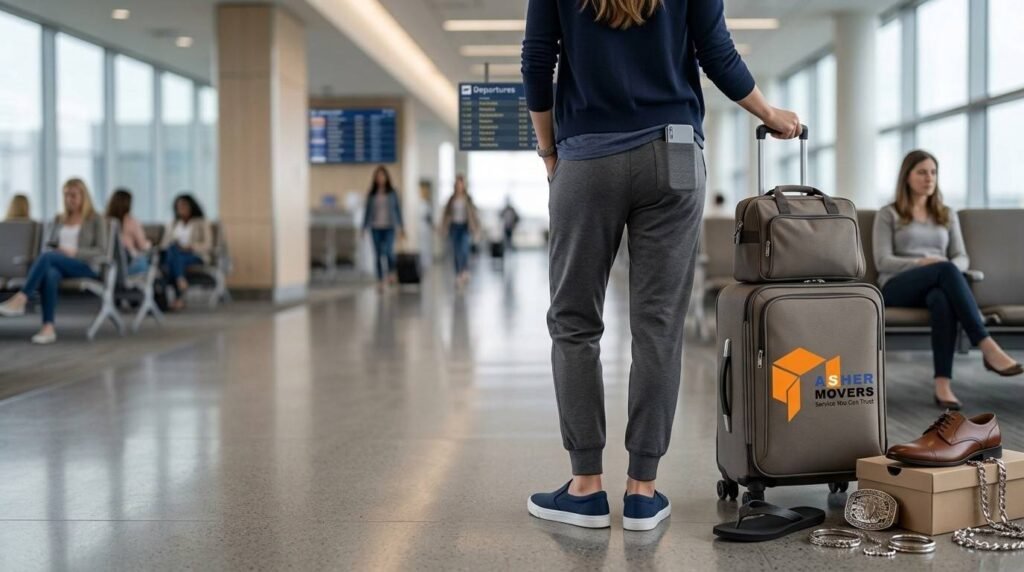
I’ve packed enough trips to know the outfit you choose on travel day either makes everything easier or turns a simple flight into a headache. The wrong clothes slow you down at security, leave you uncomfortable for hours, and sometimes cause real problems mid-flight.
Long flights swell feet, dry out skin, and shift cabin temperatures fast. Comfort and practicality matter more than style here, and a few small choices prevent a genuinely miserable travel day.
I’m walking through seven specific things to skip, why each one causes trouble, and what actually works better in the cabin.
Why What You Wear on a Plane Actually Matters
Airplane cabins run cold, then warm, then cold again as crews adjust temperature for different rows and flight phases. Clothing that can’t adapt leaves you stuck either sweating or freezing for hours.
Security screening adds another layer to this. Metal accessories, bulky shoes, and complicated layers all slow down the line and single you out for extra checks.
And there’s a safety piece too. Loose, dangling fabric and impractical shoes make it harder to move quickly in an emergency, and flight crews notice.
1. Tight or Restrictive Clothing
Skinny jeans, tight waistbands, and fitted dresses feel fine standing in the airport. They stop feeling fine somewhere around hour two of sitting in an economy seat.
Blood circulation slows during long periods of sitting, and tight clothing makes that worse. Swelling in the legs and feet gets more uncomfortable when fabric won’t give at all.
I reach for stretch-fabric pants or joggers instead. They move with me through the terminal and stay comfortable once I’m buckled in for a five-hour stretch.
2. Underwire Bras and Metal-Heavy Garments
Underwire bras, heavily studded jackets, and belts with oversized metal buckles trigger extra attention at security screening. That means more pat-downs, more delays, and more stress before you’ve even reached the gate.
Metal detectors don’t discriminate between fashion and function. A jacket covered in metal studs reads the same as anything else with dense metal content.
Soft-cup bras and minimal-hardware clothing move through screening faster. It’s a small swap that saves real time at a checkpoint that’s already unpredictable.
3. Flip-Flops and Backless Shoes
Flip-flops feel breezy on a warm departure day, but they’re a poor choice for a plane. Cabin floors collect spills, crumbs, and whatever the previous flight left behind, and open shoes give zero protection.
Backless shoes also slip off constantly during boarding, walking through the aisle, and especially during turbulence. That’s not a minor annoyance in an emergency evacuation scenario.
Closed-toe slip-on sneakers give protection and still come off fast at security. That combination matters more than people expect until they’re standing in a TSA line juggling three bins.
4. Heavy Perfume or Cologne
A cabin is a sealed, recirculated-air environment holding 150 to 300 people in close quarters for hours. Heavy fragrance doesn’t fade in that space, it lingers and spreads to everyone nearby.
Strong scents also trigger genuine reactions in people with migraines, asthma, or fragrance sensitivities. What smells pleasant to you at the gate can cause real discomfort for the passenger seated next to you.
I skip fragrance entirely on travel days now. A quick deodorant application does the job without turning row 24 into a perfume counter.
5. Brand-New, Stiff Shoes
New shoes seem like a smart choice for a trip. In practice, unbroken-in shoes cause blisters fast, and there’s no good way to deal with a blister mid-flight.
Feet also swell during long flights due to lower cabin pressure and hours of limited movement. New shoes that fit fine at the gate can feel painfully tight by landing.
Worn-in, familiar shoes flex with your foot and give room for natural swelling. Save the new pair for after you’ve landed and settled in.
6. Complicated Layers and Accessories
Multiple belts, layered necklaces, several rings, and stacked bracelets all add up to more time removing items at security and more things to keep track of once you’re seated.
Bulky layers also fight against the temperature shifts inside a cabin. Peeling off four items when the plane warms up leaves you juggling clothing in a tight economy seat with nowhere to put it.
One light layer that adds or removes easily, like a zip-up or cardigan, handles cabin temperature swings without the hassle.
7. Clothing Without Pockets or Practical Storage
Dresses and outfits with no pockets force you to juggle your phone, boarding pass, ID, and headphones in your hands or dig through a bag every few minutes.
That constant fumbling slows you down at the gate, at security, and during boarding when the line behind you is waiting. It also increases the odds you set something down and walk away without it.
Clothing with real pockets keeps your essentials on you and accessible. It’s a small detail that saves genuine frustration throughout a travel day.
What to Wear Instead: A Quick Packing-Friendly Outfit Formula
A strong travel outfit comes down to four things: stretch-fabric bottoms, a breathable top, one easy layer, and broken-in closed-toe shoes. That combination handles security, comfort, and temperature shifts without extra thought.
Pockets round out the formula well, and minimal metal accessories keep the security line moving. This same instinct for smart, practical prep carries directly into how you handle packing your belongings for moving day, since comfort and preparation matter just as much when you’re the one doing the heavy lifting.
How This Connects to Smart Packing for Your Whole Trip
Getting dressed right for a flight is really the same instinct as packing right for a move. Both come down to thinking ahead about comfort, practicality, and what you’ll actually need access to.
If you’re flying out during a relocation, the same practical mindset applies to your belongings. Knowing what movers can and cannot transport prevents the same kind of last-minute scramble a bad travel outfit causes at the airport.
We work with people across Skokie who are juggling a flight and a move at the same time, and small preparation choices like this make the whole process smoother. ASHER MOVERS LOCAL & LONG DISTANCE helps you plan both the packing and the transport side so moving day doesn’t catch you off guard the way a bad shoe choice does at security.
Conclusion
Comfort, practicality, and a little foresight turn travel day from stressful into manageable, whether you’re heading to a gate or a new home.
The same mindset that picks the right outfit for a flight applies directly to preparing belongings for a move.
We built ASHER MOVERS LOCAL & LONG DISTANCE to help Skokie families handle both the small details and the big logistics, so reach out and let’s make your move as smooth as a well-planned trip.
Frequently Asked Questions
Can I wear jeans on a plane?
Jeans work fine for flying as long as they’re not tight through the waist or legs. Stretch-denim options handle long sitting periods more comfortably than rigid denim.
Why do my feet swell on long flights?
Lower cabin pressure and hours without movement cause fluid to build up in the lower legs and feet. Broken-in shoes with a little extra room handle this better than snug or brand-new pairs.
Are metal accessories really a problem at airport security?
Dense metal jewelry, thick belt buckles, and metal-studded clothing frequently trigger secondary screening. Minimal-metal outfits move through the checkpoint noticeably faster.
What shoes are best for air travel?
Closed-toe, slip-on sneakers that are already broken in offer the best combination of comfort, protection, and quick removal at security. Flip-flops and stiff new shoes both create problems mid-trip.
Does what I wear on a plane matter for safety?
Yes. Loose dangling fabric and hard-to-move-in shoes make it harder to react quickly during turbulence or an emergency, and flight crews are trained to notice this.
