
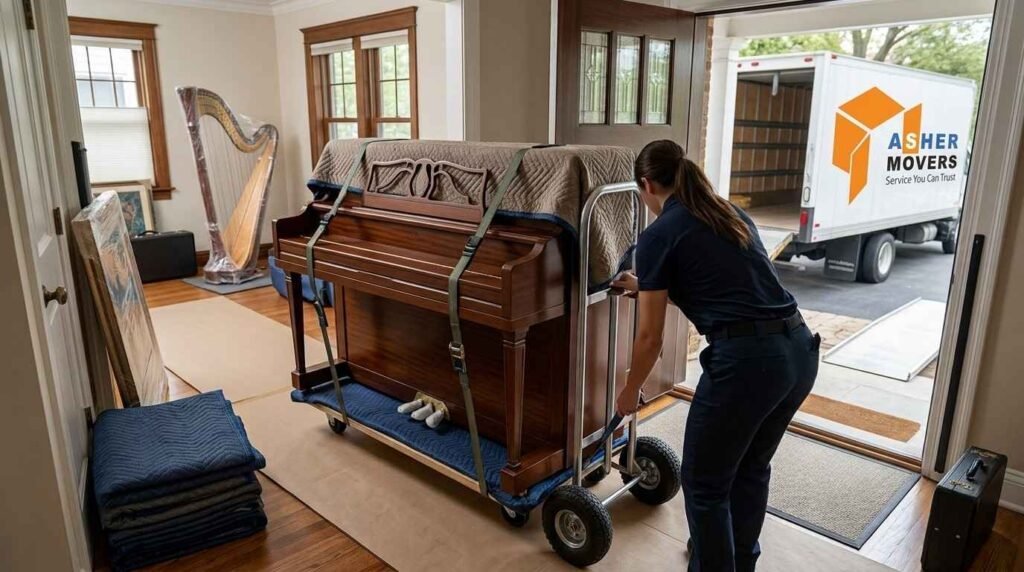
Moving a piano is nothing like moving a couch. A single upright piano can weigh 300 to 500 pounds, and a grand piano can top 1,200 pounds, which changes almost everything about how it gets packed, carried, and loaded. I’ve seen homeowners try to muscle a piano through a doorway alone, and it almost never ends well.
This guide exists because pianos and specialty instruments get damaged, or people get hurt, when movers skip the right steps. Skokie homeowners planning a move need to know this before moving day arrives.
I’ll walk through what counts as a specialty item, how professionals prepare and transport them, and what you need to do before the truck shows up.
What Counts as a Specialty Item on Moving Day
A specialty item is anything that needs custom handling because of its weight, shape, fragility, or internal mechanics. Pianos sit at the top of this list, but they’re not alone.
Pianos (Upright, Spinet, Baby Grand, Grand, Digital)
Upright pianos and spinets are tall, front-heavy, and awkward to tip without damaging internal hammers and strings. Baby grand and grand pianos disassemble differently — legs, lyres, and pedal boards often come off before the move.
Digital pianos weigh far less but still need padding for their screens and internal boards. And each type moves through doorways differently, which matters a lot in older Skokie homes with narrower hallways.
Other Specialty Instruments (Organs, Harps, Drum Kits)
Pipe organs and console organs carry delicate internal components that shift during transport if they’re not braced correctly. Concert harps are tall, top-heavy, and easily thrown off balance on stairs.
Full drum kits aren’t usually fragile in the same way, but cymbals, shells, and hardware need separate packing to avoid dents and cracked finishes.
Other High-Value Specialty Items (Comparison Context)
Pool tables, gun safes, and large aquariums get grouped into the same “specialty” category for a reason. They all share the same core problem: extreme weight combined with a shape that resists standard moving equipment.
Why Pianos and Specialty Instruments Need Different Handling
Standard moving techniques don’t work here. The weight distribution and internal mechanics change the entire approach.
Weight and Balance Challenges
A grand piano’s weight sits unevenly across its body, which means a two-person lift without the right equipment risks tipping and dropping. Movers train specifically on how to shift that weight through doorways, down stairs, and onto a truck ramp.
Internal Mechanism Sensitivity
Pianos contain thousands of moving parts — hammers, strings, dampers — that go out of tune or get physically damaged from vibration and tilting. Harps and organs carry similar internal sensitivity, where a hard jolt during transport can crack a soundboard or bend a tuning pin.
How Professional Movers Prepare a Piano for Transport
Preparation is where most of the protection happens, long before the piano ever leaves the house.
Padding, Blankets, and Wrapping
Movers wrap the entire piano body in thick moving blankets, securing them with tape or straps that never touch the wood finish directly. Corners and edges get extra padding since those points take the most impact during loading.
Securing the Lid, Pedals, and Keys
The keyboard lid gets locked or taped shut to prevent it from opening mid-move and damaging the keys. Pedals get wrapped separately since they’re often the first thing to catch on a doorframe or stair rail.
Piano Boards, Dollies, and Skid Boards
A piano board is a flat, padded platform that the piano gets strapped onto before any lifting begins. This spreads the weight evenly and lets movers use dollies to roll the piano instead of carrying it by hand across long stretches.
Specialty Equipment Movers Use for Instrument Transport
The right equipment is the difference between a controlled move and a dangerous one.
Piano Straps and Ramps
Shoulder straps let two or more movers distribute a piano’s weight across their bodies instead of their arms alone, which reduces injury risk significantly. Ramps replace stairs whenever possible, since a ramp keeps the piano level instead of tilting it at odd angles.
Climate-Controlled Trucks
Wood, felt, and strings inside a piano react to extreme heat and cold, which can cause warping or tuning instability. Long-distance movers use climate-controlled trucks specifically to protect these materials across multi-day transport.
Preparing Your Home for Piano Moving Day
Homeowners play a real role in how smoothly the move goes, and a little prep work prevents most delays.
Measuring Doorways, Stairs, and Hallways
I always tell people to measure their piano’s width, depth, and height, then compare those numbers against every doorway and hallway it needs to pass through. Older Skokie homes sometimes have narrower doorframes than expected, and that detail changes the entire moving plan.
Clearing the Path and Protecting Floors
Remove rugs, furniture, and decor from the piano’s exit path the night before. Floor protection like ramp boards or heavy cardboard keeps hardwood and tile from scratching during the roll-out.
Local vs. Long-Distance Piano Moving Considerations
The distance of your move changes several practical decisions.
What Changes for a Skokie, IL Local Move
Local moves in Skokie typically happen in a single day, which reduces the piano’s total exposure to temperature swings and rough handling. Movers still need the same padding and equipment, but the timeline is tighter and more predictable.
What Changes for a Long-Distance Move
Long-distance moves add days of transport time, which raises the importance of climate control and secure bracing inside the truck. Insurance conversations also become more detailed, since the instrument sits in transit far longer.
Safety Risks of Moving a Piano Without Professionals
Skipping professional help introduces risks that go beyond a scratched finish.
Injury Risks
Back injuries account for a significant share of moving-related injuries reported in occupational safety data, and pianos are among the heaviest household items people attempt to move themselves, according to the U.S. Bureau of Labor Statistics. A dropped piano can crush fingers, feet, or worse on a staircase.
Property and Instrument Damage Risks
An improperly moved piano can crack a soundboard, snap strings, or knock the entire instrument out of tune permanently. Walls, door frames, and stair railings take damage too when a piano shifts unexpectedly during a DIY attempt.
Insurance, Liability, and Valuation Coverage for Specialty Moves
Ask about valuation coverage before booking, since standard liability coverage often pays out far less than a piano’s actual worth. Full-value protection plans cost more upfront but cover the true replacement cost of the instrument if something goes wrong.
Get any coverage details in writing before moving day. A verbal promise doesn’t help if a claim comes up later.
How to Choose a Piano and Specialty Instrument Moving Company
Not every moving company handles pianos, and the ones that do vary a lot in experience level.
Questions to Ask Before Booking
Ask how many years the company has moved pianos specifically, not just furniture. Ask what equipment they bring, whether they carry valuation coverage, and whether the movers assigned to your job have handled your exact piano type before.
Red Flags to Avoid
A company that can’t answer basic questions about piano boards, straps, or climate control probably doesn’t specialize in this work. Extremely low quotes for piano moving are often a sign of inexperience or hidden fees added later.
What to Expect on Piano Moving Day With Professional Movers
Professional crews typically arrive early to measure doorways and walk the exit path before touching the piano. They pad and wrap it first, then use the piano board and straps to move it slowly, communicating each step out loud.
Loading onto the truck happens last, with the piano secured against shifting for the entire ride. The whole process, done right, looks careful and slow rather than rushed.
Conclusion
Piano and specialty instrument moving depends on proper padding, the right equipment, and movers trained specifically for this weight and fragility. Skokie homeowners protect their instruments and their safety by preparing doorways early and choosing experienced crews.
We handle pianos and specialty instruments with the equipment and training this work actually demands. Contact ASHER MOVERS LOCAL & LONG DISTANCE to schedule a piano moving consultation today.
Frequently Asked Questions
How much does it cost to move a piano?
Piano moving costs vary based on piano type, distance, and stairs involved. Local moves typically cost less than long-distance moves due to reduced transport time and equipment needs.
Can I move a piano myself with friends?
Moving a piano without training risks serious injury and permanent instrument damage. Professional movers use straps, boards, and techniques that untrained helpers don’t have access to.
Do movers disassemble pianos before transport?
Grand pianos often need legs, lyres, and pedal boards removed before moving. Upright pianos usually move intact but still require careful padding and securing.
How long does a local piano move take in Skokie?
Most local piano moves complete within a single day, including loading, transport, and placement. Complex staircases or narrow doorways can add extra time.
What happens if my piano gets damaged during the move?
Valuation coverage determines how much compensation you receive for damage. Reviewing coverage details before booking protects you if something goes wrong.
Do I need to prepare my piano before movers arrive?
Clear the exit path and measure doorways ahead of time, but leave the actual padding and disassembly to the professional crew. Attempting to prep the piano yourself risks damaging keys or the finish.
Are digital pianos easier to move than acoustic pianos?
Digital pianos weigh significantly less than acoustic pianos, making them easier to lift and transport. They still need padding to protect screens and internal electronics from impact
