
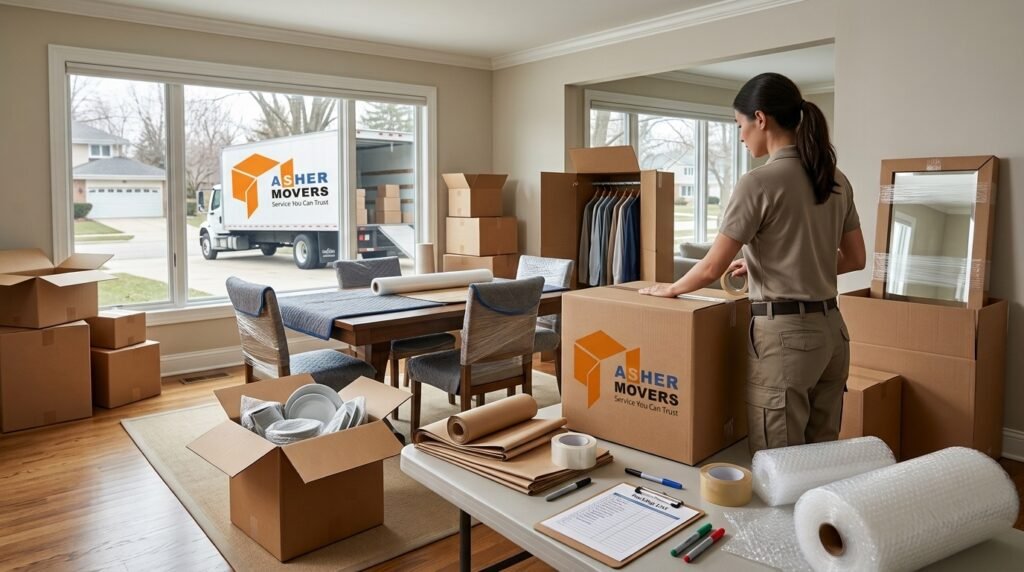
Moving boxes and packing supplies determine whether your move goes smoothly or turns into a stressful mess of broken dishes and delayed trucks. I’ve watched plenty of moves get held up on the day itself, usually because someone grabbed the wrong box size or packed something a mover legally can’t touch. Getting the basics right ahead of time saves you money, time, and a lot of frustration.
Skokie residents face tight timelines, apartment stairwells, and unpredictable weather that all affect packing decisions. Poor prep causes damaged items, mover delays, and unexpected costs on moving day.
This guide covers box types, essential supplies, prohibited items, and packing techniques. I’ll walk you through exactly what you need and what to skip.
What Types of Moving Boxes Do You Actually Need?
Not every box works for every item, and that’s the first mistake I see people make. A box built for books will crush under the weight of, well, more books than it can handle. Matching the box to the item is half the battle.
Most residential moves use a mix of small, medium, large, and specialty boxes. The right combination protects your belongings and makes loading the truck far more efficient. I always tell people to think in terms of weight distribution, not just size.
Small, Medium, and Large Box Sizes Explained
Small boxes, typically around 16x12x12 inches, are for dense, heavy items. Books, tools, and canned goods belong here because a full box of these items stays light enough to lift safely.
Medium boxes run about 18x18x16 inches and handle kitchen items, toys, and small appliances. These are the workhorse boxes of most moves. You’ll use more of these than any other size.
Large boxes, around 18x18x24 inches, work best for lightweight, bulky items like linens, pillows, and lampshades. Never pack large boxes with heavy items. The box fails, or the person carrying it does.
Specialty Boxes (Wardrobe, Dish Pack, Mirror/Picture)
Wardrobe boxes include a metal bar so clothes hang exactly as they do in your closet. This eliminates wrinkling and cuts your packing time down significantly since you skip folding altogether.
Dish pack boxes have thicker walls and cell dividers built for stacking plates, glasses, and stemware. I recommend these over standard boxes every time for kitchen breakables. The extra structural support actually matters here.
Mirror and picture boxes are flat, adjustable, and designed to protect flat glass and framed art from bending or cracking. Standard boxes crush these items during transport.
How Many Boxes Do You Need for Your Home Size?
A one-bedroom apartment generally needs 20 to 30 boxes total. A three-bedroom house typically needs 60 to 80 boxes, depending on how much you own and how minimalist your storage habits are.
I always suggest buying 10 percent more than your estimate. Running out mid-pack on a Saturday afternoon is a hassle nobody needs.
Essential Packing Supplies Beyond Boxes
Boxes get all the attention, but the supporting supplies are what actually keep your items intact. Tape, cushioning, and labels do more heavy lifting than most people realize.
Skipping these supplies to save a few dollars almost always costs more later in damaged goods or wasted time searching for items in unlabeled boxes.
Packing Tape, Bubble Wrap, and Cushioning Materials
Use a strong packing tape, not household tape. Household tape simply doesn’t hold under the weight of a stacked box, and it fails at the worst possible moment.
Bubble wrap, packing paper, and foam sheets protect breakables from shifting during transit. Crumpled newspaper works in a pinch but can transfer ink onto light-colored items. I lean toward packing paper for anything that matters.
Furniture Blankets, Straps, and Protective Covers
Furniture blankets prevent scratches, dents, and fabric damage on couches, dressers, and tables. Straps secure furniture inside the truck so nothing shifts and tips during transport.
Mattress bags and covers keep fabric surfaces clean and dry. Dust, moisture, and dirt find their way onto exposed mattresses fast, especially during a Skokie winter move.
Labels, Markers, and Inventory Systems
Labeling boxes by room saves enormous time during unloading. I write the destination room and a short contents list on at least two sides of every box.
Color-coded stickers speed this process up even further for movers who are juggling dozens of boxes at once. A simple system here prevents confusion later.
New vs. Used Moving Boxes — What’s the Better Choice?
New boxes offer consistent strength and no risk of hidden weak spots. Used boxes save money but often carry fatigue from prior moves that isn’t visible until the box collapses.
I generally recommend new boxes for anything heavy or fragile. Used boxes work fine for lightweight items like linens or stuffed animals, where structural failure isn’t a real risk.
Free used boxes from grocery stores or online marketplaces cut costs significantly. Just inspect every seam and corner before loading anything valuable inside.
How to Pack Boxes the Right Way (Room by Room)
Packing strategy changes room by room. What works for the kitchen doesn’t translate to the closet, and treating every room the same way leads to wasted supplies or broken items.
Packing the Kitchen Safely
Wrap each dish individually in packing paper, then stack them vertically inside a dish pack box, like records in a crate. Vertical stacking distributes pressure far better than flat stacking.
Fill any remaining gaps with crumpled paper so nothing shifts during transport. Glasses get individual wrapping and go in cell dividers whenever possible.
Packing Fragile and Breakable Items
Wrap fragile items twice, once in packing paper and once in bubble wrap. Label the box “Fragile” on all sides, and mark which side faces up.
Fragile items go in smaller boxes so the weight stays manageable. Overpacking a large box with breakables is one of the fastest ways to guarantee something cracks.
Packing Closets, Clothing, and Electronics
Wardrobe boxes handle hanging clothes directly. Folded clothing goes in medium boxes, ideally using the empty space to cushion other fragile items nearby.
Electronics need their original boxes when possible. Without original packaging, wrap devices in anti-static bubble wrap and pack them in snug boxes with minimal shifting room.
Items Movers Cannot Transport (Prohibited Items List)
Movers operate under strict regulations regarding what they legally can and cannot transport. Knowing this list before moving day prevents last-minute scrambling and awkward conversations with your moving crew.
The Federal Motor Carrier Safety Administration regulates household goods carriers, and most moving companies build their prohibited items policies around these federal guidelines along with their own liability standards.
Hazardous and Flammable Materials
Propane tanks, gasoline, paint thinner, and aerosol cans cannot go on the moving truck. These materials pose fire and explosion risks in an enclosed trailer.
Fireworks, ammunition, and pool chemicals fall into this same category. Dispose of these properly or transport them yourself following local safety guidelines.
Perishables, Plants, and Pets
Movers cannot transport perishable food, frozen items, or fresh produce because there’s no climate control guarantee during transit. Plants face similar restrictions, partly due to temperature sensitivity and partly due to state agricultural regulations at certain borders.
Pets never travel on a moving truck. They need to travel with you or through a specialized pet transport service.
Valuables and Irreplaceable Items to Move Yourself
Cash, jewelry, important documents, and family heirlooms should travel with you personally, not on the truck. Liability coverage on movers typically doesn’t extend to these categories the way it does for furniture.
I always tell clients to pack a “personal box” of irreplaceable items and keep it in their own vehicle. This single habit prevents more heartache than almost any other packing tip.
Where to Get Moving Boxes and Packing Supplies in Skokie, IL
Local options in Skokie include hardware stores, big-box retailers, and dedicated moving supply shops that stock everything from wardrobe boxes to specialty dish packs.
We at Asher Movers Local & Long Distance supply moving boxes and packing materials directly to customers preparing for a Skokie move, saving you a separate trip before your relocation date.
How Much Do Moving Boxes and Packing Supplies Cost?
A basic box kit for a one-bedroom apartment runs roughly $50 to $100, covering boxes, tape, and paper. A full house kit for a three-bedroom home typically runs $150 to $300 depending on the number of specialty boxes needed.
Used or free boxes reduce this cost substantially. Specialty items like wardrobe boxes and dish packs cost more individually but prevent damage that costs far more to replace.
Eco-Friendly and Reusable Packing Alternatives
Plastic moving bins are reusable across multiple moves and hold up better than cardboard under repeated stress. Renting these bins through local supply companies cuts down on cardboard waste significantly.
Packing with towels, blankets, and clothing as cushioning material reduces the need for bubble wrap entirely. This dual-purpose approach saves both money and landfill space.
Common Packing Mistakes That Delay Moving Day
Overpacked boxes are the most frequent issue I see. A box too heavy to lift safely slows down the entire crew and increases injury risk.
Unlabeled boxes cause massive confusion during unloading, sending kitchen items into the garage and bedroom items into the basement. Waiting until the last minute to pack is the other major culprit, turning what should be an organized process into a chaotic scramble.
Conclusion
Moving boxes and packing supplies form the foundation of a smooth, damage-free relocation. Understanding prohibited items and proper packing techniques prevents delays and protects your belongings.
Skokie movers face unique local logistics, from apartment stairwells to seasonal weather challenges. Preparing correctly ahead of time makes all the difference.
We at Asher Movers Local & Long Distance help you source the right supplies and pack with confidence. Reach out today for a free consultation on your upcoming move.
Frequently Asked Questions
How many moving boxes do I need for a two-bedroom apartment?
A two-bedroom apartment typically needs 40 to 50 boxes total. This includes a mix of small, medium, large, and a few specialty boxes for closets and kitchen items.
Can movers transport house plants?
Movers generally cannot transport house plants due to temperature control issues and state agricultural regulations. Transport plants yourself in your own vehicle instead.
What’s the difference between a dish pack box and a regular box?
Dish pack boxes have thicker walls and built-in cell dividers for stacking dishes safely. Regular boxes lack this structural support and risk breakage under stacked weight.
Do I need special boxes for a mattress?
Mattresses need a mattress bag or cover, not a box. This protects the fabric from dirt, moisture, and tears during loading and transport.
Can I use used boxes for a long-distance move?
Used boxes work for lightweight items on long-distance moves but carry more risk for heavy or fragile items. New boxes offer more consistent strength for longer transit times.
What items should I pack myself instead of letting movers handle them?
Cash, jewelry, important documents, and family heirlooms should travel with you personally. Mover liability coverage typically doesn’t extend fully to these high-value categories.
How far in advance should I start packing before a move?
Start packing non-essential items three to four weeks before moving day. This spreads the workload out and avoids a last-minute scramble that increases mistakes and damage.
Are wardrobe boxes worth the extra cost?
Wardrobe boxes save significant time by letting clothes hang directly from the built-in bar. They eliminate folding, reduce wrinkling, and speed up both packing and unpacking.
