
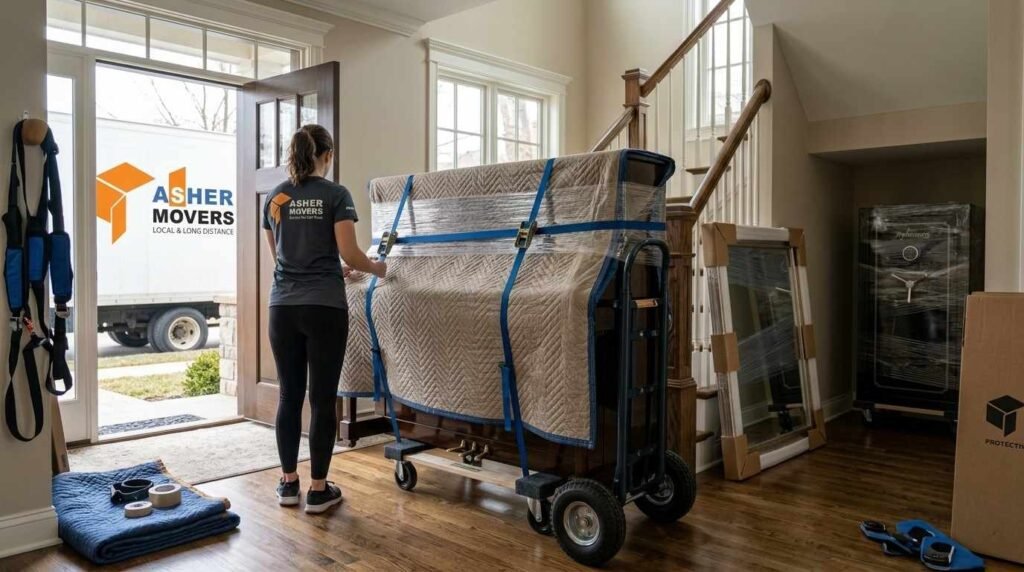
I’ve watched a lot of moving days go sideways over one mislabeled box or one piano that nobody measured against the stairwell first. Heavy, fragile, and specialty items need different handling than your average box of books, and knowing that difference ahead of time saves you money, time, and a cracked heirloom.
Skokie homes range from vintage bungalows to newer condo buildings, and each one presents its own access challenges. Getting this wrong on moving day means delays, damaged goods, or a truck that can’t even reach your door.
This guide walks through what counts as heavy or fragile, how movers pack these items, what’s off-limits entirely, and how Asher Movers Local & Long Distance approaches these jobs in Skokie, IL.
What Counts as a Heavy, Fragile, or Specialty Item?
Not every bulky object gets treated the same way by a moving crew. Weight, shape, material, and value all factor into how a piece gets wrapped, lifted, and loaded.
I break this into three working categories, because that’s how crews actually plan a truck. Heavy items are about mass and awkward leverage. Fragile items are about surface vulnerability. Specialty items are about needing tools or expertise most households don’t have lying around.
Heavy Items Movers Handle Differently
A washer, a china cabinet, a safe, a sectional couch. These items share one trait: they need more than two hands and a good attitude.
Movers use furniture dollies, straps, and sometimes a piano board to distribute weight evenly. Refrigerators and washers also need water lines disconnected and drums secured before they ever touch a dolly.
Fragile Items That Need Special Packing
Glassware, mirrors, artwork, and electronics fall into this group. The risk isn’t just breaking on impact it’s micro-vibrations during transport that crack things slowly over hours on the road.
I’ve seen unwrapped mirrors survive a short local move and shatter on a five-hour highway trip. Vibration matters as much as handling.
Specialty Items Requiring Custom Equipment
Pianos, pool tables, gun safes, hot tubs, and large aquariums live here. These aren’t just heavy or fragile they require disassembly know-how, custom crating, or rigging equipment a general labor crew won’t have on the truck.
How Movers Prepare and Pack Heavy Furniture and Appliances
Preparation for heavy items starts well before the truck arrives. Crews inspect the piece, plan a lift path, and stage materials so nothing stalls mid-carry.
Packing Materials for Heavy Items
Furniture blankets, stretch wrap, and corner protectors go on first. Straps and shoulder dollies come next for anything over roughly 100 pounds that needs stairs or narrow hallways.
Appliance dollies with ratchet straps keep refrigerators and washers upright, since tilting them too far can damage internal compressors or drums.
Disassembly and Equipment Movers Use
Bed frames, large sectionals, and table legs usually come apart to reduce bulk and injury risk. A four-wheel dolly, ramp, and set of furniture sliders handle the rest of the transition from house to truck.
Packing Guidelines for Fragile and Breakable Belongings
Fragile packing is about layering protection so nothing shifts and nothing touches bare surfaces. Dish packs, cell kits, and mirror cartons exist specifically because standard boxes don’t cut it here.
Wrapping and Cushioning Techniques
Each glass or dish gets individually wrapped in packing paper, never newspaper, since ink can transfer onto porous materials. Bubble wrap goes around electronics and framed items, with the fragile side facing inward.
Box Labeling and Loading Order
Every fragile box gets a clear “Fragile This Side Up” label plus a general contents note. Loading fragile boxes last and on top prevents crushing weight from heavier items stacked below.
Moving Pianos, Pool Tables, and Other Specialty Items
Specialty items usually need a dedicated crew trained on that specific object type. A piano crew handles weight distribution and staircase turns differently than a crew moving a hot tub through a backyard gate.
Why These Items Need Dedicated Crews
Pianos alone weigh anywhere from 300 to over 1,000 pounds depending on type, and their internal mechanisms are sensitive to tilting. Pool tables require full disassembly of the slate, felt, and frame before transport, then precise reassembly and leveling at the destination.
Questions to Ask Before Booking
I always tell people to ask a mover directly whether they’ve moved this exact item type before, what equipment they bring, and whether the quote includes disassembly and reassembly. A vague answer on any of these three points is a warning sign.
Items Movers Cannot or Will Not Transport
Every moving company maintains a list of prohibited items, and this list exists for safety and liability reasons, not arbitrary policy. Federal transportation regulations restrict certain hazardous materials from riding on moving trucks at all.
Hazardous and Prohibited Materials
Propane tanks, gasoline, paint thinners, aerosols, and fireworks sit at the top of every mover’s banned list. The U.S. Department of Transportation’s Federal Motor Carrier Safety Administration classifies many of these under hazardous materials rules that household movers are not licensed to carry.
Ammunition and firearms also carry restrictions that vary by state and carrier policy.
Perishables, Plants, and Personal Valuables
Frozen food, fresh produce, and live plants typically don’t survive long-distance transport and most movers decline them outright for that reason. Cash, jewelry, and irreplaceable documents belong in a personal bag you keep with you, not on the truck, regardless of distance.
How Skokie, IL Homes Affect Heavy & Specialty Item Moves
Skokie’s mix of older single-family homes and newer multi-unit buildings changes how a crew approaches a heavy or specialty item move. A piano move from a Devonshire bungalow looks nothing like one from a mid-rise condo on Oakton Street.
Apartment, Condo, and Walk-Up Considerations
Narrow stairwells, tight elevator dimensions, and low ceiling clearances all factor into whether a specialty item needs a hoist or crane instead of a standard carry. I recommend measuring doorways and elevator interiors before move day, not after the truck shows up.
Local Access, Parking, and Building Rules
Many Skokie apartment buildings require a certificate of insurance and a scheduled loading dock window before movers can even enter. Street parking restrictions on residential blocks can also limit how close a truck parks to your front door.
Insurance, Liability, and Cost Factors for Specialty Moves
Specialty and heavy items usually cost more to move because they demand extra labor, equipment, and time. Most movers price these jobs by item complexity rather than a flat weight rate alone.
Basic released-value protection covers a fraction of an item’s actual worth, often around 60 cents per pound under federal minimum standards. Full-value protection costs more upfront but replaces or repairs an item at its actual value if something goes wrong in transit.
I always suggest asking your mover directly what protection level applies to pianos, antiques, or anything irreplaceable before the day arrives, since assumptions here get expensive fast.
How to Get Your Home Ready Before Moving Day
Getting ready starts with an honest inventory of anything heavy, fragile, or unusual in your home. That list drives everything else crew size, truck size, and equipment needs.
Clear a straight path from each specialty item to the exit, and remove rugs or décor that could cause a slip. Empty and defrost refrigerators at least 24 hours ahead so they’re ready to move without leaks.
Take photos of valuable or fragile items before the crew arrives, documenting their condition in case a claim comes up later.
Conclusion
Heavy, fragile, and specialty items each demand their own packing approach, equipment, and trained hands to move safely. Skokie’s mix of housing types adds another layer of planning most guides skip entirely.
Getting ahead of prohibited items, insurance options, and home prep turns a stressful day into a manageable one. Every detail here connects back to one goal: protecting what matters most during transit.
We handle heavy, fragile, and specialty moves across Skokie every week. Reach out to Asher Movers Local & Long Distance for a quote built around your specific items.
Frequently Asked Questions
How much does it cost to move a piano?
Piano moves typically run $300 to $1,500 depending on piano type, distance, and stair access. Upright pianos cost less to move than grand or baby grand models.
Can movers transport a gun safe?
Yes, most movers transport gun safes using dollies and straps rated for extreme weight. Firearms themselves usually travel separately per state regulations.
What items are movers not allowed to transport?
Movers cannot transport hazardous materials like propane, gasoline, and aerosols under federal safety rules. Perishables, plants, and personal valuables are typically declined as well.
Do I need special insurance for fragile or specialty items?
Full-value protection is worth considering for pianos, antiques, or anything irreplaceable. Basic coverage often pays far less than an item’s actual worth.
How do movers pack fragile items like mirrors and artwork?
Movers wrap each piece individually in packing paper and use mirror cartons or custom crating for extra protection. Boxes get labeled fragile and loaded last, on top of heavier items.
Should I disassemble furniture myself before movers arrive?
I recommend leaving disassembly to the crew, since they know how to protect hardware and reassemble pieces correctly. Doing it yourself risks lost screws or damaged joints.
How far in advance should I book a specialty item move?
Booking two to four weeks ahead gives movers time to schedule the right crew and equipment for pianos, pool tables, or safes. Peak moving season may require even more lead time.
