
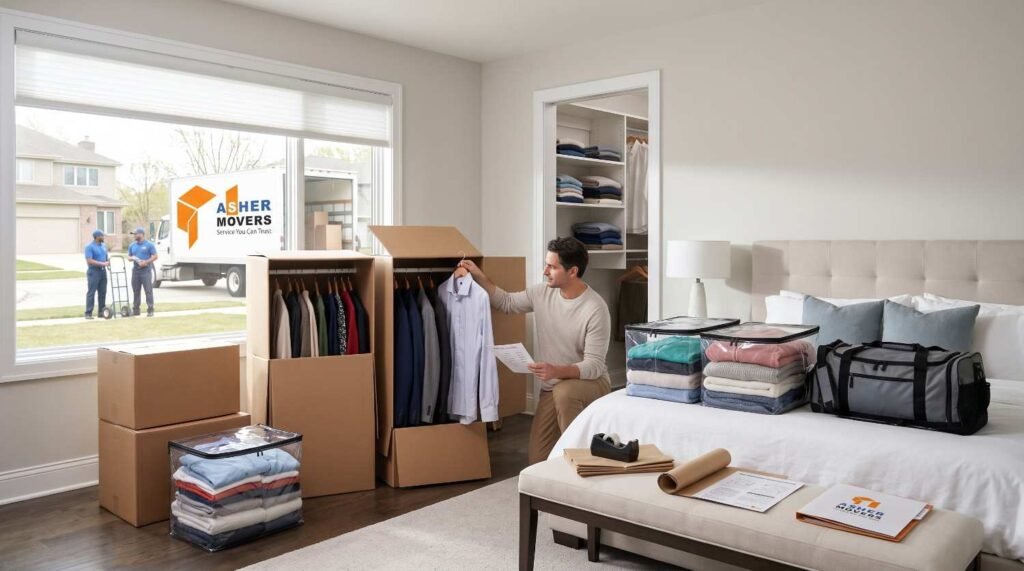
Most movers accept both bags and boxes for clothes but the right choice depends on what you’re packing, how far you’re moving, and what your moving company’s policies actually say. Getting this wrong can slow down your move, damage your belongings, or create liability headaches you didn’t see coming.
Packing method matters more than most people realize. The wrong container for the wrong item causes real problems on moving day.
Here’s a clear breakdown of when bags work, when boxes win, what movers actually allow, and how to pack your clothes so nothing gets damaged or delayed.
The Short Answer: Bags vs. Boxes for Moving
The bags-versus-boxes debate doesn’t have one universal answer. It depends on the item type, the move distance, and your moving company’s specific rules.
Boxes are the industry standard for a reason. They stack cleanly, protect contents from compression, and give movers a predictable shape to work with inside the truck.
Bags are acceptable for soft, lightweight items but they come with real limitations that catch people off guard.
When Bags Work Fine
Soft, compressible items like t-shirts, sweaters, linens, and towels move well in bags. A sturdy duffel bag or a sealed plastic storage bag handles these items without any issue.
Bags also work for last-minute packing when you’re running out of boxes. Movers generally won’t refuse a well-sealed, manageable bag filled with soft clothing.
The key word is manageable. A bag that’s overstuffed, poorly sealed, or too heavy to carry safely becomes a problem for the crew and a risk for your belongings.
When Boxes Are the Better Choice
Boxes protect structure. Anything that can be crushed, bent, or damaged by the weight of other items stacked on top needs a rigid container.
Boxes also load faster. Movers can stack them efficiently, which means less time on the truck and a lower risk of shifting during transit.
For long-distance moves especially, boxes are the smarter call. Items in bags shift, compress, and sometimes tear over hundreds of miles.
What Most Moving Companies Actually Allow
Moving companies set their own policies, and those policies vary. But there are general patterns that hold across most professional movers.
Most companies accept bags for soft goods. Most companies prefer boxes for everything else. And some companies have specific rules about garbage bags that you need to know before moving day.
Soft Items in Bags: The General Rule
Professional movers typically allow bags for clothing, bedding, pillows, and other soft household textiles. These items don’t break, don’t require structural support, and compress without damage.
The bag itself matters, though. Flimsy garbage bags are a different story from a sealed plastic storage bag or a quality duffel. Many movers will flag or refuse thin garbage bags because they tear during loading and create a mess in the truck.
Use bags with handles, secure closures, and enough structural integrity to survive being carried, stacked, and moved multiple times.
Why Movers Prefer Boxes for Most Items
Boxes give movers control. A uniform shape means predictable stacking, better truck utilization, and less risk of items shifting during the drive.
Bags create dead space in the truck. They don’t stack flat, they slide, and they can compress in ways that damage whatever’s inside or underneath them.
From a liability standpoint, boxes also matter. When items are packed in proper moving boxes according to professional standards, damage claims are cleaner and easier to resolve.
Packing Clothes Specifically: What Works Best
Clothes are one of the easier categories to pack but the method still matters. Hanging clothes, folded clothes, and delicate garments each have a best-practice approach.
Getting this right saves you time unpacking and keeps your wardrobe in the same condition it left in.
Wardrobe Boxes for Hanging Clothes
Wardrobe boxes are the gold standard for suits, dresses, dress shirts, and anything you’d normally keep on a hanger. They’re tall boxes with a built-in hanging rod that lets clothes travel upright without wrinkling or folding.
These boxes are worth every penny for a formal wardrobe. A suit that arrives wrinkled from being stuffed into a bag costs more to press than the box would have cost to rent.
Ask your moving company whether wardrobe box rentals are included in your quote or available as an add-on. Many movers offer them as part of a full-service packing package.
Folded Clothes: Bags or Boxes?
For everyday folded clothes jeans, t-shirts, casual wear both bags and boxes work. The deciding factor is usually how much you have and how organized you want to be on the other end.
Boxes keep folded clothes organized by category, which makes unpacking faster. Bags are quicker to fill and easier to carry into a bedroom directly.
A practical approach: use boxes for clothes you want to unpack neatly and organized, and use bags for items you’ll wash before wearing anyway.
Items You Should Never Pack in Bags
Bags have real limits. Certain items should never go into a bag regardless of how convenient it seems in the moment.
This isn’t about preference it’s about protecting your belongings and keeping the move running smoothly.
Fragile and Breakable Items
Bags offer zero structural protection. Picture frames, mirrors, ceramics, glassware, and electronics need rigid walls and cushioning material none of which a bag provides.
A bag full of fragile items gets stacked under heavier boxes in the truck. The result is predictable and expensive.
Pack anything breakable in a proper box with packing paper or bubble wrap. There’s no workaround here.
Heavy Items That Stress Bag Seams
Books, tools, canned goods, and other dense items destroy bags. The seams split, the handles tear, and you end up with a pile of items on the floor of the truck or your driveway.
Heavy items also create a safety risk for the moving crew. A bag that breaks mid-carry is a trip hazard and a liability issue.
Box these items in small, manageable containers. A small box of books is far safer and easier to handle than a bag that’s about to give out.
How Packing Method Affects Moving Day
The way you pack doesn’t just affect your belongings it affects the entire pace and efficiency of your move. Movers work faster with well-packed loads, and that directly impacts your final bill on hourly moves.
Understanding this connection helps you pack smarter before the crew arrives.
Stackability and Truck Space
A truck packed with uniform boxes loads faster and fits more. Bags create irregular shapes that waste vertical space and force movers to improvise around them.
On a long-distance move, wasted truck space can mean a larger truck or a second trip both of which cost more money. Packing in boxes wherever possible is one of the simplest ways to keep your moving costs under control.
Even on local moves, a well-organized load means fewer trips back and forth to the truck, which cuts time and keeps the crew moving efficiently.
Liability and Damage Claims
Most moving companies limit their liability for items packed by the owner rather than the crew. When you pack bags instead of boxes, you take on more of that risk yourself.
If a bag tears and something inside gets damaged, the claim process gets complicated fast. Boxes packed to professional standards give you a much cleaner paper trail.
Ask your mover about their valuation coverage options before moving day. Knowing what’s covered and what isn’t changes how you approach packing decisions.
Practical Packing Tips Before the Movers Arrive
A few simple habits before the crew shows up make a real difference in how smoothly the day goes.
- Label every box and bag with the destination room. Movers place items faster when they don’t have to ask.
- Keep bags to soft, lightweight items only. If it’s heavy or breakable, it goes in a box.
- Don’t overfill bags. A bag you can’t lift comfortably is a bag that’s going to cause a problem.
- Seal bags completely. Open bags shift and spill. Use zip ties, tape, or knot the handles.
- Set aside a “first night” bag with essentials you’ll need immediately toiletries, a change of clothes, chargers. Keep this one with you, not on the truck.
These aren’t complicated steps. But skipping them is one of the most common reasons moves run long or end with damaged items.
Frequently Asked Questions
Can movers refuse to take garbage bags?
Yes, movers can and often do refuse thin garbage bags. Most professional moving companies require items to be packed in containers that won’t tear or break during loading. A sturdy sealed bag is usually fine a flimsy garbage bag is not.
Are vacuum storage bags okay for moving?
Vacuum storage bags work well for soft items like comforters, pillows, and bulky sweaters. They compress well and protect against moisture. Just make sure the seal holds a bag that re-inflates in the truck creates problems.
Do wardrobe boxes come with the moving truck?
Not automatically. Wardrobe boxes are typically available as a rental or purchase add-on through your moving company. Ask about availability and pricing when you book. Some full-service packing packages include them.
Can I use bags for a local move but not long distance?
Bags are more acceptable on local moves where transit time is short and handling is minimal. On long-distance moves, the extended transit, multiple handling points, and greater vibration make boxes the safer choice for almost everything.
What happens if my bag breaks during the move?
If a bag you packed breaks during the move, the moving company’s liability for the contents is typically limited. Most movers are not responsible for damage to owner-packed items. Using proper boxes and packing materials is the best protection against this situation.
Conclusion
The bags-versus-boxes question comes down to item type, move distance, and your mover’s policies. Bags handle soft goods well. Boxes protect everything else and keep your move running efficiently.
Smart packing before moving day reduces damage, speeds up loading, and keeps costs predictable especially on hourly local moves where every minute counts.
At Asher Movers Local & Long Distance, we help customers in Skokie, IL pack right and move without surprises. Contact us today to get a quote and ask about our packing supplies and wardrobe box options.
