
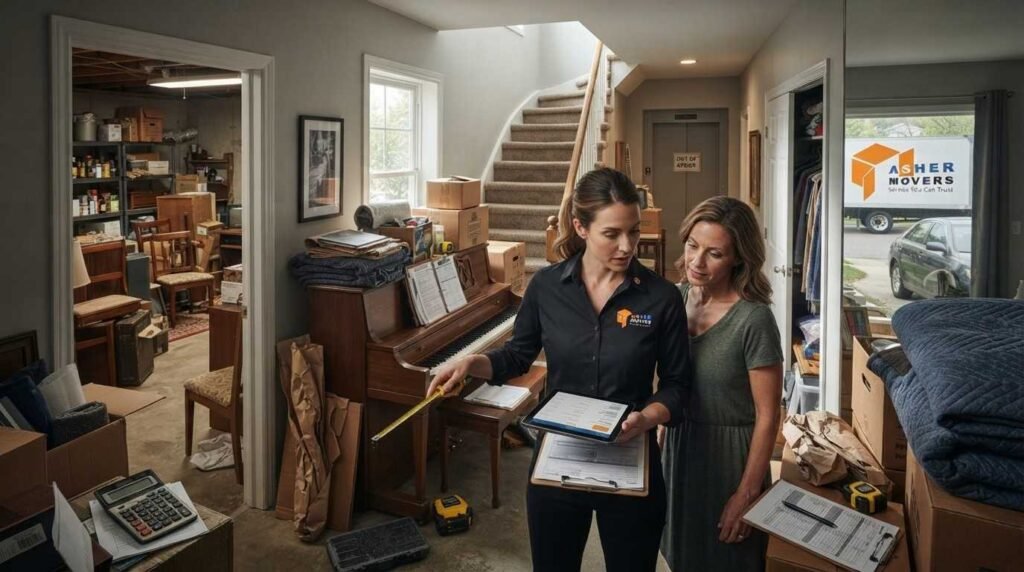
Local moving quotes rarely stay put, and most overages trace back to the same ten root causes, not bad luck. I’ve watched Skokie families open their final invoice and wonder where the extra few hundred dollars came from, and nine times out of ten it’s one of the issues below.
Movers price local jobs on inventory, access, and time. Miss any one of those at quote stage and the number moves. That gap catches people off guard on moving day itself, right when they have the least room to negotiate.
I’m walking through inventory surprises, access charges, packing gaps, time overruns, and the fine-print fees that stack on top. Then I cover how to lock in a number that actually holds.
Underestimating Your Inventory and Item Count
Every local moving quote starts with an inventory count, and that count is the single biggest lever on your final price. A moving estimate is a projected cost based on the volume, weight, or hours a mover expects your job to require. Get the inventory wrong and everything downstream shifts with it.
Reason 1: Inaccurate Item Lists at Quote Time
Phone quotes and quick walkthroughs miss things constantly. I see it happen when someone lists “a two-bedroom apartment” without mentioning the exercise bike, the extra bookshelf, or the box collection stacked in a closet.
A binding estimate locks a price to a specific inventory. Add ten unlisted boxes and you’ve broken the terms of that binding agreement, and the mover is within their rights to rebill for the difference.
Reason 2: Forgotten Storage Areas
Garages, attics, and basements get skipped constantly during walkthrough quotes. These spaces hold disproportionate volume compared to their square footage, and movers price by volume.
I always tell people to physically open every door before the estimator leaves. A forgotten storage area is the single fastest way to add an unplanned truck’s worth of items to a quote that already felt finalized.
Extra Labor Charges From Building Access Problems
Access issues cost more in labor time than almost anything else on a local move. Movers price walking distance and stairs into every quote, and any deviation from that plan adds paid hours fast.
Reason 3: Stairs, Elevators, and Long Carry Distances
A long carry fee applies when movers must walk belongings a set distance beyond the truck’s parking spot to reach your door. Stairs slow a crew down even more, since heavy furniture takes two or three movers per flight instead of one.
Elevator buildings aren’t automatically faster either. A slow service elevator or a strict reservation window adds waiting time that gets billed at the hourly rate.
Reason 4: No Parking Permit or Loading Zone Secured
Skokie’s residential streets and apartment complexes don’t always have open curb space for a 26-foot truck. Without a reserved loading zone or parking permit, the crew parks farther away and that distance becomes billable carry time.
This is one of the easiest overages to prevent. A quick call to the village or your building management before moving day solves most of it.
Additional Packing Materials and Services You Didn’t Plan For
Packing gaps between what you assumed and what the crew actually needs turn into line-item charges fast. Movers stock a set amount of standard materials per job type, and anything beyond that gets billed separately.
Reason 5: Unpacked or Improperly Packed Belongings
Loose items in drawers, unboxed closet contents, and half-packed kitchens force the crew to stop and pack on-site. That labor gets charged at the hourly rate, and the materials used come out of a separate packing supply invoice.
I’ve seen a single unpacked linen closet add forty-five minutes to a moving day. Multiply that across a whole house and the number climbs quickly.
Reason 6: Specialty Items Requiring Extra Crating
Pianos, large mirrors, glass tabletops, and certain electronics need custom crating or blanket-wrapping that standard moves don’t budget for. These items also often require additional movers just to lift safely.
Specialty crating is a real cost, not an upsell. Skipping it risks damage that costs far more than the fee itself.
Time-Based Overages on Hourly Local Moves
Most local moves bill by the hour, and hourly rates make time the most direct driver of your final invoice. Anything that slows the crew down shows up as extra dollars on the bill.
Reason 7: Slower-Than-Expected Loading Due to Disorganization
An unorganized home with items scattered across rooms, no clear staging area, and last-minute decisions about what’s going takes longer to load than a home that’s ready and labeled. Every extra minute of indecision is paid time.
Staging everything in one room per floor before the crew arrives cuts loading time noticeably. I’ve watched this single habit save a full hour on a mid-size home.
Reason 8: Traffic Delays and Multiple-Stop Moves
Skokie’s proximity to Chicago means rush-hour traffic on routes like Skokie Boulevard or Dempster Street can add real travel time between stops. A multiple-stop move, like a storage unit pickup plus a final delivery, compounds that even further.
Travel time between locations is billable under most hourly agreements. Scheduling around peak traffic windows is one of the few controllable variables here.
Add-On Fees Buried in the Fine Print
Beyond labor and materials, a handful of standard fee categories show up on final invoices that customers rarely notice during the quote stage. These aren’t hidden fees in a dishonest sense, they’re standard tariff items that go unread.
Reason 9: Fuel Surcharges, Travel Fees, and Stair Fees
A fuel surcharge covers the cost of the truck’s round trip from the mover’s dispatch location to your home and back. A travel fee is similar but calculated separately in some tariffs. Stair fees, as covered above, apply per flight beyond ground level.
FMCSA requires movers to disclose these charges in writing before the move, so asking for an itemized tariff sheet upfront eliminates the surprise entirely.
Reason 10: Last-Minute Add-On Services Requested on Moving Day
Asking for an extra wardrobe box, requesting furniture disassembly you didn’t mention, or adding a stop to drop items at a relative’s house all count as service changes. Each one gets priced and added to the final bill on the spot.
None of these requests are unreasonable. They just weren’t part of the original scope, and pricing reflects that.
How to Get an Accurate Local Moving Estimate From the Start
An accurate estimate starts with a thorough, honest inventory and a clear conversation about access, timing, and services. An in-home or virtual video survey catches nearly everything a phone quote misses.
I recommend asking specifically for a binding, not-to-exceed estimate whenever the option exists. That structure caps your liability at the quoted number even if the crew discovers something unexpected once loading starts.
Walk every room, including closets and storage areas, with whoever provides your quote. Mention stairs, parking restrictions, and any item that seems even slightly unusual, since that single conversation prevents most of the ten reasons above.
Conclusion
Local moving overages trace back to gaps between the quoted inventory and the actual job. Access, timing, and fine-print fees compound quickly once the crew is on-site and the clock is running.
A thorough walkthrough and a binding estimate close most of that gap before moving day even starts. Small upfront details save real money once the truck is loaded.
We walk every Skokie home in detail before quoting a number. Call ASHER MOVERS LOCAL & LONG DISTANCE for a binding estimate that holds.
Frequently Asked Questions
Why did my local moving quote go up on moving day?
Your quote likely went up because the actual inventory, access conditions, or time required exceeded what was estimated. Unlisted items, stairs, or unpacked belongings are the most common causes.
What is a binding moving estimate?
A binding estimate is a fixed price based on a specific inventory that the mover cannot exceed unless the scope of the job changes. It protects you from surprise overages as long as your inventory stays accurate.
Do movers charge extra for stairs?
Yes, most movers charge a per-flight fee for stairs beyond the ground floor since they require more labor and time. This fee is usually disclosed in the written tariff before your move.
Can I avoid a fuel surcharge on a local move?
Fuel surcharges are standard tariff items tied to dispatch distance and are difficult to avoid entirely. Asking for an itemized tariff sheet upfront tells you the exact amount before moving day.
Should I pack my own boxes to avoid extra charges?
Packing your own boxes before moving day avoids on-site packing labor charges billed at the hourly rate. Unpacked closets and drawers are one of the most common reasons movers exceed the original time estimate.
