
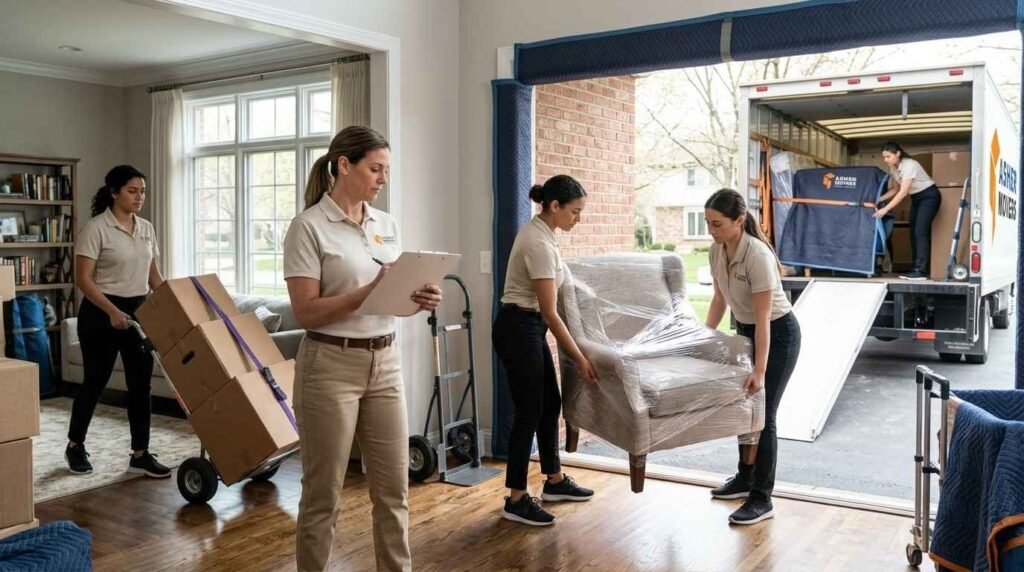
A local moving crew is a small team of trained movers, typically three to five people, who handle the packing, loading, transport, and unloading of your belongings during a residential or commercial move. I’ve watched dozens of these crews work, and the ones that run smoothly all share the same structure underneath. There’s a rhythm to it that most homeowners never see until moving day actually arrives.
Not knowing who does what on a moving crew creates real confusion when the truck pulls up. Families in Skokie, IL often assume it’s just “a few guys with a truck,” and that assumption leads to miscommunication about timelines, fragile items, and access to the home. Understanding the crew ahead of time removes a lot of that stress.
I’ll walk through what a crew actually is, the specific roles each person plays, the equipment they bring, how they operate once they’re inside your home, and what you can do to make their arrival go faster.
What a Local Moving Crew Actually Is
A moving crew is a coordinated team assigned to your job based on the size and complexity of your local move. It’s not a random group. Companies build these teams around specific skill sets, and the size of your home directly determines how many people show up.
I’ve seen two-person crews finish a studio apartment in under three hours. And I’ve seen five-person crews spend a full day on a four-bedroom house with a finished basement.
Crew Size Based on Home Size
A studio or one-bedroom apartment usually gets two movers. A two-to-three-bedroom home typically needs three to four movers to keep the timeline reasonable. Four-plus bedroom homes, or moves involving a lot of furniture, often require four to five movers plus a dedicated driver.
Crew size affects your moving cost estimate more than almost any other factor. More hands means a faster move, but it also means a higher hourly rate, so the math has to balance against your actual timeline.
The Key Roles Inside Every Moving Crew
Every crew member has a defined job, and the roles rarely overlap. This division of labor is what keeps a move organized instead of chaotic.
The Crew Lead / Foreman
The foreman runs the job from start to finish. This person does the initial walkthrough, assigns tasks to the rest of the team, and serves as your single point of contact for questions or changes during the move.
The foreman also manages the inventory sheet and signs off on the final count before the truck leaves. If something feels off during the move, the foreman is who you talk to.
Packers vs. Loaders
Packers wrap, pad, and box items so they survive transport without damage. Loaders take those packed items and place them in the truck using a specific weight-distribution strategy that prevents shifting during transit.
On smaller crews, the same person often does both jobs. On larger crews, splitting these tasks speeds up the entire process significantly.
Driver Responsibilities
The driver operates the truck and is responsible for route planning between your old address and your new one. In Skokie, IL, that often means navigating narrower residential streets, so an experienced local driver matters more than people expect.
Drivers also help load and unload when the crew is short-handed, but their core job is getting the truck there safely and on schedule.
The Equipment and Tools a Crew Brings
A crew doesn’t just bring muscle. They bring dollies, furniture straps, moving blankets, shrink wrap, mattress bags, and ramps to protect both your belongings and your home.
Furniture dollies and hand trucks move heavy items without scraping floors. Moving blankets wrap furniture edges to prevent nicks on doorframes and walls. Straps secure large items inside the truck so nothing tips or slides during transport.
A crew arriving without this equipment is a warning sign. It usually means rushed scheduling or a company cutting corners on training.
How a Crew Operates on Moving Day
A well-run crew follows the same basic sequence on every job, regardless of home size. That consistency is what keeps things moving on schedule.
Walkthrough, Loading Order, and Communication
The foreman starts with a walkthrough of the home, confirming what’s moving and flagging anything fragile or unusual. From there, the crew loads heaviest and largest items first, filling gaps with boxes and smaller pieces to maximize space and stability.
Communication happens constantly during this process. The foreman checks in with you at key points, especially before the truck leaves the old address and again before unloading begins at the new one.
How to Prepare Your Home for the Crew’s Arrival
Clearing walkways, reserving parking close to your entrance, and setting fragile or high-value items aside speeds up the entire job. Crews move faster when they aren’t navigating clutter or hunting for a legal place to park the truck.
It also helps to know ahead of time which items movers cannot transport, since certain hazardous materials and restricted goods get set aside before loading even begins. That distinction matters enough that it deserves its own explanation, separate from crew structure itself.
Labeling boxes by room, even loosely, also cuts down on the questions a crew has to ask you mid-move. Small preparation steps like these save real time on the clock.
Conclusion
A local moving crew runs on structure, not luck. Every foreman, packer, loader, and driver plays a specific role that keeps your move organized from walkthrough to final delivery.
Knowing this structure ahead of time turns moving day from a guessing game into a predictable process you can actually plan around.
We build our crews at ASHER MOVERS LOCAL & LONG DISTANCE around exactly this structure, so your Skokie, IL move gets the right hands, the right equipment, and a foreman who keeps everything on schedule.
Frequently Asked Questions
How many movers do I need for a local move?
Most one-bedroom apartments need two movers, while three-to-four-bedroom homes typically need four to five. Crew size scales with the volume of furniture and boxes involved.
What does a moving crew foreman actually do?
The foreman runs the walkthrough, assigns tasks to the rest of the crew, and manages the inventory sheet. They’re also your main point of contact throughout the move.
Do movers bring their own equipment?
Yes, a professional crew brings dollies, furniture straps, moving blankets, and ramps. Arriving without this equipment usually signals a rushed or under-trained crew.
How long does a local move typically take?
A studio or one-bedroom move often finishes in two to four hours, while a four-bedroom home can take a full day. Timeline depends heavily on crew size and how prepared the home is before arrival.
Should I tip my moving crew?
Tipping isn’t required, but it’s common practice for a job well done, typically split evenly among the crew. Many customers tip based on the difficulty of the move and how the crew handled their belongings.
What’s the difference between a packer and a loader?
Packers wrap and box items to protect them for transport, while loaders arrange those items in the truck using weight distribution to prevent shifting. Smaller crews often combine both roles into one person.
