
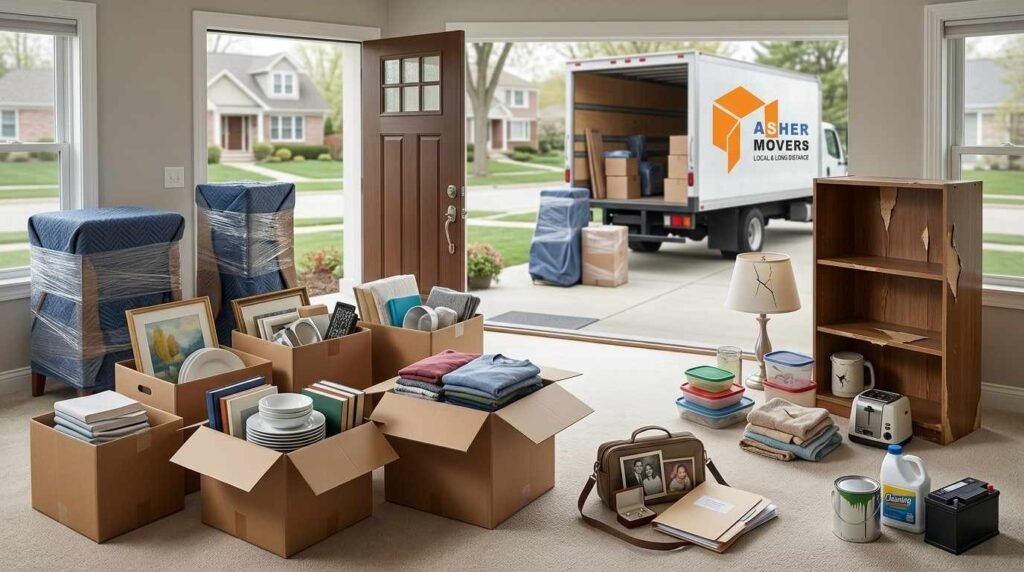
A new house deserves a fresh start, and that starts with what you pack. Certain items are unsafe for movers to transport, others just don’t belong in your next chapter, and knowing the difference saves you time, money, and headaches on moving day.
Skokie homeowners and renters face tight moving windows, HOA restrictions, and truck loading limits. Getting this wrong causes real delays.
I’ll walk you through banned items, sentimental exceptions, and a simple system for deciding what stays, what goes, and what gets donated before the truck arrives.
Why It Matters What You Bring Into Your New Home
Moving is one of the few moments in life where you get to hit reset. Every box you pack is a choice, and dragging along things you don’t need just recreates the same clutter in a new zip code.
There’s also a practical side. Movers operate under strict liability and safety regulations that limit what they can legally load onto a truck. Packing something prohibited doesn’t just risk a mess. It can hold up your entire load at pickup.
I’ve seen customers try to sneak a propane tank or an old can of paint thinner into a box, thinking it’s no big deal. It is a big deal, and movers are trained to catch it.
Items Movers Legally Cannot Transport
Every professional moving company follows federal and state guidelines on hazardous materials. These aren’t arbitrary rules. They exist because certain items are genuinely dangerous inside a moving truck packed tight with your belongings.
Hazardous and Flammable Materials
Propane tanks, gasoline, motor oil, paint thinner, and aerosol cans top this list. Fireworks, ammunition, and pool chemicals get rejected too. These items react badly to heat, vibration, and pressure changes during transport, and a sealed truck in summer traffic is basically an oven.
Cleaning products with bleach or ammonia often get flagged as well. I always tell customers to check under the kitchen sink and in the garage twice, because that’s where these items hide.
Perishable and Living Items
Frozen food, opened produce, and anything that spoils doesn’t survive a multi-day haul, especially on long-distance moves. Plants are another common surprise. Many state agricultural departments restrict transporting live plants across state lines to prevent spreading pests, so cross-border moves usually mean leaving your garden behind.
Pets and other animals never go on the truck. They travel with you, period.
Items Movers Restrict for Liability Reasons
Firearms, valuables like jewelry, and important documents typically fall under restricted-but-negotiable territory. Most moving companies won’t accept liability for these items even when they’re willing to load them, which means you’re better off transporting them yourself.
Personal Belongings You Should Leave Behind
Not everything on your “don’t bring” list is dangerous. A lot of it is just dead weight.
Expired or Unused Household Items
Old medications, expired spices, half-empty cleaning bottles, and pantry items past their date all belong in the trash, not a moving box. I get it, throwing things away feels wasteful. But paying movers by weight or by the hour to transport garbage is the real waste.
Duplicate or Broken Items Not Worth Moving
That second blender you never use. The lamp with the cracked shade. Three sets of mismatched Tupperware lids with no matching containers. None of it earns a spot in your new place.
Sentimental or High-Value Items to Handle Yourself
Family heirlooms, irreplaceable photos, and small valuables deserve a spot in your car, not the truck. Movers carry insurance for damage and loss, but no policy replaces a grandmother’s ring or a box of childhood photographs.
I always recommend a dedicated “personal” bag or box for these items. Keep it with you the entire move, from your old front door to your new one.
Old Furniture and Items That Won’t Fit Your New Space
Measure before you move. A sectional couch that barely fit your old living room might not clear the doorway of your new one, and a china cabinet that towered gracefully in a colonial-style home can dwarf a smaller Skokie bungalow.
Furniture that’s already worn out, structurally unstable, or simply doesn’t match your new layout is a strong candidate to leave behind. Moving heavy furniture costs money in labor and truck space. Spending that budget on furniture you’re planning to replace anyway rarely makes sense.
How to Decide What Stays and What Goes
I use a simple filter with clients: have you used it, worn it, or thought about it in the last year? If the answer is no, it likely doesn’t need to make the trip.
Start sorting at least three weeks before moving day. Go room by room, and separate everything into four piles: keep, donate, sell, and discard. Rushing this process the night before packing leads to bringing things you meant to toss.
Now that you know what not to bring, here’s what to do with it, and how to prepare what you’re keeping for the road ahead.
What to Do With Items You Can’t Bring
Donation centers accept furniture, clothing, kitchenware, and working electronics in good condition. Many local Skokie organizations offer pickup service for larger items, which saves you a separate trip.
Hazardous materials need proper disposal, not a regular trash bin. Many municipalities run household hazardous waste collection events specifically for paint, chemicals, and batteries that can’t go curbside.
Selling items through local marketplace apps recoups some cash before the move. Anything left after donating and selling can go curbside or to a junk removal service, clearing your space completely before the truck shows up.
Conclusion
Packing smart means knowing the difference between what movers can’t take and what you simply shouldn’t. Hazardous materials, perishables, and unwanted clutter all fall outside a smart moving plan.
Sorting early, protecting sentimental items yourself, and disposing of hazardous materials properly keeps your move safe and efficient. Your new house deserves a clean start.
We at Asher Movers Local & Long Distance help Skokie families move smarter, safer, and faster. Reach out before your next move for guidance tailored to your home.
Frequently Asked Questions
Can movers transport paint cans?
No, movers cannot transport paint, paint thinner, or similar flammable liquids. Dispose of these at a household hazardous waste facility before your move.
Should I pack my important documents in the moving truck?
No, keep passports, birth certificates, and financial documents with you during the move. Movers aren’t liable for lost or damaged personal paperwork.
What happens if I accidentally pack a prohibited item?
Movers typically catch prohibited items during loading and set them aside on the spot. This can slow down the loading process, so check your boxes beforehand.
Can I bring plants to my new home?
Local moves usually allow plants, but long-distance and interstate moves often restrict them. Check your destination state’s agricultural regulations before packing greenery.
Is it worth moving old or damaged furniture?
Rarely. Moving costs often exceed the value of worn-out furniture, and replacing it after the move is usually more practical than transporting it.
How early should I start deciding what not to bring?
Start sorting three to four weeks before your move date. This gives you time to donate, sell, or dispose of items without rushing the process.
