
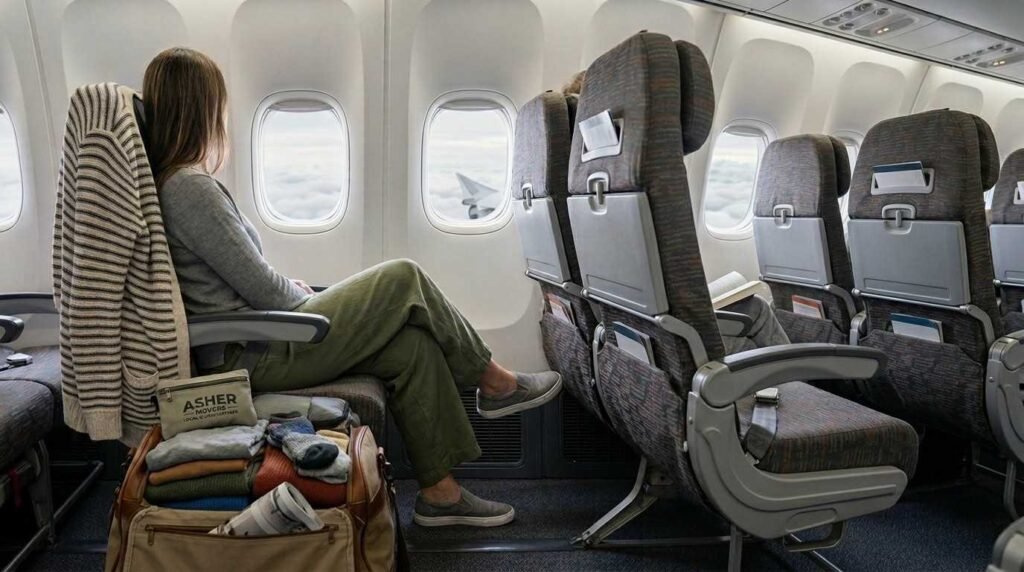
Leggings trap heat, snag on rough airplane fabric, and can slow you down at security. I used to grab leggings for every flight because they felt like the easy choice. Then I actually paid attention to what happens once I’m strapped into a middle seat for four hours.
Cabin air runs dry and cold, then swings warm during boarding delays. Synthetic fabric clings to skin and traps moisture against you the whole flight.
I’m walking through what leggings actually do to your body in the air, why they cause more hassle than people expect, and what holds up better for travel days.
What Actually Happens to Leggings at 35,000 Feet
Cabin humidity drops to somewhere between 10% and 20% on most commercial flights, according to the FAA’s cabin environment research. That’s drier than most deserts.
Synthetic blends in leggings don’t breathe well in that environment. They hold static and cling to skin, and that combination makes the fabric feel clammy instead of comfortable by hour two.
Temperature swings make it worse. Boarding gets warm and stuffy, then cruising altitude turns the cabin cold, and tight synthetic fabric doesn’t adjust with your body the way looser layers do.
Why Cabin Pressure and Recycled Air Matter
Cabin pressure sits at an altitude equivalent of 6,000 to 8,000 feet, based on data from the CDC’s guidance on air travel health. That thinner air changes how your skin and circulation behave mid-flight.
Tight-fitting leggings restrict blood flow in the legs during long sits. Loose, breathable fabric moves with natural swelling that happens in the air and doesn’t dig into your skin the same way.
The Static, Snagging, and Security Line Problems
Airplane seat fabric is rougher than it looks. Leggings snag on worn upholstery, tray table edges, and seatbelt buckles more than looser pants do.
Static cling turns into an actual nuisance in dry cabin air. I’ve watched leggings ride up mid-flight from static alone, and readjusting in a middle seat isn’t exactly private.
Security lines add a separate problem entirely.
Why TSA Screening Gets Complicated
Tight leggings show every outline through a body scanner, which sometimes triggers additional pat-downs. The TSA’s official screening guidance confirms scanners flag anomalies in clothing contours, and thin, form-fitting fabric reads differently than looser layers.
That extra screening step adds time you don’t have when a gate is already boarding. Looser clothing with fewer tight seams moves through the process faster.
Comfort Myths vs. What Your Body Actually Needs
Stretchy doesn’t mean breathable. Leggings flex with movement, but most blends trap heat instead of releasing it, and that’s the opposite of what a long flight calls for.
Real travel comfort comes from airflow and room to move, not just stretch. Your legs swell during long flights from reduced circulation, and tight fabric works against that instead of accommodating it.
Why “Stretchy” Doesn’t Mean “Breathable”
Cotton-blend or looser woven fabrics let air circulate around the skin. Leggings made from polyester-spandex blends trap moisture against the leg, and that moisture combined with cabin dryness creates discomfort by the midpoint of a long flight.
Fabric weight matters just as much as stretch. A lightweight, looser pant regulates temperature better across a five-hour flight than a tight, heavier legging does.
What to Wear Instead for Long Flights
Loose-fit joggers or wide-leg pants give you the same ease of movement without the static, snagging, or scanner issues. They also handle temperature swings far better than tight synthetic fabric.
Layering solves the boarding-to-cruising temperature shift. A breathable base layer with a light jacket on top adjusts easily as the cabin temperature changes.
Layering Basics That Actually Work
Start with a breathable, moisture-wicking base. Add a mid-layer you can remove easily, like a cardigan or zip-up, and skip anything with tight ankle cuffs or a snug waistband that digs in after hours in a seat.
Footwear matters here too. Slip-on shoes get you through security faster and keep pressure off swelling feet during the flight.
When Leggings Are Actually Fine to Wear
Short flights under two hours don’t carry the same risk. Cabin dryness and circulation issues build up over time, so a quick regional hop doesn’t create the same problems a cross-country or international flight does.
Leggings paired with a longer tunic or oversized layer also solve the security-scan issue. The extra coverage changes how the fabric reads on a body scanner.
Context matters more than the leggings themselves.
Packing Smart for Travel Days
Getting dressed for the flight is only half the equation. What you pack alongside your travel outfit matters just as much when a move or a long trip is on the calendar.
Movers can’t legally transport certain items in a moving truck, and travel days often overlap with packing days for people relocating. Keeping a separate travel bag with your flight outfit, layers, and essentials avoids digging through boxes at 5 a.m. on moving day.
Keeping Travel Clothes Wrinkle-Free and Ready
Roll rather than fold when packing your flight outfit. It cuts down on wrinkles and saves space in a carry-on, which matters when you’re also managing moving boxes or long-distance travel logistics on the same day.
Keep a small bag of travel-only clothes separate from moving boxes entirely. That way nothing you need for the flight ends up loaded onto a truck by mistake.
Conclusion
Leggings feel easy, but cabin dryness, static, and security screening make them a weaker choice for long flights. Loose, breathable layers solve comfort and circulation issues leggings can’t.
Short flights are the exception, not the rule, and coverage changes the security-scan outcome entirely. Small adjustments make a real difference in how a travel day actually feels.
We know travel days get complicated fast, especially when packing and relocating collide. Asher Movers Local & Long Distance keeps the moving side simple, so you can focus on getting to the airport, not digging through boxes.
Frequently Asked Questions
Are leggings bad for circulation on flights?
Tight leggings can restrict blood flow during long sits, especially as legs naturally swell in low cabin pressure. Looser pants accommodate that swelling better.
Why do leggings cause static on airplanes?
Cabin humidity drops as low as 10%, and synthetic fabric holds static in dry air. That’s why leggings cling and ride up more on flights than on the ground.
Do leggings really get flagged at airport security?
Tight-fitting fabric shows clothing contours clearly on body scanners, which sometimes triggers extra screening. Looser fabric with fewer tight seams tends to move through faster.
What should I wear instead of leggings on a long flight?
Loose joggers, wide-leg pants, or leggings paired with a longer tunic all work better. Layering with a breathable base and a removable top handles temperature swings well.
Are leggings okay for short flights?
Short flights under two hours don’t carry the same circulation or dryness risks as longer ones. The problems build up over time, not immediately.
How do I pack travel clothes so they don’t wrinkle?
Roll clothes instead of folding them to cut down on creases and save carry-on space. Keeping travel outfits in a separate bag from moving boxes also avoids mix-ups on moving day.
