
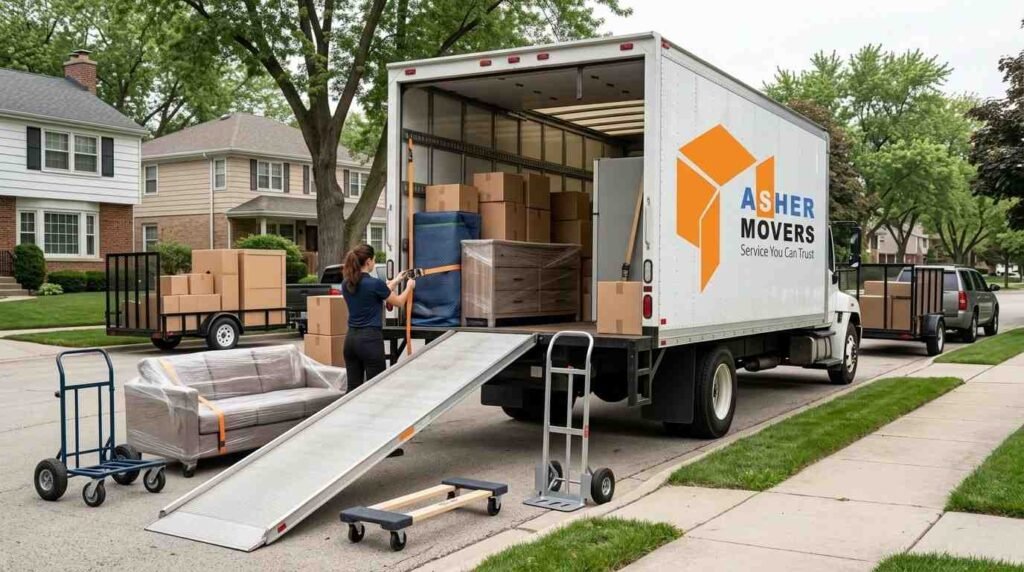
Choosing the right moving truck, trailer, and equipment comes down to three things: the size of your home, the weight of your belongings, and the distance you’re moving. I’ve watched too many people rent a truck that was too small and end up making three extra trips. Getting this right saves you time, money, and a lot of stress.
Moving day goes wrong fast when the equipment doesn’t match the job. The wrong truck size or a missing dolly turns a smooth move into a long, exhausting one.
In this guide I’ll walk you through truck sizes, trailers, essential tools, prohibited items, safe loading, and how to prepare for your move in Skokie.
What Moving Trucks, Trailers, and Equipment Actually Do
Moving trucks, trailers, and equipment are the tools that get your belongings from one place to another safely. Each one serves a different purpose, and knowing the difference helps you plan smarter.
Think of it this way. The truck carries the load. The trailer extends your capacity. The equipment protects your stuff and your back.
Moving Trucks Explained
A moving truck is a box-shaped vehicle built to haul household goods in one enclosed space. They come in sizes from small 10-foot cargo vans up to 26-foot trucks that handle a full house.
Most rental trucks have a low deck and a built-in ramp. That makes loading heavy furniture far easier than lifting it into a pickup bed.
The bigger the truck, the fewer trips you make. But a bigger truck also means tighter turns and harder parking on narrow streets.
Moving Trailers Explained
A moving trailer is an unpowered cargo unit you tow behind your own vehicle. It works well for smaller loads or when you’d rather drive your own car.
Trailers come as enclosed boxes or open utility beds. Enclosed trailers protect against rain and road debris, which matters over long distances.
Towing a trailer takes a vehicle rated for the weight. Not every car or SUV can pull one safely.
Specialized Moving Equipment
Specialized moving equipment includes the tools that make heavy lifting manageable. Dollies, straps, blankets, and ramps do the quiet work that prevents damage and injury.
I never move a fridge or a piano without the right gear. The equipment is cheaper than a hospital visit or a replacement couch.
How to Choose the Right Moving Truck Size
The right truck size matches the volume of your belongings without wasting space or money. Renting too big burns fuel and cash. Renting too small forces repeat trips.
Start by walking through your home and counting rooms of furniture. That gives you a rough baseline before you look at any rental chart.
Truck Sizes by Home Size
A studio or one-bedroom apartment usually fits in a 10 to 12-foot truck. A two-bedroom home needs a 15 to 17-foot truck for comfort.
Three bedrooms and up call for a 20 to 26-foot truck. Families with garages, patios, and storage often need the largest size available.
When you sit between two sizes, go up. The extra room costs less than a second trip across town.
Cargo Volume and Weight Basics
Cargo volume is measured in cubic feet, and it tells you how much space you have. Weight capacity, called payload, tells you how much that space can safely hold.
A truck can run out of weight capacity before it runs out of room. Books, tools, and appliances get heavy fast even in a small pile.
Check both numbers on the rental spec sheet. Overloading strains the truck and creates real safety risk on the road.
Fuel, Mileage, and Cost Factors
Larger trucks burn more fuel per mile, and that adds up over a long move. Most rental trucks get between 6 and 12 miles per gallon depending on size and load.
Rental cost usually combines a daily rate, a per-mile charge, and fuel. According to the U.S. Bureau of Labor Statistics, transportation and moving-related service prices have stayed a closely tracked category in recent consumer price data.
Budget for fuel separately. It’s the cost people forget until they’re standing at the pump.
Moving Trailers vs. Moving Trucks
A trailer and a truck solve the same problem in different ways. The truck is self-powered and simple. The trailer is cheaper but depends on your vehicle.
Your choice comes down to load size, distance, and what you’re comfortable driving. Neither one is better in every case.
When a Trailer Makes Sense
A trailer makes sense for small moves, partial loads, or a single large item. Students, one-room moves, and simple apartment shuffles fit trailers well.
Trailers also help when you want your own car at the destination. You tow your belongings and drive your vehicle in one trip.
They fall short for full-house moves. The capacity just isn’t there for a family home.
Towing Safety and Vehicle Limits
Towing safety starts with your vehicle’s tow rating, found in your owner’s manual. The trailer plus its load must stay under that number.
You also need a proper hitch, working trailer lights, and safety chains. The National Highway Traffic Safety Administration provides towing safety guidance covering hitch setup, trailer sway, and load limits.
Take turns wide and brake early. A loaded trailer changes how your whole vehicle handles.
Essential Moving Equipment and Tools
The right equipment turns an impossible lift into a controlled one. Good tools protect your belongings, your body, and your home’s walls and floors.
You don’t need everything. But a few key items make every move dramatically easier.
Dollies, Hand Trucks, and Furniture Sliders
A hand truck is an upright two-wheeled cart for boxes and appliances. A furniture dolly is a flat four-wheeled platform for heavy, bulky pieces.
Furniture sliders go under legs and corners so you glide heavy items across the floor. They save your back and your hardwood at the same time.
I keep both a hand truck and a set of sliders on every job. Together they handle almost anything in a home.
Straps, Blankets, and Padding
Moving blankets wrap furniture to guard against scratches, dents, and dust. Ratchet straps and rope hold everything in place so it doesn’t shift.
Padding also fills gaps between items in the truck. A tight, padded load moves as one solid block instead of loose pieces.
Wrap first, load second. Cutting that corner is how mirrors and dressers get ruined.
Ramps, Loading Aids, and Lift Gates
A ramp bridges the gap between the ground and the truck deck. A lift gate is a powered platform that raises heavy items with no lifting at all.
Loading aids like shoulder dollies and lifting straps spread weight across your body. They make two people move like four.
For appliances and safes, a lift gate is worth every penny. Some rentals include one, so ask before you book.
What Movers Can and Cannot Transport
Movers cannot transport hazardous, perishable, or irreplaceable items, and knowing the list ahead of time prevents delays on moving day. Professional movers follow strict rules for safety and liability.
I always tell people to sort these items a week early. Scrambling on the truck with a can of gasoline slows everyone down.
Prohibited and Non-Allowable Items
Non-allowable items are things movers refuse to load for safety or legal reasons. The list covers flammables, corrosives, pressurized containers, and living things.
Common examples include propane tanks, gasoline, paint, aerosols, cleaning chemicals, and fireworks. Plants, pets, and open food also stay off the truck.
Empty and drain fuel-powered tools like mowers and trimmers. A dry tank clears them for transport in most cases.
Hazardous Materials Rules
Hazardous materials are items that catch fire, explode, corrode, or poison. Federal rules restrict how these move, and most movers simply won’t carry them.
The U.S. Department of Transportation sets the hazardous materials regulations that govern flammable, corrosive, and reactive goods in transport. These rules exist to protect drivers and everyone on the road.
Dispose of old chemicals through a local hazardous waste program. Don’t try to sneak them onto the truck.
Items You Should Move Yourself
Some items you should always carry in your own vehicle. Important documents, jewelry, cash, medications, and small electronics travel best with you.
Irreplaceable things belong in your hands, not a shared truck. Photos, heirlooms, and passports fall in this group.
Pack a personal essentials bag for the first night. It saves you from digging through boxes at midnight.
How to Load a Moving Truck or Trailer Safely
Safe loading protects your belongings and keeps the vehicle stable on the road. The goal is a balanced, tight load that doesn’t shift when you drive.
Load in a plan, not a panic. A little order at the start saves chaos at the destination.
Weight Distribution and Balance
Weight distribution means placing heavy items low and toward the front, near the cab. This keeps the center of gravity where it belongs.
Load your heaviest pieces first: appliances, dressers, and sofas. Then stack lighter boxes on top and fill the gaps.
An unbalanced load pulls the vehicle to one side. That’s dangerous at highway speed and hard on your tires.
Securing Your Load
Securing your load means strapping items to the truck’s tie-down rails at regular intervals. Tighten straps so nothing rocks or slides.
Fill empty spaces with blankets or soft bags. A packed load can’t shift because there’s nowhere for it to go.
Check your straps once more before you close the door. Two minutes now beats a broken lamp later.
Local vs. Long-Distance Equipment Needs
Local and long-distance moves call for different equipment and planning. A short move across Skokie is forgiving. A cross-country haul is not.
The distance changes your margin for error. Small mistakes get magnified over hundreds of miles.
Local Move Equipment Checklist
For a local move you need a right-sized truck, a hand truck, blankets, and straps. Basic gear covers most short-distance jobs.
You can also make two trips without much penalty when the drive is short. That flexibility takes pressure off packing perfectly.
Keep it simple. A local move rewards speed and good hands over heavy planning.
Long-Distance Considerations
Long-distance moves demand enclosed protection, tighter loading, and extra padding. Your belongings ride for hours over rough highway, and vibration works everything loose.
Enclosed trailers and trucks shield against weather and debris. Movers reported strong demand for interstate relocation in recent years, according to data reflected in U.S. Census Bureau migration statistics.
Plan fuel stops, rest breaks, and secure overnight parking. A long haul is a marathon, not a sprint.
Costs, Rentals, and Insurance Basics
Moving costs depend on distance, truck size, equipment, and whether you hire help. Understanding the pieces helps you budget without surprises.
Cheap up front isn’t always cheap in the end. A tight budget that leads to damage costs more than doing it right.
Rental vs. Full-Service Moving
Rental means you drive and load yourself, paying only for the truck and gear. Full-service means professional movers handle loading, driving, and unloading.
Rental costs less in dollars but more in your time and labor. Full-service costs more up front and saves your back and your schedule.
Pick based on your budget, your health, and how much you value your weekend. Both are valid choices.
Liability and Valuation Coverage
Valuation coverage is the level of responsibility a mover takes for your belongings. It is not the same as insurance, though it works in a similar way.
The Federal Motor Carrier Safety Administration requires interstate movers to offer released value and full value protection options. Released value is minimal, while full value covers repair or replacement.
Read the coverage terms before signing. Knowing your protection level removes the guesswork if something breaks.
Moving Day Preparation in Skokie, IL
Moving day in Skokie goes smoothly with parking, permits, and timing sorted in advance. Local streets, weather, and building rules all shape the day.
I plan Skokie moves around the calendar and the clock. A little local knowledge prevents most day-of headaches.
Check whether your street or building needs a parking permit for a large truck. Reserving a spot near the door cuts your carry distance in half.
Chicago-area winters make timing matter. Icy steps and short daylight turn an easy move into a slow one, so morning starts help.
Confirm elevator reservations, loading docks, and building hours for apartments and condos. Buildings in and around Skokie often limit move times to specific windows.
We handle these details every week for local families and businesses. Local experience is the difference between a move that runs on time and one that stalls.
Conclusion
Choosing the right truck, trailer, and equipment ties directly to your load size, distance, and the items you’re moving. Match the gear to the job and the whole day gets easier.
Prohibited items, safe loading, and coverage rules protect both your belongings and everyone on the road. These pieces work together as one system, not separate steps.
We’re here to make your move simple from the first box to the last. Contact ASHER MOVERS LOCAL & LONG DISTANCE today and let our team handle your Skokie move with the right equipment and real local experience.
Frequently Asked Questions
What size moving truck do I need for a 2-bedroom home?
A two-bedroom home usually fits in a 15 to 17-foot truck. When you have a garage or a lot of storage, size up to a 20-foot truck to avoid a second trip.
Can movers transport my houseplants?
No, most movers will not transport houseplants, especially across state lines. Plants can carry pests and don’t survive well in a dark truck, so I recommend carrying them in your own car.
What items are movers not allowed to take?
Movers cannot take flammables, gasoline, propane, paint, aerosols, ammunition, and pressurized containers. They also refuse perishable food, plants, pets, and hazardous chemicals for safety and legal reasons.
Is it cheaper to rent a truck or hire full-service movers?
Renting a truck costs less in dollars but more in your time and labor. Full-service movers cost more up front and save your energy, so the better deal depends on your budget and schedule.
Do I need a special license to drive a moving truck?
No, most rental moving trucks up to 26 feet can be driven with a standard driver’s license. Larger commercial vehicles require a commercial license, but standard household trucks do not.
How do I keep furniture from getting damaged during a move?
Wrap every piece in moving blankets and secure them with straps before loading. Fill gaps in the truck with padding so nothing shifts, and load heavy items low and tight.
What is valuation coverage on a move?
Valuation coverage is the level of financial responsibility a mover accepts for your belongings. Released value offers minimal protection, while full value protection covers repair or replacement of damaged items.
How should I prepare for moving day in Skokie?
Sort prohibited items early, reserve truck parking, and confirm any building move-time rules ahead of time. Starting in the morning also helps you beat winter daylight limits and icy conditions.
