
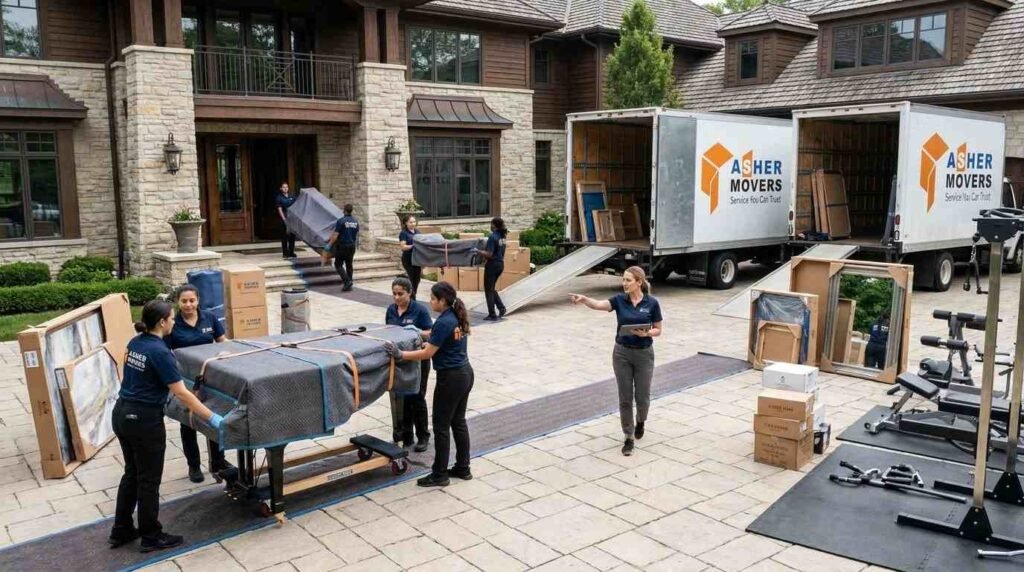
A 5+ bedroom estate move in Skokie, IL typically needs a crew of six to ten movers, two to three trucks, and a full week of packing lead time. That’s the reality for most large homes I’ve worked with, and it changes almost every decision you make leading up to moving day. Estate moves aren’t just bigger versions of a standard move they carry their own timeline, their own packing order, and their own rules about what can and can’t go on the truck.
Homeowners with large properties run into surprises that smaller moves rarely produce. A grand piano needs crating. A wine collection needs climate control. And half the garage is full of items movers legally cannot transport.
I’ll walk you through what makes an estate move different, how to build your timeline, the room-by-room packing approach that works, which items get left behind, how specialty pieces get handled, and what actually happens on moving day.
What Makes a 5+ Bedroom Estate Move Different From a Standard Move
An estate move is a residential relocation involving five or more bedrooms, typically requiring a larger crew, multiple trucks, and extended packing time compared to a standard household move. The sheer volume of belongings changes the math on everything.
A two-bedroom apartment might need two movers and one truck for four hours. A 5+ bedroom estate often needs a full day, sometimes two, with a much bigger team working in parallel across different rooms.
Scale, Timeline, and Crew Requirements
I typically see six to ten movers assigned to estate jobs, split into teams handling separate zones of the house at once. That parallel approach keeps the day moving instead of one crew working room by room in sequence.
Truck count matters too. Most estate moves need two to three trucks depending on square footage and how much furniture is involved. Skipping this step and booking a “standard” crew is the single biggest reason estate moves run long or spill into a second day.
How to Plan Your Estate Move Timeline (8 Weeks to Moving Day)
Estate moves need roughly eight weeks of lead time from first booking to final walkthrough. That window gives you room to sort belongings, book your date, and pack methodically instead of scrambling in the final week.
Weeks eight through six are for decluttering and getting your moving date locked in. Weeks five through three are for packing non-essential rooms guest bedrooms, storage areas, and seasonal items. The final two weeks focus on daily-use rooms and the specialty items that need extra prep.
Booking Your Moving Date Early
Estate moves require more equipment and staff than movers keep on standby, so booking six to eight weeks out protects your preferred date. Waiting until three weeks before your move date often means settling for whatever crew size is available, not the one your home actually needs.
I always tell clients: lock the date first, then build your packing schedule backward from it. That order keeps everything else on track.
Room-by-Room Packing Strategy for Large Homes
Packing a large home works best room by room, starting with spaces you use least. Guest rooms, home offices, and storage areas get packed first since they won’t disrupt daily life while you finish the move.
Kitchens and primary bedrooms get packed last because you’ll use them until moving day itself. This order keeps the household functional through the entire packing process instead of living out of boxes for weeks.
Prioritizing Fragile, Valuable, and Bulky Items
Fragile and valuable items need their own packing pass, separate from general boxes. That means dedicated wrapping materials, clearly labeled boxes, and for anything irreplaceable a conversation with your moving company about additional coverage before the truck is loaded.
Bulky furniture gets measured against doorways and stairwells before moving day, not on it. A sectional sofa that doesn’t clear a hallway turn is a problem best solved with a tape measure a week early, not a crew standing in your driveway.
Items Movers Cannot Transport in an Estate Move
Moving companies are prohibited by law and internal safety policy from transporting hazardous materials, flammable substances, and certain perishable or high-value items on their trucks. This applies to every move regardless of home size, but larger estates tend to accumulate more of these items simply because they have more storage space garages, sheds, and basements where restricted items pile up unnoticed.
Common non-allowable items include propane tanks, paint and paint thinners, motor oil, fireworks, ammunition, pool chemicals, and aerosol cans. Perishable food, plants, and pets also don’t travel on the moving truck.
Hazardous, Perishable, and High-Value Exceptions
Cash, jewelry, and important documents fall into a different category movers can transport them, but most companies recommend you transport these yourself. It isn’t a legal restriction; it’s a liability and peace-of-mind recommendation that protects everyone involved.
Large propane tanks for grills need to be emptied or disposed of properly before moving day. A quick call to your local waste management service ahead of time avoids a last-minute scramble when the crew arrives and can’t load them.
Managing Specialty Items Pianos, Art, Wine, and Home Gyms
Large estates often include specialty items that require custom handling beyond standard packing pianos, fine art, wine collections, and home gym equipment among them. These pieces need advance planning because they can’t be boxed the way a bookshelf or dresser can.
A grand piano alone can weigh 500 to 1,200 pounds and typically requires specialized equipment and trained handlers, not just extra muscle. Skipping this step risks damage to the piano and to your floors, walls, and staircases along the way.
Crating and Custom Protection Needs
Fine art and mirrors need custom crating, particularly for pieces with irregular shapes or fragile frames. Standard moving blankets protect surfaces but don’t prevent flexing or pressure damage during transport, which is where a custom crate earns its cost.
Wine collections need climate-conscious handling and upright transport whenever the move duration or weather makes temperature swings a real risk. Home gym equipment, especially disassembled weight racks and cardio machines, needs its hardware bagged and labeled so reassembly doesn’t turn into a hunt for missing bolts.
Moving Day Logistics for Large Estates
Moving day on a 5+ bedroom estate runs on parallel crews, multiple trucks, and a clear loading sequence that keeps everything organized from the first box to the last piece of furniture. Bulky and heavy items typically load first since they anchor the truck’s weight distribution.
A move coordinator or lead mover usually walks the property first, confirming the loading order and flagging any access issues narrow stairwells, tight driveway turns, or protected flooring that needs covering before anything moves.
Crew Size, Truck Count, and Parking Access
Parking access affects estate moves more than people expect. Long driveways, gated communities, or street parking restrictions in dense neighborhoods can add real time to a moving day if trucks can’t park close to the entrance.
I recommend confirming parking permits or HOA notifications at least a week ahead. It’s a small step that prevents your crew from circling the block instead of loading boxes.
Conclusion
A 5+ bedroom estate move runs on timeline, crew size, and packing order working together, not any single factor alone. Specialty items and prohibited materials need attention weeks before the truck arrives, not the morning of.
Estate moves reward preparation more than almost any other type of relocation. The homes that move smoothly are the ones where packing started early and restrictions were sorted out ahead of time.
We handle estate moves across Skokie, IL every week, and our crews know how to keep a large home moving on schedule. Reach out to ASHER MOVERS LOCAL & LONG DISTANCE to book your estate move date and get a crew sized right for your home.
Frequently Asked Questions
How many movers do I need for a 5+ bedroom estate move?
Most estate moves need six to ten movers split across parallel teams. Crew size depends on square footage, stair access, and how much furniture needs disassembly.
How far in advance should I book an estate move?
Book six to eight weeks ahead of your target date. Estate moves need more trucks and staff than moving companies keep available on short notice.
What items can’t movers take on an estate move?
Movers cannot transport hazardous materials like propane, paint, ammunition, and pool chemicals. Perishable food, plants, and pets also stay off the truck.
How much does a 5+ bedroom estate move cost?
Cost depends on distance, crew size, truck count, and specialty item handling like pianos or fine art. Local estate moves generally run higher than standard moves due to added labor and time.
Do movers pack fragile and valuable items differently?
Yes, fragile and valuable items get separate packing materials and dedicated boxes. Movers often recommend additional coverage for irreplaceable pieces before loading.
Can movers transport a piano during an estate move?
Yes, but pianos require specialized equipment and trained handlers due to their weight and shape. Standard moving trucks and dollies aren’t built for safe piano transport alone.
