
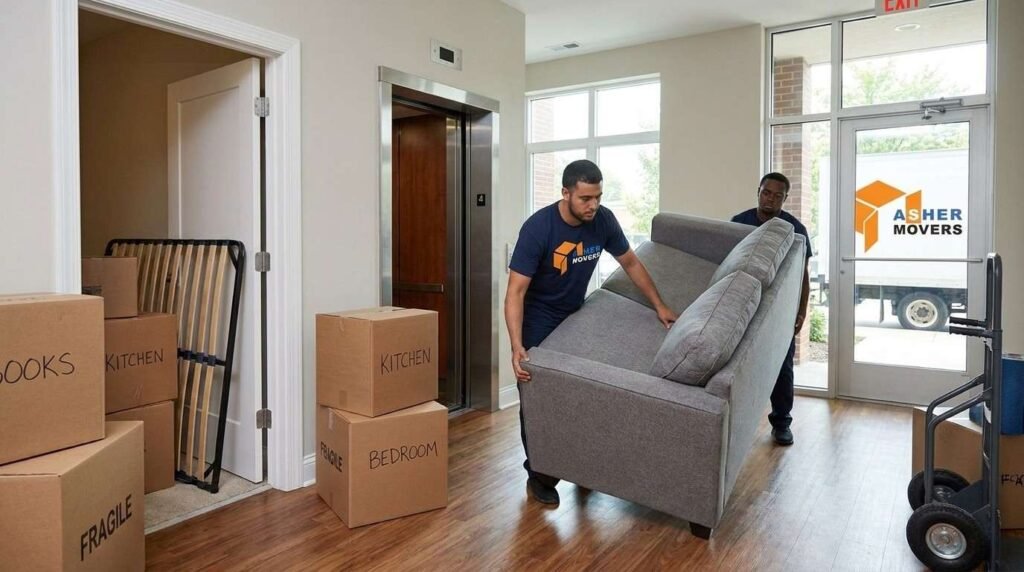
A 1-bedroom apartment move typically costs between $400 and $1,200 for a local move and takes four to six hours with a two-person crew. I’ve walked enough Skokie renters through this exact question to know the range holds steady across most one-bedroom setups. Cost and time both shift once stairs, elevators, or bulky furniture enter the picture, though.
Most people underestimate how fast a small move can spiral into a long day. A missed elevator reservation or an oversized couch changes your crew size and your bill fast. Getting ahead of that now saves you money and stress later.
Here’s what I’m covering: what a 1-bedroom move actually costs locally and long-distance, how long the whole process takes from packing to unloading, how many movers you actually need, what factors push your price and timeline up, and how to prep your apartment so moving day goes smoothly.
How Much Does a 1-Bedroom Apartment Move Cost?
A 1-bedroom apartment move is a relocation of a single bedroom’s worth of furniture, boxes, and household goods, typically requiring one truck and a two- to three-person crew. That’s the baseline most movers quote from. Your actual number moves based on distance, access, and how much stuff you’re bringing.
I always tell people to think in ranges, not fixed prices. A studio-adjacent one-bedroom with minimal furniture lands on the low end. A one-bedroom packed with a home office, gym equipment, or a large sectional pushes toward the top.
Local Move Cost Range
Local 1-bedroom moves in the Skokie area generally run $400 to $1,200, billed hourly per crew member. Two movers typically charge $100 to $150 per hour combined, and a straightforward job clears in four to six hours including loading and unloading. Add a third mover for stairs or a large furniture piece and the hourly rate climbs, but the job often finishes faster.
Long-Distance Move Cost Range
Long-distance 1-bedroom moves price differently, usually based on weight and mileage instead of hourly labor. Expect $1,500 to $4,500 for moves crossing state lines, depending on distance and total shipment weight. The Federal Motor Carrier Safety Administration requires interstate movers to provide a written estimate before the move, so I always tell customers to get that in writing before committing.
How Long Does a 1-Bedroom Apartment Move Take?
Most 1-bedroom moves take between four and eight hours total, covering packing, loading, transport, and unloading. That number stretches or shrinks fast depending on how much prep work happens before the crew arrives.
I’ve seen fully-packed one-bedrooms wrap in under four hours. I’ve also seen unprepared apartments turn a half-day job into an all-day one.
Packing Time Estimate
A single person packing a 1-bedroom apartment alone typically needs eight to twelve hours spread across a few days. Hiring professional packing services cuts that down to two or three hours for a two-person team. Kitchens and closets eat the most time, since they hold the most loose, breakable, or oddly shaped items.
Loading, Transport & Unloading Time
Loading a 1-bedroom apartment onto a truck takes a two-person crew roughly one to two hours, assuming clear pathways and no stairs. Local transport adds thirty minutes to an hour depending on distance across town. Unloading mirrors loading time, so the full on-site window runs three to five hours for a standard local job.
How Many Movers Do You Need for a 1-Bedroom Apartment?
Two movers handle most 1-bedroom apartments comfortably. That’s the standard crew size for a single bedroom, a living room, a kitchen, and a small dining area without oversized furniture involved.
Crew size is really a math problem: total volume, access difficulty, and time budget all factor in together.
2-Mover Crew vs 3-Mover Crew
A two-mover crew fits a 1-bedroom apartment with standard furniture and ground-floor or elevator access. A three-mover crew makes sense once you’re dealing with a walk-up building, a heavy sectional, or a piano-level specialty item. The third mover adds cost per hour but often shortens the total job length enough to even out the bill.
When You Need Extra Crew Members
Extra crew members become worthwhile past the third floor without elevator access, or when your apartment includes multiple large furniture pieces like a king bed frame plus a sectional sofa. Time pressure matters too. A tight moving window, like a same-day lease turnover moving timeline, justifies a bigger crew even for a small apartment.
What Affects Your 1-Bedroom Moving Cost and Timeline
Several variables swing your final cost and total time more than the size of your apartment does. Building access tops that list, followed closely by what you’re actually moving.
Knowing these ahead of time lets you budget accurately instead of getting surprised on invoice day.
Stairs, Elevators & Building Access
Walk-up apartments above the second floor typically add 20% to 40% to labor cost, since crews move slower and make more trips. Elevator buildings help, but a slow or shared elevator with limited access windows can add wait time that offsets the convenience. Long carry distances from your door to the truck, common in larger apartment complexes, add time even with elevator access.
Bulky or Special-Handling Items
Furniture pieces like sectional sofas, armoires, and glass-top tables require extra care, extra crew, or disassembly time. Specialty items such as pianos, gun safes, or large fish tanks often carry separate line-item charges. Flagging these items when you book your specialty item moving services prevents last-minute crew changes or price surprises.
How to Prepare a 1-Bedroom Apartment for Moving Day
Preparation is the single biggest lever you control over your final cost and timeline. A packed, organized apartment moves in half the time of an unprepared one, crew size held equal.
I tell every customer the same thing: boxes ready, path clear, questions answered before the truck shows up.
Packing Checklist Basics
Start with off-season items and closets first, since those pack up without disrupting daily life. Label every box by room and contents, and keep a small bag of essentials chargers, medications, a change of clothes separate from the main load. Disassemble bed frames and large shelving the night before, not the morning of.
Items Movers Cannot Transport
Household movers are prohibited from transporting hazardous materials including propane tanks, paint, aerosols, and gasoline under federal transport safety rules. Perishable food, live plants, and pets also fall outside standard mover liability coverage. Setting these items aside ahead of time keeps your moving day on schedule and avoids delays at the truck.
Conclusion
A 1-bedroom move comes down to three numbers: cost, time, and crew size, and all three connect directly to how prepared you are. Building access and bulky items swing your final bill more than anything else. We at ASHER MOVERS LOCAL & LONG DISTANCE price every 1-bedroom move with these factors upfront, so call us for a clear, accurate quote before your moving day arrives.
Frequently Asked Questions
How much does it cost to move a 1-bedroom apartment locally?
A local 1-bedroom move typically costs $400 to $1,200, based on an hourly rate for a two-person crew. Distance across town and building access both affect the final number.
How many hours does a 1-bedroom apartment move take?
Most 1-bedroom moves take four to eight hours total, covering loading, transport, and unloading. A fully packed apartment moves faster than one still being packed on move day.
Do I need two or three movers for a 1-bedroom apartment?
Two movers handle a standard 1-bedroom apartment with normal access and furniture. A third mover helps with walk-up buildings or oversized furniture pieces.
What items can’t movers take in a 1-bedroom move?
Movers cannot transport hazardous materials like propane, gasoline, or aerosols, along with perishable food and live plants. These fall outside standard liability coverage on any residential move.
Does a walk-up building increase moving costs?
Yes, walk-up apartments above the second floor typically add 20% to 40% to labor costs. Crews move slower and make more trips without elevator access.
How much does a long-distance 1-bedroom move cost?
Long-distance 1-bedroom moves usually run $1,500 to $4,500, priced by weight and mileage rather than hourly labor. Get a written estimate before booking, since interstate pricing varies by carrier.
