
TaskRabbit movers are independent gig workers booked through an app for hourly labor, while licensed local movers are USDOT and state-regulated companies carrying commercial insurance and legal liability for your belongings. Homeowners and renters in Skokie, IL often weigh these two options when planning a move, and the difference matters more than price alone. I’ve worked with moving companies long enough to know that the choice affects everything from what happens if a couch gets damaged to whether your items are covered at all.
Picking the wrong option can mean no recourse if something breaks, delays from unlicensed vehicles, or surprise costs mid-move.
This guide covers how TaskRabbit and licensed movers actually operate, what separates their insurance and liability coverage, which items any mover can legally transport, how their pricing models differ, and when each option makes sense for your specific move.
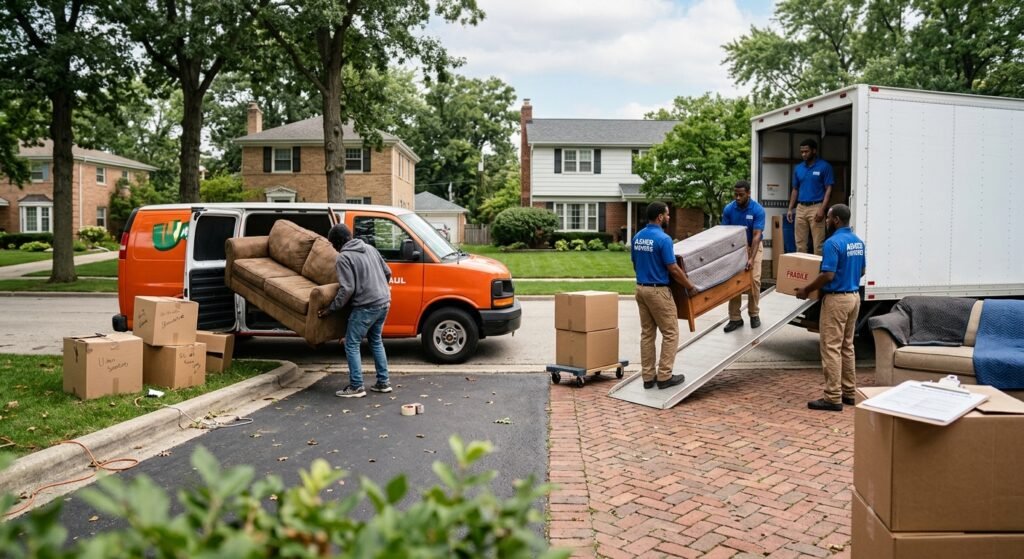
What Is the Difference Between TaskRabbit Movers and Licensed Local Movers?
TaskRabbit movers are independent contractors who offer moving labor through a gig-economy app, while licensed local movers operate as registered moving companies regulated by state and federal transportation authorities. I see this confusion constantly with Skokie clients who assume “mover” means the same legal thing no matter who they hire.
The core difference comes down to accountability. A licensed mover carries commercial auto insurance, cargo insurance, and operates under an Illinois Commerce Commission registration number, which means there’s a regulatory body you can file a complaint with if something goes wrong.
| Factor | TaskRabbit Movers | Licensed Local Movers |
| Legal structure | Independent contractor | Registered moving company |
| Insurance | Platform liability only | Commercial cargo + liability insurance |
| Licensing | Not required | USDOT/ICC licensed |
| Equipment | Often your vehicle | Company trucks, dollies, pads |
| Liability for damage | Limited | Legally defined coverage options |
Both options can move your belongings, but licensed movers carry a different weight of legal responsibility that TaskRabbit’s labor-only model doesn’t match.
How TaskRabbit Movers Work for a Move in Skokie, IL
Booking a TaskRabbit mover starts with selecting a “Tasker” through the app based on hourly rate, reviews, and availability near Skokie. I’ve seen this work fine for a studio apartment and fall apart for a four-bedroom house.
The process looks like this:
- You post a moving task with date, size, and location details
- Taskers bid or get matched based on hourly rate
- You confirm a Tasker and agree on scope
- The Tasker arrives, often without a company-branded truck
- Labor is billed hourly through the app
- You handle vehicle rental separately in most cases
That last step surprises people. Many TaskRabbit movers provide labor only, meaning you’re renting your own truck or trailer in addition to paying for the help.
How Licensed Local Movers Work and What Licensing Means
A licensed local mover is a moving company registered with transportation regulators and legally required to carry specific insurance coverage before touching your belongings. Licensing is not a marketing term; it’s a regulatory status tied to specific obligations.
In Illinois, local movers operating within the state register with the Illinois Commerce Commission, while movers crossing state lines need USDOT federal authority. I check for both numbers before I’d ever recommend a company to a client.
Licensing requirements typically include:
- A valid USDOT number (for interstate moves) or ICC registration (for intrastate Illinois moves)
- Proof of commercial cargo insurance
- Compliance with weight and safety inspections
- A documented complaint and claims process
- Background-checked crew members in most reputable companies
This regulatory structure is what separates licensed movers from app-based labor matching, and it’s the reason claims and disputes actually have a resolution path.
TaskRabbit Movers vs Licensed Movers — Side-by-Side Comparison
The clearest way to compare these two options is attribute by attribute, since the right choice depends on what matters most for your specific move.
| Attribute | TaskRabbit Movers | Licensed Local Movers |
| Best for | Single items, small apartments | Full households, long-distance moves |
| Average hourly cost | Lower | Moderate to higher |
| Truck included | Rarely | Yes |
| Insurance coverage | Minimal | Released value + full value options |
| Regulatory oversight | None | ICC/USDOT regulated |
| Claims process | Informal, platform-dependent | Formal, legally defined |
| Packing materials | Usually your responsibility | Often included or available |
This comparison shows why a one-room move and a cross-town family relocation call for different answers entirely.
Insurance and Liability Coverage Differences
Licensed movers are legally required to offer at least released value protection, which covers your belongings at a set rate per pound regardless of actual item value. This is federally mandated for any company engaged in interstate moving under FMCSA regulations.
| Coverage Type | TaskRabbit | Licensed Movers |
| Released value protection | Not standard | Required by law |
| Full value protection | Not available | Available as add-on |
| Third-party insurance | Possible, but your responsibility | Often bundled |
| Platform guarantee | Limited, case-by-case | N/A — legal liability instead |
I always tell clients that “released value protection” sounds reassuring but typically only covers pennies per pound, so understanding full value protection as an upgrade option matters if you’re moving anything expensive.
Who Is Liable If Belongings Are Damaged or Lost?
Licensed movers carry legal liability defined by their insurance tier, while TaskRabbit’s liability depends on the platform’s case-by-case policies rather than a regulated framework. This distinction becomes critical the moment something actually breaks.
With a licensed company, you file a claim through a documented process with set timelines. With TaskRabbit, resolution depends on the Tasker’s responsiveness and the platform’s discretion, which varies case by case.
- Licensed movers: claims tied to released or full value protection tier
- TaskRabbit: platform-mediated, no guaranteed payout structure
- Neither option: covers items you packed yourself in most cases, unless you purchase separate valuation coverage
What Items Can Movers Legally Transport?
Movers can legally transport most household goods, furniture, electronics, and personal belongings, but regulatory and safety restrictions apply to specific categories regardless of which type of mover you hire. This rule applies equally to TaskRabbit Taskers and licensed companies.
Generally allowable items include:
- Furniture, mattresses, and large household items
- Electronics and appliances (properly prepared)
- Clothing, books, and general household goods
- Boxed kitchenware and décor
The categories that create problems are narrower than people expect, and they’re worth understanding before moving day arrives.
Prohibited and Non-Allowable Items for Any Moving Company
Hazardous materials, perishable food, and certain high-value items are restricted or prohibited by regulation from standard moving transport, regardless of whether you hire TaskRabbit or a licensed company. These restrictions exist for safety reasons, not company preference.
Commonly prohibited categories:
- Hazardous materials: propane tanks, gasoline, paint thinners, fireworks, ammunition
- Perishables: refrigerated or frozen food, plants in some cases
- Flammables: aerosol cans, cleaning chemicals, nail polish remover
- Irreplaceable items: often restricted by company policy rather than law, including cash, jewelry, and important documents
These restrictions catch people off guard more than any other part of the moving process, since items like a garage propane tank seem harmless until a crew refuses to load the truck.
Pricing Differences — TaskRabbit Movers vs Licensed Movers
TaskRabbit movers typically charge $35 to $75 per hour per mover, based on TaskRabbit’s published rate ranges, while licensed local movers often price moves through binding or non-binding estimates that factor in distance, weight, and crew size. The pricing models aren’t structured the same way at all.
| Pricing Factor | TaskRabbit | Licensed Movers |
| Rate structure | Hourly, per Tasker | Estimate-based (binding/non-binding) |
| Truck rental | Separate cost | Included |
| Fuel/mileage | Often separate | Usually included |
| Packing materials | Separate cost | Often included |
| Hidden cost risk | Higher (multiple add-ons) | Lower (itemized estimate) |
A lower hourly rate on paper doesn’t always mean a lower total cost once truck rental and materials are added in.
Safety Considerations on Moving Day
Moving heavy furniture and appliances carries real injury risk, and licensed movers typically carry workers’ compensation coverage and use professional equipment that reduces that risk. This matters for your safety and theirs.
Key safety factors to weigh:
- Proper lifting equipment (dollies, straps, ramps) reduces injury and item damage
- Licensed crews often carry workers’ comp, limiting your liability if someone is hurt on your property
- Vehicle safety standards apply to commercial moving trucks but not necessarily to a Tasker’s personal vehicle
When TaskRabbit Movers Might Be a Reasonable Choice
TaskRabbit movers work well for small, low-complexity moves where you already have a vehicle and just need labor. I’d point a client toward this option in a few specific situations.
- Moving a single room or studio apartment locally
- You already own or rented a truck and only need loading/unloading help
- Budget is the primary constraint and item value is low
- The move is same-day or last-minute with limited lead time
When You Should Hire a Licensed Local Mover Instead
A licensed local mover makes more sense once a move involves a full household, long distances, or belongings valuable enough to need real insurance coverage. The stakes simply change at that scale.
- Moving an entire house or multi-bedroom apartment
- Any move crossing state lines
- High-value furniture, antiques, or electronics are involved
- You want a documented, enforceable claims process if something goes wrong
How to Verify a Mover’s License in Illinois
You can verify a mover’s license by searching their company name or USDOT number through the FMCSA’s SAFER database or checking Illinois Commerce Commission records directly. This takes about five minutes and can save a lot of regret.
- Ask the company for their USDOT number or ICC registration number
- Search the FMCSA SAFER database for interstate movers
- Check the Illinois Commerce Commission’s registry for intrastate movers
- Confirm active insurance status, not just a license number
- Look for any flagged safety violations or complaints
Common Moving-Day Complications and How to Avoid Them
Unlicensed vehicles, missing equipment, and unclear hourly billing cause most moving-day complications, and nearly all of them are preventable with upfront questions. I’ve seen the same issues repeat across dozens of moves.
- Underestimated time leading to higher-than-expected hourly charges
- No truck included, leaving you scrambling for a rental same-day
- Crew unfamiliar with fragile or oversized item handling
- Unclear prohibited-items list causing last-minute refusals at load time
Conclusion
TaskRabbit movers and licensed local movers serve different needs entirely, from insurance coverage to pricing structure to legal accountability. Understanding licensing, liability, and prohibited items helps you choose the right fit for your move.
Whether you’re moving a studio apartment or a full household across Skokie, matching the mover type to your situation prevents costly surprises.
We built ASHER MOVERS LOCAL & LONG DISTANCE to give you licensed, insured relocation support — contact us today to get a clear, accurate moving estimate.
Frequently Asked Questions
Is TaskRabbit insured for moving damages?
TaskRabbit offers limited, case-by-case protection rather than formal cargo insurance. Coverage depends on platform discretion, not a regulated insurance policy like licensed movers carry.
Do I need a licensed mover for a local move in Illinois?
Illinois does not legally require a licensed mover for every local move, but licensing provides insurance coverage and accountability. Unlicensed options carry more risk if items are damaged.
What items will movers refuse to move?
Movers refuse hazardous materials, flammables, perishables, and certain high-value items like cash or jewelry. These restrictions apply to both TaskRabbit and licensed movers for safety and liability reasons.
How much does a local move cost in Skokie, IL?
Local move costs vary by home size, distance, and mover type, typically ranging from a few hundred to over a thousand dollars. Licensed movers often provide itemized estimates upfront.
Can TaskRabbit movers handle long-distance relocations?
TaskRabbit is designed primarily for local, hourly labor rather than long-distance relocations. Licensed movers are better equipped with interstate authority and logistics for long-distance moves.
What happens if a mover damages my belongings?
With licensed movers, you file a claim under released or full value protection with a defined resolution timeline. TaskRabbit claims depend on platform policies without guaranteed payout structures.
How do I verify a moving company is legitimate?
Check the company’s USDOT or ICC number through the FMCSA SAFER database or Illinois Commerce Commission registry. Confirm active insurance and review any flagged safety violations.
