
Renting a moving truck means paying a company directly for a vehicle, fuel, and insurance coverage, and doing the loading, driving, and unloading yourself. U-Haul, Penske, and Budget are the three dominant national chains serving Skokie, each with different pricing structures, truck sizes, and mileage policies. I’ve watched plenty of Skokie families go this route to save money, and the savings are real, but only if you know what you’re walking into.
Picking wrong costs you time and money. A truck that’s too small means two trips. One that’s too big burns extra fuel for nothing.
This guide covers what the three companies actually charge, how their trucks and policies compare side by side, how to pick the right size for your home, what insurance options protect you, and when DIY rental stops making sense compared to hiring movers. I’ll also walk through regulations specific to Skokie and the return policies that catch people off guard.
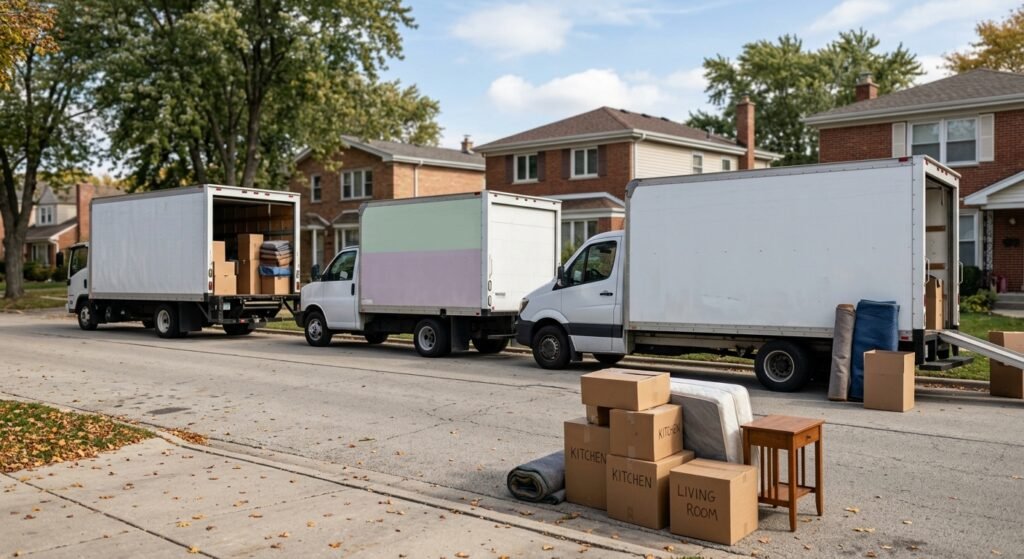
What It Actually Costs to Rent a Truck in Skokie
A local truck rental in Skokie typically runs $30 to $130 per day depending on truck size, plus mileage fees that stack up fast on longer routes. I always tell people the advertised daily rate is just the opening number, not the total.
Daily Rental Rates vs Mileage Fees
Base rates look cheap because they’re built to look cheap. U-Haul’s published rate structure charges $0.99 to $1.19 per mile on top of the daily fee, and that mileage charge is where most people’s budget goes sideways. A 15-mile round trip across Skokie can add $30 or more just in mileage.
Hidden Fees to Watch For
Environmental fees, fuel service charges, and insurance add-ons rarely show up in the first quote you see online. I’ve seen final receipts run 40% higher than the advertised rate once these extras get added in. Reading the full rate breakdown before you book saves a surprise at the counter.
U-Haul, Penske, and Budget How the Three Compare
U-Haul, Penske, and Budget are the three national truck rental chains that dominate the local moving market, and each one structures pricing, availability, and mileage policy differently. I’ve rented from all three over the years, and the differences matter more than people expect going in.
Truck Sizes Each Company Offers
Each company offers a similar size range, from cargo vans up through 26-foot trucks, but the exact cutoffs vary between brands. Penske’s fleet tends to skew newer, which matters for reliability on longer local hauls.
Availability and Booking Windows Near Skokie
Weekend and end-of-month slots disappear fast in the Chicago suburbs. Booking two to three weeks ahead gives you the best shot at getting the size truck you actually need, not whatever’s left.
This table compares the three companies across the factors that matter most for a local Skokie move:
| Factor | U-Haul | Penske | Budget |
| Daily rate (local) | $19.95–$39.95 base | $29–$109 base | $19.99–$99 base |
| Mileage fee | $0.99–$1.19/mile | Often included locally | $0.79–$0.99/mile |
| Largest truck size | 26 ft | 26 ft | 26 ft |
| Fleet age | Mixed | Newer average | Mixed |
| Insurance options | Yes, tiered | Yes, tiered | Yes, tiered |
Choosing the Right Truck Size for Your Home
The right truck size depends on your home’s bedroom count, with studios needing a 10-foot truck and four-bedroom homes needing the full 26-foot option. Guessing small is the most expensive mistake I see people make.
A one-bedroom apartment generally fits in a 10 to 15-foot truck. Two to three-bedroom homes usually need a 17 to 20-foot truck to avoid a second trip. Anything larger than that, especially with a garage or basement full of boxes, calls for the 26-foot option.
Insurance and Damage Coverage Options
Rental truck insurance is a tiered coverage system that protects you against collision damage, cargo loss, and liability during the rental period. Most people stack their personal auto policy against the rental company’s coverage and end up double paying or under-covered.
Collision Damage Waivers, known as CDW, cover the truck itself if something happens on the road. Supplemental liability protection covers injury or property damage to others, which your personal auto policy frequently excludes for rented commercial vehicles.
What a DIY Rental Actually Requires From You
A DIY truck rental requires you to handle loading, driving an unfamiliar vehicle, unloading, and returning the truck within a specific window, all without professional help. That’s a full day of physical labor most people underestimate going in.
Driving a 20-foot truck through Skokie side streets feels different than driving your car, especially around tight turns and low clearances. Add the physical toll of carrying furniture up stairs, and the “savings” of DIY start costing you in other ways.
Fuel, Mileage, and Drop-Off Policies Explained
Fuel and mileage policies determine your final bill more than the advertised daily rate does, and most rental companies require you to return the truck with the same fuel level it had at pickup. This refuel-to-mark rule catches people off guard at drop-off more than almost anything else in the contract.
One-way rentals carry a flat fee structure, while round-trip rentals bill by the mile. Confirming which policy applies to your specific route before you book prevents a surprise charge at return.
Licensing and Who Can Legally Drive the Truck
A standard driver’s license is sufficient to legally drive a rental moving truck up to 26 feet in length, with no commercial license required in Illinois. Age minimums typically start at 18, though some companies require 21 or older for their largest trucks.
Adding a second driver to the rental agreement usually comes with an additional daily fee. Skipping this step and letting an unlisted driver operate the truck voids your insurance coverage entirely if something goes wrong.
Packing and Loading a Rental Truck Safely
Safe loading means distributing weight evenly across the truck bed and securing every item with tie-downs before you pull away from the curb. Heavier furniture belongs at the front near the cab, with lighter boxes stacked toward the rear doors.
Weight distribution problems don’t just risk damage to your belongings. An unbalanced truck handles poorly at highway speed and can become genuinely dangerous on uneven Skokie roads during winter months.
Items You Cannot Legally Transport in a Rental Truck
Rental truck companies prohibit hazardous materials, propane tanks, and flammable liquids from being transported in their vehicles under federal transportation regulations. These restrictions exist for safety reasons, not company preference, and apply regardless of which rental brand you choose.
Propane tanks, paint thinners, and aerosol cans are common items people forget to set aside. I always tell customers to sort these out before loading day, not the morning of, since finding alternate transportation at the last minute adds stress nobody needs.
Best Times to Book a Truck in Skokie (Seasonal Demand)
Truck availability in Skokie drops sharply during the last weekend of each month and throughout the summer peak moving season from May through September. Booking three to four weeks ahead during these windows gives you real odds of getting the size you actually need.
Weekday rentals, particularly Tuesday through Thursday, carry lower demand and sometimes better rates than weekend slots. Shifting your move even two days earlier in the week can open up availability that’s gone by Saturday.
Hidden Costs of DIY Moving Beyond the Rental Fee
DIY moving costs extend well beyond the truck rental itself to include packing supplies, moving equipment rentals, and the value of time taken off work to complete the move. Boxes, tape, furniture blankets, and a dolly rental add up faster than people budget for.
Physical risk is the cost that doesn’t show up on any receipt. Back injuries and dropped furniture during a DIY move happen often enough that it’s worth factoring the risk into your decision, not just the dollar amount.
When a Truck Rental Makes Sense vs When to Hire Movers
A truck rental makes financial sense for small, local moves with light furniture and a flexible schedule, while hiring movers makes more sense for larger homes, heavy items, or tight timelines. Distance, volume, and your own physical capability are the three factors that should drive this decision.
Should I rent a truck or hire professional movers for my Skokie move? If your move involves a studio or one-bedroom apartment with help from friends, DIY rental likely saves money. A full house with stairs, a piano, or a hard deadline usually costs less in stress and risk when handled by professionals.
I think the break-even point shows up around the three-bedroom mark. Below that, DIY often wins on cost. Above it, the physical toll and time investment tend to erase the savings.
Local Regulations and Parking Permits for Moving Trucks in Skokie
Skokie requires moving trucks parked on residential streets to comply with local parking regulations, and some situations call for a temporary permit from the village. Apartment buildings add another layer, since loading dock access and elevator reservations often need scheduling in advance.
HOA communities sometimes restrict truck size or require advance notice before a moving truck can park in a shared lot. Checking these rules a week ahead avoids a blocked driveway or a parking citation on moving day.
Return Policies and Late Fee Structures
Return policies require the truck back at a specific location and time, with grace periods typically running 29 minutes to an hour before late fees apply. After that grace window closes, charges accrue per hour or per day depending on the rental company.
Returning a truck late during a high-demand weekend can also trigger a larger penalty, since the next renter is often waiting on that exact vehicle. Building extra time into your schedule for unloading protects you from this charge.
Conclusion
Renting a truck means weighing daily rates, mileage fees, and insurance against the physical demands of loading and driving yourself. U-Haul, Penske, and Budget each offer distinct pricing and availability in Skokie.
Understanding size requirements, prohibited items, and local parking rules sets up a smoother moving day either way. The right choice depends on your home’s size and your comfort with the labor involved.
We at ASHER MOVERS LOCAL & LONG DISTANCE help Skokie families compare these options honestly and step in with professional support whenever DIY isn’t the right fit.
Frequently Asked Questions
Is a regular driver’s license enough to rent a moving truck?
Yes, a standard driver’s license is sufficient to rent and drive a moving truck up to 26 feet long. No commercial license is required in Illinois for this size.
How much does a 26-foot truck rental cost per day?
A 26-foot truck typically costs $39.95 to $130 per day before mileage and fees. Final cost depends heavily on distance driven and insurance selections.
Can I rent a truck one-way from Skokie to another city?
Yes, all three major companies offer one-way rentals with flat-fee pricing instead of per-mile charges. Availability for one-way trucks is more limited than round-trip rentals.
Does truck rental insurance cover damage to my belongings?
No, standard rental truck insurance covers the vehicle and liability, not your personal belongings inside it. Separate moving insurance or your renters/homeowners policy typically covers cargo.
What size truck do I need for a 2-bedroom apartment?
A 2-bedroom apartment typically needs a 17 to 20-foot truck to move everything in one trip. Homes with extra storage or a garage may need the larger size.
Are there items movers and rental trucks both refuse to transport?
Yes, hazardous materials, propane tanks, and flammable liquids are prohibited by both moving companies and truck rental agreements. These restrictions come from federal transportation safety regulations.
Is it cheaper to rent a truck or hire a full-service moving company?
Renting a truck is usually cheaper for small, local moves with light furniture and available help. Full-service movers often cost less overall for larger homes once time, labor, and risk are factored in.
