
Moving out of a brownstone or row house is not the same job as moving out of a standard single-family home, and anyone who has tried to get a king-size mattress down a 19th-century stairwell knows it. A historic district move is a residential relocation involving a building with narrow stairwells, tight doorways, limited parking access, and often preservation-related restrictions that standard moving plans don’t account for. I’ve walked into enough brownstones to know the floor plan alone changes the whole strategy.
These buildings weren’t designed with modern furniture or modern moving trucks in mind. Skipping prep here causes real delays.
This guide covers what makes historic buildings different to move from, the access and structural challenges you’ll run into, how to protect the property and pack fragile or antique items properly, the parking and permit logistics specific to older blocks, and what to look for when choosing a mover for this kind of job.
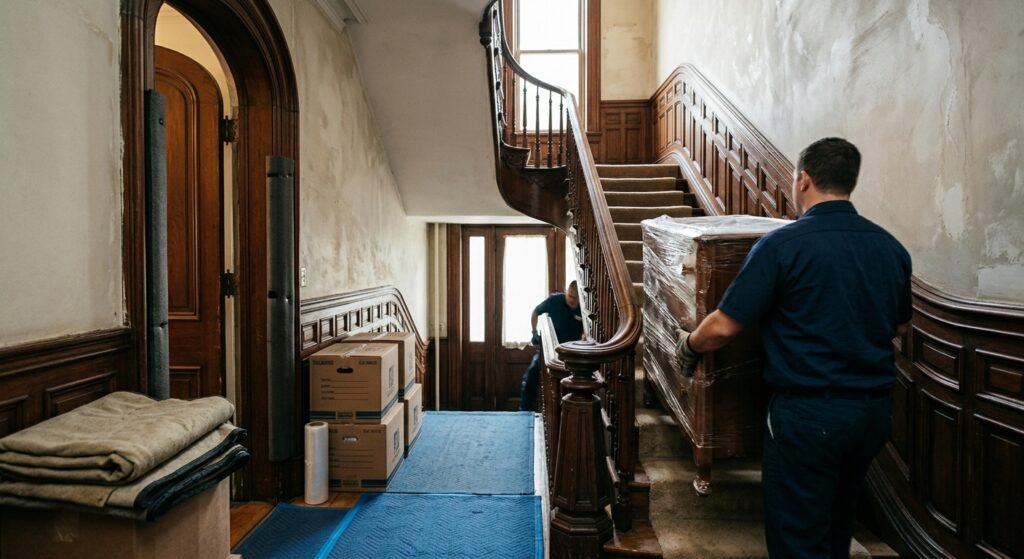
What Makes Moving in a Historic District Different?
Historic district homes present layout and material constraints that most moving companies don’t encounter in newer construction. The building’s age, not its size, is usually what drives the complexity.
Row houses and brownstones were built in an era before modern plumbing stacks, wide hallways, or elevator access were standard. I’ve seen entire moves slow down because nobody checked the staircase width in advance.
Brownstones vs. Row Houses: Key Structural Differences
Brownstones typically feature a raised stoop entrance, a narrower street-facing lot, and ornate interior woodwork that needs protecting. Row houses are more uniform, often share a wall on both sides, and sometimes restrict rear-alley access entirely.
Both styles tend to have steep, turning staircases rather than straight runs.
Why Standard Moving Plans Fall Short Here
A standard residential move assumes wide doorways, a driveway, and an elevator or ground-floor entry. None of that is guaranteed in a 100-year-old building, which is why pre-move measuring and a building-specific plan matter more here than almost anywhere else.
Narrow Staircases, Stoops, and Tight Doorways: Access Challenges
Most access problems in historic buildings come from turning staircases and doorway widths that were never updated to modern standards. A sofa that fits through a modern 36-inch doorway may not clear a historic home’s original 28-inch frame.
I always tell people the stoop itself is often the first obstacle, not the stairs inside.
Measuring Doorways and Stairwells Before Moving Day
Measuring every doorway, stairwell turn, and ceiling height along the exit path before moving day prevents the most common cause of on-site delays. Pre-move measurement typically takes under an hour and catches the furniture that won’t fit well before the truck arrives.
Stairwell turning radius matters more than straight-line width in most brownstones.
Furniture That Commonly Gets Stuck (and What To Do)
Sectional sofas, large mattresses, armor, and dining tables with fixed legs are the items that most often get stuck in historic stairwells. Disassembly solves most of these cases without needing special equipment.
When disassembly isn’t possible, hoisting becomes the next option.
Hoisting and Window Removal for Oversized Furniture
Hoisting is the process of lifting large furniture through a window opening using a mechanical lift or crane rig, bypassing the stairwell entirely. It’s a standard solution in brownstone moves, not a last resort reserved for emergencies.
Window removal sometimes accompanies a hoist when the opening itself is too small, which requires a licensed technician rather than the moving crew.
Hoisting adds cost and requires advance scheduling with the building, so it’s worth confirming early whether your piece will need it.
Parking, Loading Zones, and Permit Requirements in Historic Blocks
Historic blocks frequently restrict truck parking to metered spots, alleyways, or permit-only zones that require advance clearance from the local municipality. A moving truck idling in a no-parking zone on a narrow street creates delays and, in some cases, fines.
Loading logistics here depend heavily on block width and whether the building has rear access at all.
Getting a Temporary No-Parking Permit in Skokie
Skokie issues temporary no-parking permits through its public works department, typically requiring a few business days’ notice before the move date. Booking the permit early avoids the scenario where a moving truck has nowhere legal to park on move day.
When Alley Loading Is the Only Option
Some row houses have no front-loading zone at all, making the rear alley the only route in or out. Alley width restrictions mean not every truck size can access these spaces, which is worth confirming with your mover before booking.
Building Management and HOA Rules for Moves
Many historic buildings require a certificate of insurance from the moving company and a scheduled elevator or loading-dock reservation before move day. Skipping this step is one of the most common causes of a move being turned away at the door.
Building rules vary widely, and co-ops tend to enforce them more strictly than privately owned row houses.
Confirming these requirements with building management at least a week ahead keeps the schedule intact.
Protecting Historic Floors, Walls, and Banisters During the Move
Original hardwood floors, plaster walls, and wood banisters in historic homes are more easily damaged than modern materials and typically can’t be repaired with a simple patch job. Floor protection isn’t optional in these buildings; it’s a baseline requirement.
Floor Runners, Corner Guards, and Door Jamb Padding
Floor runners, corner guards, and door jamb padding form the standard protective setup used on historic-home moves. These materials get laid down before a single box leaves the house, not improvised mid-move.
A banister wrap is also standard on any staircase with original woodwork.
What Happens If the Property Is Damaged
Reputable movers carry liability coverage that addresses property damage, and any incident should be documented with photos immediately. Confirming the mover’s coverage limits before move day avoids disputes if something does go wrong.
Packing Antiques, Fragile Decor, and Older Fixtures Safely
Antique furniture and older decorative fixtures require different packing materials than standard household goods because their finishes and joinery are more fragile. Shrink wrap and standard moving blankets alone usually aren’t enough protection for a piece with original finish or inlay work.
Materials That Work Best for Antique Furniture
Acid-free packing paper, breathable moving blankets, and corner protectors work best for antique wood furniture, since plastic wrap can trap moisture against old finishes. Glass-front cabinets and mirrors need their own flat-pack crating separate from the frame.
Items That Require Custom Crating
Oversized mirrors, marble tabletops, and chandeliers typically require custom wood crating rather than standard pads and blankets. These items also tend to fall outside a standard moving estimate, so flagging them in advance avoids a surprise on move day.
Items Movers Cannot Transport From Historic Homes
Movers are legally prohibited from transporting hazardous materials, flammable liquids, and certain chemicals regardless of how the home is built. This rule applies the same way in a brand-new condo as it does in a 1920s row house, but historic homes often surface more of these items from old basements and attics.
Paint thinners, propane tanks, old cleaning chemicals, and fireworks are common finds in older homes that movers will refuse to load.
Perishable food and live plants also fall outside standard transport policies on most moves.
How Long Does a Historic District Move Take?
A historic district move typically takes one to two hours longer than a comparable standard move, mainly due to staircase navigation and protective setup time. Hoisting, when needed, adds additional hours beyond that baseline.
Crew size matters more here than truck size, since narrow stairwells limit how many movers can work at once.
What Affects the Cost of Moving in a Historic District?
Cost in a historic district move is driven primarily by crew size, hoisting needs, permit fees, and the extra protective materials required for the building. A move requiring a hoist or custom crating will run noticeably higher than a comparable move from a modern building.
Parking permit fees and building-required insurance certificates add smaller but predictable costs on top of labor.
Questions to Ask Before Hiring a Historic-District Moving Company
Asking a moving company directly about their experience with brownstones or row houses reveals more than a general quote ever will. A crew unfamiliar with these buildings is more likely to run into delays once they’re on site.
Confirming insurance coverage, hoisting capability, and whether they handle building-specific paperwork separates an experienced crew from a generalist one.
Preparing Your Household for Moving Day in a Row House or Brownstone
Preparing a historic home for moving day starts with measuring exits and flagging any item that might need disassembly or hoisting. A short walkthrough with the moving company a few days ahead resolves most surprises before they happen.
A Simple Pre-Move Checklist for Older Homes
Confirming building permits, measuring doorways, securing a parking permit, and separating prohibited items ahead of time are the four steps that prevent the most common move-day delays.
Moving in Skokie’s Historic and Older Residential Blocks
Skokie’s older residential streets share many of the same access and parking constraints found in classic row house neighborhoods, even where the architecture differs slightly from coastal brownstones. Local permit timing and block-specific loading rules make early planning especially worthwhile here.
Conclusion
Historic district moves involve structural constraints, protective prep, and permit logistics that standard moves don’t require. Understanding access challenges, packing rules, and prohibited items keeps the day moving on schedule.
Every historic building has its own quirks, and a crew experienced with brownstones and row houses navigates them without guesswork.
We’ve handled historic district moves across Skokie for years. Contact ASHER MOVERS LOCAL & LONG DISTANCE to plan yours with confidence.
Frequently Asked Questions
Do movers charge more for brownstones or row houses?
Yes, brownstone and row house moves typically cost more due to longer labor time, hoisting needs, and permit requirements. The exact increase depends on staircase difficulty and whether special equipment is needed.
Can movers remove a window to move furniture?
Yes, licensed hoisting technicians can remove a window to lift oversized furniture through the opening. This requires advance scheduling and is not part of a standard moving crew’s basic service.
Do I need a permit to park a moving truck in Skokie?
Many historic blocks in Skokie require a temporary no-parking permit for moving trucks. Applying a few business days ahead through the local public works department secures the loading zone.
What items can’t movers take from an older home?
Movers cannot transport hazardous materials, flammable liquids, propane tanks, and similar chemicals regardless of building age. Older homes often surface more of these items from basements and attics during a move.
How far in advance should I book a historic-district move?
Booking a historic-district move three to four weeks ahead gives time to arrange permits, hoisting, and building clearances. Popular moving seasons may require even earlier scheduling.
Who pays for damage to a building during a move?
A reputable moving company’s liability coverage typically addresses property damage caused during the move. Confirming coverage limits before move day prevents disputes if damage occurs.
Can large furniture always be disassembled instead of hoisted?
Not always; some pieces have fixed frames or joinery that can’t be taken apart without damage. Hoisting becomes the fallback option whenever disassembly isn’t possible.
