
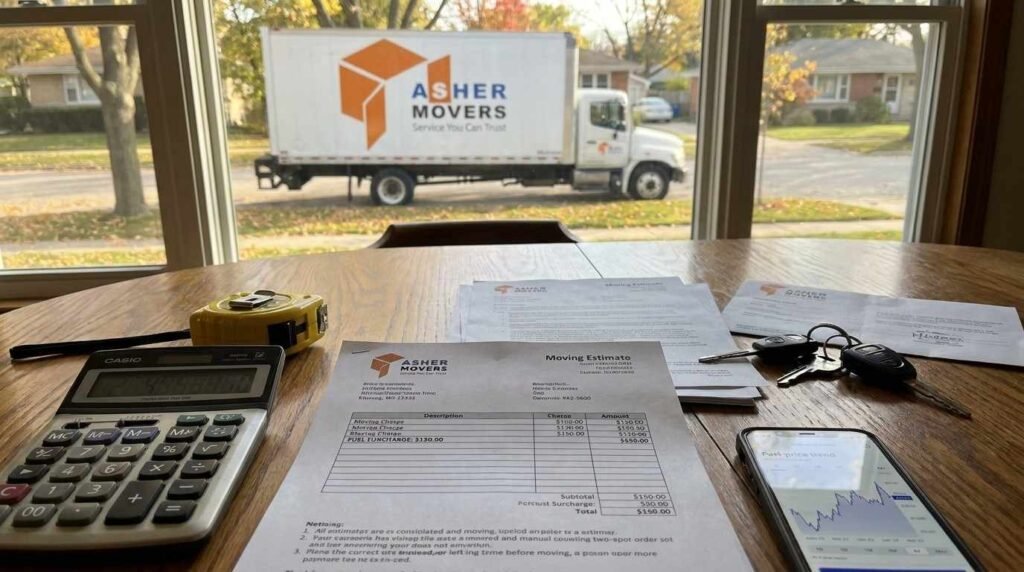
A fuel surcharge is an added fee movers charge to cover rising fuel costs that go beyond what’s already built into your base moving rate. It shows up as a separate line item on your estimate, not folded into your hourly or per-pound price.
I’ve watched plenty of Skokie families get blindsided by this line item on moving day, and it’s almost always because nobody explained it upfront. The fee itself is legitimate. The confusion around it is what causes the frustration.
This guide breaks down what a fuel surcharge actually is, why local movers apply it, how the number gets calculated, what to check on your estimate, and how to avoid getting surprised by it when the truck shows up.
What a Fuel Surcharge Actually Is
A fuel surcharge is a supplemental charge that covers fuel costs above a baseline price movers use when building their standard rates. It’s separate from your hourly labor rate or your weight-based charge.
Movers set base pricing around a “normal” fuel cost assumption. When diesel or gas prices climb past that assumption, the surcharge closes the gap instead of forcing a full rate hike across every customer.
I explain it to clients this way: your base rate pays for the truck, the crew, and the equipment. The surcharge pays for what it costs to actually move that truck down the road.
How It Differs From Your Base Moving Rate
Your base rate is fixed and quoted upfront. It’s built around labor, truck size, and estimated hours or weight. The fuel surcharge sits on top of that, tied specifically to current fuel market conditions.
Local moves usually see smaller surcharges than long-distance moves. Shorter mileage means less fuel burned, so the add-on stays modest often a small flat fee or a low single-digit percentage of the total bill.
Why Local Movers Add Fuel Surcharges
Movers add fuel surcharges because fuel prices swing constantly and locking a fixed rate months in advance would force pricing that’s either too high or unsustainably low. The surcharge lets the base rate stay stable while fuel costs float separately.
The U.S. Energy Information Administration tracks weekly diesel and gasoline prices nationally, and diesel prices have shown double-digit percentage swings within single calendar years in recent reporting periods. That volatility is exactly what surcharges are built to absorb.
A moving company running a fleet of trucks feels that volatility across every job on the schedule. One truck burning more fuel than budgeted is a rounding error. A hundred trucks doing it every week is a real operating cost.
Fuel Prices, Distance, and Truck Size Factors
Distance matters even within a “local” move. A move across Skokie costs less in fuel than a move stretching toward Chicago’s outer suburbs, and the surcharge often scales with mileage.
Truck size plays a role too. Larger trucks carrying heavier loads burn more fuel per mile, so a four-bedroom home move typically carries a higher surcharge than a studio apartment move.
How Fuel Surcharges Are Calculated
Movers calculate fuel surcharges one of two common ways: a flat fee added to the total invoice, or a percentage tacked onto the base charge. Neither method is inherently better it depends on the company’s pricing structure and the specifics of your move.
AAA’s Daily Fuel Gauge Report publishes current average gas prices by state, and many movers reference regional averages like these when setting or adjusting their surcharge percentage.
I’ve seen surcharges range from a flat $25–$50 fee on a small local move to 3–8% of the total bill on larger jobs. The number isn’t arbitrary. It’s tied to a documented fuel index the company references when setting rates.
Flat Fee vs. Percentage-Based Models
A flat fee stays the same regardless of your total bill size. It’s predictable and easy to budget for, especially on smaller moves.
A percentage-based model scales with your total invoice. It can feel steeper on a large move, but it also means light moves pay proportionally less.
What to Look for in Your Moving Estimate
Your estimate should list the fuel surcharge as its own itemized line, not buried inside a bundled total. A binding estimate locks in that number. A non-binding estimate leaves room for it to shift.
I always tell people to ask for the surcharge in writing before move day. A reputable company puts it on paper without hesitation, because it’s a standard, defensible part of the pricing model.
Red Flags That Signal Hidden Fees
Watch for estimates with no fuel line item at all, then a surprise charge added to the final invoice. That’s a sign the company either miscommunicated pricing or is padding the bill after the fact.
Vague language like “additional fees may apply” without specifics is another warning sign. A trustworthy mover names the fee, states the method, and gives you a number or a range in advance.
How to Avoid Surprise Fuel Charges on Moving Day
Ask for a written, itemized estimate before booking. That single step eliminates most surprise fees, fuel surcharges included, because everything gets disclosed before the truck ever leaves the lot.
Book early in the week or during off-peak season when possible. Demand-driven pricing sometimes bundles fuel costs differently during peak summer months compared to slower winter weeks.
Questions to Ask Asher Movers Before You Book
Ask directly: is the fuel surcharge flat or percentage-based, and what triggers a change to that number. Ask whether the estimate is binding, and ask what happens if fuel prices spike between the quote date and your move date.
We answer these questions upfront with every Skokie estimate we write. A moving quote that hides its math isn’t one worth trusting.
Conclusion
Fuel surcharges aren’t a hidden trick they’re a standard cost adjustment tied to real fuel market swings. Understanding how they’re calculated removes the mystery and the moving-day frustration.
Ask for the number in writing, understand whether it’s flat or percentage-based, and confirm it before your move date arrives.
We build fuel costs into every written estimate at Asher Movers, so nothing shows up unexplained on your invoice. Reach out and we’ll walk you through your exact number before you book.
Frequently Asked Questions
Is a fuel surcharge legal on a local move?
Yes, fuel surcharges are a standard, legal part of moving industry pricing. They cover fuel cost volatility and appear as a disclosed line item on a proper estimate.
Can I negotiate or waive a fuel surcharge?
Some movers offer flexibility on the surcharge during slower seasons or for larger jobs. It never hurts to ask directly before booking.
Does every moving company charge a fuel surcharge?
No, not every mover applies one. Some build fuel costs directly into their base rate instead of listing it separately.
How much does a typical fuel surcharge cost on a local move?
Local move fuel surcharges typically range from a flat $25–$50 fee to roughly 3–8% of the total bill, depending on distance and truck size.
Will my fuel surcharge change between my quote and moving day?
A binding estimate locks the surcharge in place. A non-binding estimate can shift if fuel prices move significantly before your move date.
Do long-distance moves have higher fuel surcharges than local moves?
Yes, long-distance moves generally carry higher fuel surcharges because they cover significantly more mileage and fuel consumption.
