
A “friends-and-pizza move” is a do-it-yourself relocation where unpaid friends or family help carry, load, and transport belongings in exchange for food or drinks instead of payment. I’ve seen this option look appealing to almost everyone planning a move in Skokie, IL, because it seems to cost nothing beyond a few pizzas. We’ve watched that assumption fall apart more often than it holds up.
The real price shows up later, in damaged furniture, strained backs, and friendships. Thirty words in, the pattern is already familiar to anyone who’s tried it once.
This guide covers what a friends-and-pizza move actually involves, the hidden dollar costs people forget to count, who carries the risk when something breaks or someone gets hurt, and how the real numbers compare against hiring professional movers. We’ll walk through each layer so you know exactly what you’re signing up for.
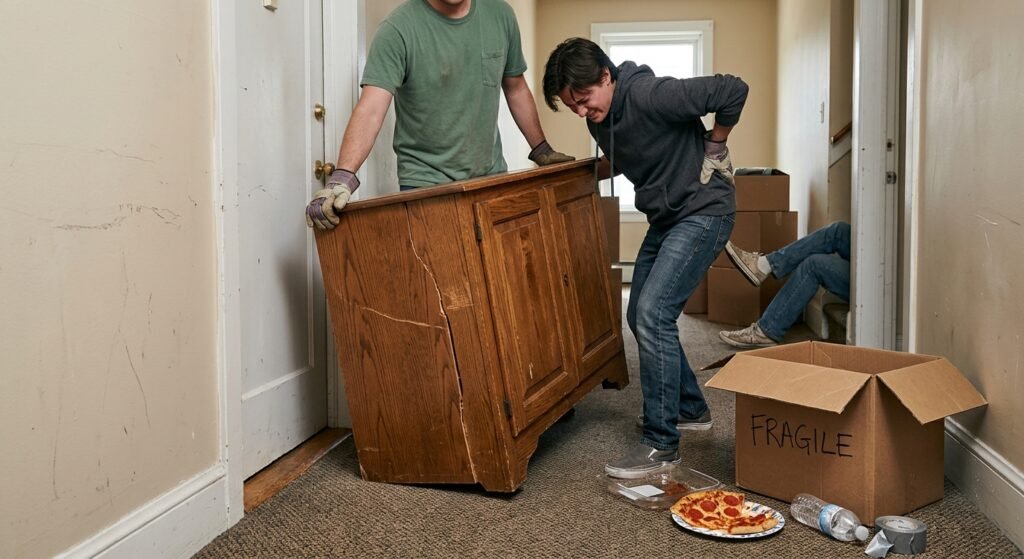
What a “Friends-and-Pizza Move” Actually Means
A friends-and-pizza move is an informal relocation arrangement where the people helping aren’t paid movers, aren’t insured for the job, and aren’t trained in load-bearing techniques. I think the term undersells what’s actually happening — it’s a full moving operation being run without any of the systems that make moving companies reliable.
We’ve noticed most people underestimate this because the “move” part feels identical to a professional job on the surface. Boxes get carried, a truck gets loaded, furniture ends up in a new house. But the structure underneath — training, insurance, equipment — simply isn’t there.
Why This Option Looks Free But Rarely Is
The sticker price of a friends-and-pizza move is pizza and gas money, which is exactly why it looks free. I’ve broken down enough of these moves to know the real cost hides in categories nobody budgets for upfront.
Truck rental fees, replacement costs for broken items, and the value of everyone’s time rarely make it into the initial plan. Property damage and injury risk compound the problem further, and those two categories alone can erase any money “saved” by skipping professional movers.
The Hidden Dollar Costs Nobody Budgets For
The dollar cost of a friends-and-pizza move typically includes truck rental, fuel, food, and out-of-pocket repairs for anything broken along the way, and those line items add up faster than most people expect. I’ve tallied these costs for families who thought they were saving money and found the final number uncomfortably close to a mover’s quote.
| Cost Category | DIY (“Friends & Pizza”) | Professional Movers |
| Truck rental + mileage | $100–$300 | Included in quote |
| Fuel | $50–$150 | Included in quote |
| Food/drinks for helpers | $75–$200 | $0 |
| Replacement for damaged items | Variable, often $200+ | Covered by mover liability |
| Lost wages (time off work) | Variable | Minimal |
The table above shows where DIY costs sneak in even when labor itself is unpaid.
Truck Rental, Fuel, and Mileage Overages
Truck rental companies charge by the day and by the mile, and most DIY movers underestimate both. A U-Haul mileage study shows overage fees can add $50 to $150 to a single local move once distance and fuel surcharges are factored in.
Pizza, Drinks, and “Thank You” Costs That Add Up
Feeding a crew of four or five helpers across a full moving day costs more than one pizza order. We’ve watched these “thank you” expenses — food, drinks, gas money for helpers — quietly reach $150 or more by the end of the day.
Replacing Damaged or Broken Items Out of Pocket
Untrained movers break things, and when they do, the homeowner pays to replace them with no recourse. There’s no claims process, no liability coverage, and no company standing behind the damage.
Who Actually Carries the Risk When Friends Help You Move
The person who owns the belongings carries nearly all the risk in a friends-and-pizza move, because there’s no insurance policy covering the items or the people doing the lifting. I’ve explained this to more than one person who assumed their homeowner’s policy would simply step in, and it rarely does cleanly.
That gap gets more serious once injury enters the picture. If a friend hurts their back carrying your couch down a flight of stairs, you may face both a damaged friendship and an unexpected financial obligation.
No Insurance Coverage for Dropped or Damaged Items
Standard renters and homeowners insurance policies are not built to cover moving damage caused by unpaid helpers. Most policies exclude property damage that occurs during a move unless a licensed, insured moving company was involved.
Injury Liability If a Friend Gets Hurt
An injury to a friend during a DIY move can create real liability exposure for the person whose belongings were being moved. Moving injuries account for a meaningful share of home-related strain and fall injuries tracked by the Consumer Product Safety Commission, and an unpaid helper has far less protection than a mover’s employee would.
Property Damage Risks During an Untrained Move
Property damage during an untrained move most often shows up as scraped walls, dented doorframes, and cracked stair treads from furniture handled without proper technique. I’ve walked through enough post-move homes to recognize the same damage patterns over and over.
Stairwells and narrow hallways cause the most trouble, since friends carrying a couch or mattress rarely know the pivot angles professional movers use to clear tight corners. The repair bill for a single damaged doorframe or scratched hardwood floor can quietly erase whatever money the move “saved.”
Heavy Lifting Injuries and Physical Risk Factors
Heavy lifting injuries during a DIY move typically affect the lower back, shoulders, and knees, since untrained helpers lift with their backs instead of their legs. We’ve heard this story from friends who show up eager to help and leave with a pulled muscle instead.
Awkwardly shaped furniture multiplies the risk further, because it forces helpers into unnatural positions that a trained moving crew would avoid through better technique and equipment.
Time Costs: Why DIY Moves Take Longer Than Planned
A DIY move with friends almost always takes longer than planned because helpers arrive late, work at inconsistent paces, and need frequent breaks that professional crews don’t require. I’ve seen a “four-hour move” stretch into a full-day event more times than I can count.
Coordinating everyone’s schedules ahead of time adds its own delay before the move even starts, and that lost time has a real cost even when nobody’s getting paid by the hour.
What Professional Movers Carry That Friends Can’t Replace
Professional movers bring equipment, training, and liability coverage that a group of friends simply cannot replicate on moving day. I’ve worked alongside enough crews to see exactly how much of the “easy” part of a move depends on gear most households don’t own.
Dollies, furniture pads, shoulder straps, and ramps aren’t just convenience items — they’re what prevents the back injuries and wall damage that DIY moves run into constantly.
| Capability | Friends & Pizza | Professional Movers |
| Lifting equipment (dollies, straps) | Rarely available | Standard |
| Trained lifting technique | No | Yes |
| Liability for damage | None | Covered |
| Injury protection for helpers | None | Workers’ comp coverage |
The comparison above shows why equipment and training matter more than the labor itself.
Equipment and Tools for Safe Handling
Furniture dollies, moving straps, and protective padding reduce both injury risk and property damage during a move. None of these tools are commonly available in a household garage, which is exactly why DIY moves rely on raw strength instead.
Trained Technique for Heavy or Awkward Items
Trained movers use specific lifting angles and team coordination to move heavy or oddly shaped items without injury. That technique takes practice to develop, and it’s the single biggest gap between a professional crew and a group of well-meaning friends.
Items That Create Extra Risk in Any Move
Certain items create outsized risk in any move, whether professional or DIY, because of their weight, fragility, or hazardous contents. Pianos, glass furniture, large mirrors, and propane tanks top the list of items that cause the most damage and injury incidents.
These high-risk items deserve extra caution regardless of who’s doing the lifting, since even trained crews treat them differently than standard boxes and furniture.
Comparing Real Costs: DIY Move vs. Professional Movers
A typical local move in Skokie, IL costs between $300 and $800 with professional movers, while a “free” DIY move with friends often ends up costing $200 to $500 once truck rental, food, and replacement items are factored in. That narrower gap surprises most people once they actually run the numbers.
Once injury risk, property damage, and lost time get factored into the comparison, the math tips even further toward hiring movers for anything beyond a single-room apartment.
Signs It’s Time to Stop Relying on Friends for a Move
A few clear signs suggest it’s time to hire professional movers instead of relying on friends. Moving a home with stairs, heavy furniture, fragile valuables, or a tight timeline all point toward professional help over a DIY crew.
- Stairs or multiple flights involved — injury and damage risk rises sharply
- Large or heavy furniture — pianos, sectionals, and large appliances need trained handling
- Limited moving-day availability — fewer helpers means more strain per person
- Fragile or high-value items — glass, antiques, and electronics need protective handling
- A tight moving deadline — professional crews move faster and more predictably
Conclusion
A friends-and-pizza move trades a small upfront savings for real exposure to property damage, injury, and unpredictable costs. We’ve walked through why those hidden costs stack up and why trained crews avoid them. Ready for a move without the guesswork? Call ASHER MOVERS LOCAL & LONG DISTANCE today.
Frequently Asked Questions
Is it illegal to move with friends instead of a moving company?
No, moving with friends is legal in nearly all circumstances. It only becomes a legal issue if you’re paid for the service without proper licensing.
Who pays if a friend breaks something during a move?
The item’s owner typically absorbs the cost, since unpaid helpers carry no liability coverage. Most homeowner’s policies exclude this type of moving damage.
Can friends get hurt and sue if they’re injured helping me move?
Yes, an injured friend could pursue a claim, especially for serious injuries. This risk is one reason professional movers carry liability insurance.
Does renters insurance cover items damaged during a DIY move?
Rarely. Most renters and homeowners policies exclude damage that happens during a move unless a licensed company was involved.
How much do people actually save moving with friends vs. hiring movers?
The savings are often smaller than expected, sometimes under $300 once truck rental, food, and damage costs are included. A full local move with movers averages $300–$800.
What items should never be moved without professional equipment?
Pianos, large glass furniture, heavy appliances, and items requiring stairs top this list. These items cause the most injuries and damage in DIY moves.
How far in advance should I book movers in Skokie, IL instead?
Booking two to four weeks ahead secures better availability and pricing. Peak season (May–September) often requires even earlier booking.
