
Moving companies won’t transport flammable, explosive, corrosive, or toxic materials because federal transportation law and carrier liability insurance both prohibit it, and packing one by mistake can delay your entire shipment. I’ve watched a single forgotten propane tank hold up a loading crew for an hour. And that’s the easy version of the problem.
Not knowing the rules costs more than time. It risks your mover refusing the whole truck, voiding insurance coverage, or leaving you scrambling on moving day with no plan for the leftover items.
This guide covers what actually counts as hazardous in a move, the specific categories you’re most likely to own, why federal rules force movers to enforce this, and how to handle disposal and borderline items before your Skokie move day arrives.
What Counts as a Hazardous Material in a Move?
A hazardous material, in moving terms, is any item that’s flammable, explosive, corrosive, toxic, or pressurized enough to pose a risk during transport. Movers classify items this way because a sealed truck packed tight for hours or days turns a small risk into a serious one.
This classification system isn’t arbitrary. The U.S. Department of Transportation’s hazardous materials regulations set the baseline that household movers build their own prohibited-items lists around.
How Moving Companies Classify Hazardous Items
Movers sort hazardous materials into rough categories: flammables, explosives, corrosives, and toxins, with pressurized containers treated as their own risk class regardless of what’s inside them. Most moving company intake forms walk through these same four buckets during a pre-move survey.
Why Liability Rules Shape What Movers Can Carry
Liability insurance is the real enforcement mechanism behind these lists, not just safety concern on its own. A mover’s cargo policy typically excludes damage caused by undeclared hazardous materials, which means one bottle of pool acid can void coverage for an entire shipment.
Flammable and Combustible Items Movers Won’t Load
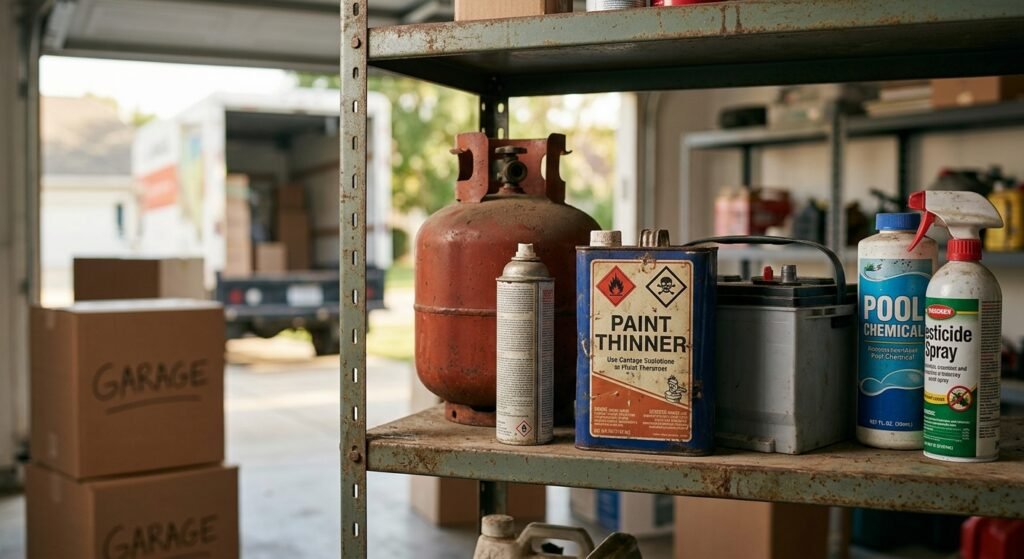
Flammable liquids and combustible household products top almost every mover’s prohibited list because they ignite easily under heat, friction, or pressure changes inside a closed truck. Garages and sheds are where most of these items hide in plain sight.
Common Flammable Liquids Found in Garages and Sheds
Paint thinner, gasoline, kerosene, and lighter fluid are flammable liquids that movers routinely reject during pre-move walkthroughs. I’ve seen half-full cans of these sitting on a shelf for years, completely forgotten until the mover flags them.
Aerosols and Propane Tanks
Aerosol cans and propane tanks are pressurized flammables that count as hazardous regardless of how little product remains inside them. A nearly empty spray paint can is still flagged the same way a full one would be.
Explosive and Pressurized Items on the Prohibited List
Explosive and pressurized items are banned outright because sudden temperature shifts or impact during loading can trigger a reaction inside a packed truck. This category tends to catch people off guard more than any other.
Fireworks, Ammunition, and Compressed Gas Cylinders
Fireworks, ammunition, and compressed gas cylinders are treated as explosive-risk items even in small personal quantities. Many customers assume a single box of leftover fireworks from a holiday is fine to pack, and it isn’t.
Corrosive and Toxic Household Chemicals
Corrosive and toxic chemicals can leak, off-gas, or react with other packed materials, which is why movers separate this category from general flammables. These products often sit under sinks and in garages without anyone thinking of them as “hazardous.”
Pool Chemicals and Pesticides
Pool chemicals like chlorine tablets and most pesticides are corrosive or toxic enough that movers won’t load them under any circumstances. Chlorine specifically can react with other spilled chemicals in transit and create dangerous fumes.
Cleaning Products That Can’t Travel Together
Certain cleaning products become hazardous only in combination, since mixing bleach and ammonia-based cleaners produces toxic gas even in small amounts. Packing these side by side is one of the most common mistakes I see during final walkthroughs.
Automotive and Garage Hazards Movers Reject
Automotive fluids and components carry both flammability and corrosivity risks, which puts them on nearly every mover’s rejection list. This is the category that trips up homeowners with garages most often.
Motor Oil, Fuel, and Car Batteries
Motor oil, gasoline, and car batteries are rejected because of leak risk, flammability, and the corrosive acid inside most standard batteries. A cracked battery case in a moving truck can damage everything stacked near it.
Perishable and Biological Items That Create Problems
Perishable and biological items aren’t regulated the same way chemicals are, but movers still restrict them because of spoilage, pest risk, and health code issues on long hauls. This category surprises people because it doesn’t feel “hazardous” in the traditional sense.
Food, Plants, and Perishables on Long-Distance Moves
Perishable food and living plants are commonly restricted on long-distance moves because multi-day transit times allow spoilage, mold, or pest infestation to set in before delivery. Local moves are more forgiving here, but interstate hauls rarely allow either.
Why Movers Enforce These Restrictions
Movers enforce hazardous material restrictions because federal transportation law requires it and because their cargo insurance explicitly excludes damage caused by undeclared dangerous goods. This isn’t a policy a dispatcher invented to slow down your move. I think of it as a legal floor every licensed carrier has to operate above.
DOT and Federal Transportation Regulations
The Department of Transportation regulates what can move across state lines in a commercial vehicle, and household goods carriers build their prohibited-items lists directly from those standards. An FMCSA review of household goods carrier violations found that undeclared hazardous materials remain among the most cited safety issues in residential moves.
Insurance and Liability Protections for Movers
Cargo insurance policies carried by moving companies typically contain explicit hazardous materials exclusions, meaning a mover who knowingly transports a banned item risks losing coverage for the entire shipment, not just the item itself. This is the financial reason restrictions get enforced strictly rather than loosely.
How to Identify Hazardous Items Before Packing Day
You can identify most hazardous household items by checking product labels for warning symbols like flame icons, skull-and-crossbones, or corrosive-hand graphics before you start boxing anything up. I walk clients through their garage and under-sink cabinets first, since that’s where 80% of flagged items usually turn up.
Reading Labels and Warning Symbols
Warning labels use standardized pictograms. A flame symbol indicates flammability, a corroding image indicates acid or caustic content, and an exclamation mark typically flags a general health hazard. The Consumer Product Safety Commission’s labeling guidelines require manufacturers to display these symbols clearly on hazardous household products.
What Happens If a Hazardous Item Is Found in Your Shipment
If a mover discovers a hazardous item during loading, the standard response is refusal of that item on the spot, which can stall the entire crew while you decide what to do with it. This is the scenario everyone wants to avoid, and it’s completely preventable with a pre-move check.
Delays, Refusals, and Potential Fees
A discovered hazardous item typically results in on-the-spot refusal, and some movers charge a disposal or handling fee if the item requires special treatment before the crew can continue loading. Larger shipments with multiple flagged items can lose significant time on an already tight moving day schedule.
How to Properly Dispose of or Transport Restricted Items Yourself
Most restricted household hazardous materials need to go to a certified hazardous waste collection site rather than regular trash, since household garbage pickup doesn’t accept them. Planning this step two to three weeks before your move date avoids a last-minute scramble.
Local Hazardous Waste Disposal Options Near Skokie, IL
Cook County residents, including those in Skokie, can use scheduled household hazardous waste collection events for items like paint, pesticides, and automotive fluids. Checking collection dates ahead of your move date is worth doing early since events don’t run continuously.
Transporting Small Quantities Safely in Your Own Vehicle
Small quantities of mild household chemicals are often safe to transport in your personal vehicle, provided they’re sealed, upright, and kept away from passenger areas and heat sources. This is usually the simplest solution for the few items a mover won’t take.
Special Considerations for Long-Distance vs. Local Moves
Long-distance moves fall under stricter federal interstate commerce rules than local moves, which means some items a local mover might flexibly handle become firm rejections on a cross-state haul. Distance changes the regulatory picture more than people expect.
Why Interstate Moves Have Stricter Rules
Interstate carriers operate under FMCSA jurisdiction the moment a shipment crosses a state line, which applies a uniform hazardous materials standard regardless of what any individual state might otherwise permit. A local move within Illinois doesn’t trigger the same federal oversight layer.
Packing Alternatives for Borderline Items
Borderline items are products that sound hazardous but usually aren’t restricted, and confusing the two categories causes unnecessary stress during packing. Knowing the difference saves both time and anxiety.
Items That Seem Hazardous But Usually Aren’t
Nail polish, perfume, and rubbing alcohol in small retail-sized containers are generally permitted since the quantities involved fall below the threshold that concerns movers. The confusion usually comes from a warning label that looks alarming on a genuinely low-risk product.
Creating a Pre-Move Hazardous Materials Checklist
A room-by-room checklist is the most reliable way to catch hazardous items before they end up in a box, since these products tend to cluster in predictable spots like garages, sheds, and utility closets. I recommend building this list at least two weeks out.
A Room-by-Room Approach to Spotting Restricted Items
Starting in the garage, then moving to the shed, then the kitchen and bathroom cabinets, catches the vast majority of restricted items in most households. This sequence mirrors where flammables, corrosives, and pressurized containers are most commonly stored.
How Professional Movers Help You Avoid Moving Day Surprises
A pre-move consultation lets a moving company walk through your home ahead of time and flag hazardous items before loading day, which eliminates most surprises entirely. This single step resolves the majority of issues that otherwise show up mid-move.
Pre-Move Consultations and Inventory Reviews
An inventory review during a pre-move consultation gives the moving crew a chance to identify restricted items while there’s still time to arrange proper disposal or personal transport. Waiting until loading day removes that flexibility entirely.
Frequently Asked Questions
Can movers transport paint cans?
Movers generally won’t transport paint cans, especially oil-based paint, because of flammability risk. Water-based latex paint is sometimes allowed in small quantities, but policies vary by company.
Will movers take my propane tank for the grill?
No, movers won’t transport propane tanks under any circumstances due to explosion risk. You’ll need to transport it yourself or arrange proper disposal beforehand.
Can I pack cleaning supplies in my moving boxes?
Most mild cleaning supplies are fine, but bleach, ammonia-based cleaners, and pool chemicals are typically restricted. Check labels for corrosive or toxic warning symbols first.
What happens to hazardous items movers find during loading?
Movers typically refuse hazardous items on the spot, which can delay loading until you decide how to handle them. Some companies charge a handling fee for discovered items.
Are car batteries considered hazardous for moving?
Yes, car batteries are considered hazardous due to the corrosive acid inside them. Most movers require these to be transported separately in your own vehicle.
Can I move live plants long-distance?
Long-distance movers often restrict live plants because multi-day transit allows for spoilage, mold, or pest issues. Local moves are generally more flexible with plant transport.
Where can I dispose of hazardous materials before moving in Skokie, IL?
Cook County hosts scheduled household hazardous waste collection events that accept paint, pesticides, and automotive fluids. Checking collection schedules a few weeks before your move date is recommended.
Conclusion
Hazardous materials rules exist because flammable, corrosive, and pressurized items genuinely threaten a loaded truck and the people handling it. Understanding these categories now prevents refusals and delays later.
Your local disposal options and a simple room-by-room check close most of the gap between what you own and what’s allowed. The rest comes down to planning ahead.
We’d rather walk you through a pre-move consultation now than watch a propane tank hold up your moving day. Reach out to ASHER MOVERS LOCAL & LONG DISTANCE and let’s get your move planned right.
