
Rural moving is the process of relocating a household or business from a property located outside dense urban infrastructure, where longer driveways, gravel roads, and limited truck access change how a move gets planned and executed. I’ve worked with enough rural moves to know the biggest surprises rarely come from the boxes themselves. They come from the driveway, the weather, or an item nobody thought to mention until the truck was already there.
Skokie homeowners moving to or from rural properties face a different set of logistics than a standard in-town move. Getting ahead of access issues and packing restrictions early prevents most delays.
This guide covers what separates rural moves from urban ones, how property access and road conditions shape your moving day, what items need special handling or can’t be transported at all, and how pricing, timing, and company selection work when your address isn’t a typical city block.
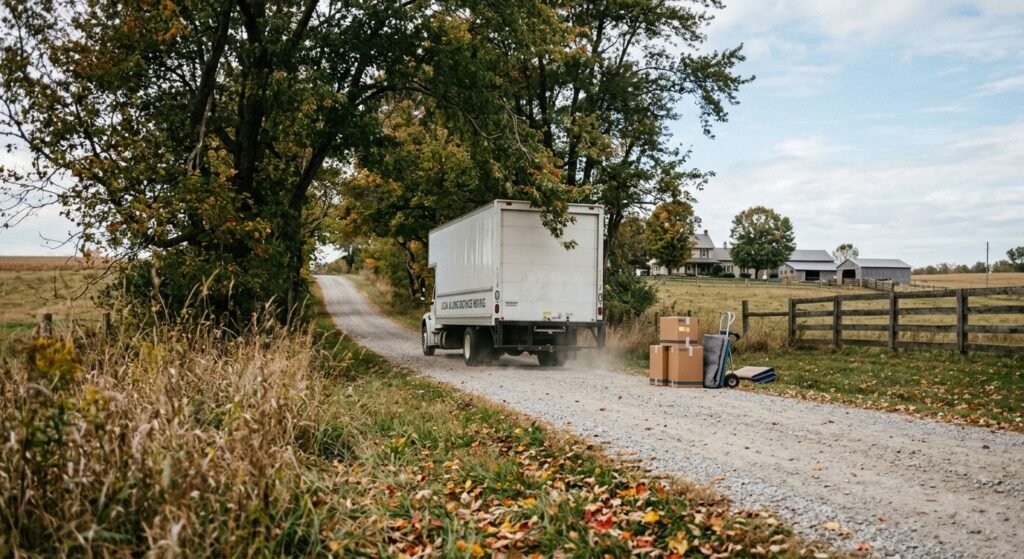
What Makes Rural Moving Different From Urban Moving
Rural moving differs from urban moving primarily because of distance, road conditions, and limited truck access rather than the volume of belongings being moved. A move from a Skokie subdivision rarely involves a quarter-mile gravel driveway or a bridge with a weight limit, but rural routes frequently do.
Distance and Access Challenges
Longer distances between the pickup point and the nearest major road mean trucks spend more time maneuvering before the actual loading even starts. I always ask about the distance from the main road to the front door before quoting a rural job.
Road and Driveway Limitations
Unpaved roads, low-hanging branches, and soft shoulders can stop a full-size moving truck before it reaches the house. Driveway and road access often determines whether the crew uses one truck or shuttles belongings with a smaller vehicle first.
How Driveway and Road Access Affects Your Moving Day
Driveway and road access affects your moving day by determining truck size, parking distance, and how many trips the crew makes between the vehicle and your front door. A gravel road that’s fine for a pickup truck can be a serious problem for an 18-wheeler.
We ask every rural customer to describe their driveway width, surface type, and any low bridges or tight turns along the route. This single conversation prevents more moving-day delays than almost anything else I’ve seen in this business.
If a truck genuinely can’t reach the property, crews shuttle items using smaller vehicles, which adds time and sometimes cost. Flagging this during booking, not on moving day, keeps the schedule intact.
Why Rural Moves Take Longer to Plan and Execute
Rural moves take longer to plan because they involve extra variables, including fuel costs, longer drive times, and equipment that an in-town move never requires. A standard local move inside Skokie might take a single day start to finish. A rural relocation twenty or thirty miles out often needs an extra half day just for travel.
Fuel and Mileage Considerations
Mileage-based pricing kicks in once a move crosses a certain distance threshold, and rural routes almost always qualify. We calculate fuel and mileage separately from labor hours so customers see exactly what they’re paying for and why.
Longer routes also mean more exposure to weather and road conditions, which is part of why rural movers build extra buffer time into their schedules. A 2023 American Trucking Associations report found that rural freight routes average 15% longer transit times than comparable urban routes due to road quality and lower speed limits on unpaved sections.
Crew Size and Equipment Needs
Rural properties sometimes require extra hands just to carry items the final stretch from the truck to the house. Crew size decisions get made based on the access conditions, not just the home’s square footage.
What Movers Need to Know About Your Rural Property
Movers need to know your rural property’s driveway length, road surface, gate or fence access points, and any seasonal conditions that might affect the day of the move. This information shapes everything from truck selection to crew count.
I ask customers to send photos of their driveway and the approach road whenever possible. A quick photo catches problems that a phone description alone tends to miss, like a sharp turn or a low tree branch.
Septic tank locations and well covers matter too, since heavy trucks can damage underground systems if they park in the wrong spot. Pointing these out ahead of time protects your property and keeps the crew working efficiently.
How to Prepare a Long Driveway or Gravel Road for Movers
Preparing a long driveway or gravel road for movers means clearing debris, trimming overhanging branches, and marking any soft spots or hazards before the truck arrives. A little prep work here saves real time on moving day.
Walk the length of your driveway a day or two before the move and look for loose gravel, standing water, or ruts that could trap a heavy vehicle. Mark problem spots with a flag or cone so the driver sees them before backing in.
If snow or ice is a possibility, clearing and salting the path in advance keeps the crew safe and the schedule on track. Winter road conditions are one of the most common causes of rural moving delays we see each year.
What Items Require Special Handling in Rural Relocations
Items that require special handling in rural relocations typically include farm equipment, propane tanks, firearms, and anything connected to well or septic systems. These items need extra prep, documentation, or sometimes a different transportation method entirely.
Farm Equipment and Outdoor Tools
Farm equipment and outdoor tools often need to be drained of fuel and secured differently than household furniture. Tractors, mowers, and tillers with gas tanks present a fire hazard if loaded without proper draining first.
Propane Tanks and Fuel Containers
Propane tanks and fuel containers fall under hazardous materials regulations that most household movers cannot transport under standard liability coverage. The U.S. Department of Transportation’s hazardous materials regulations classify compressed gas cylinders as restricted cargo for general freight carriers.
Packing Guidelines for Rural Homes and Outbuildings
Packing guidelines for rural homes and outbuildings call for separating household items from barn, shed, and garage contents, since each space often holds different categories of belongings that need their own handling plan. A property with multiple structures needs a packing strategy that covers more than just the main house.
Barns, Sheds, and Garages
Barns, sheds, and garages tend to accumulate tools, chemicals, and equipment that sit outside normal household packing categories. Walking through every outbuilding before packing day prevents last-minute surprises about what actually needs to move.
| Structure | Common Contents | Packing Consideration |
| Barn | Hay, tools, livestock supplies | Check for pest activity before loading |
| Shed | Lawn equipment, fuel cans | Drain fuel, secure sharp tools |
| Garage | Vehicles, chemicals | Separate hazardous materials |
| Workshop | Power tools, loose hardware | Box small parts separately |
Seasonal and Weather-Sensitive Items
Seasonal and weather-sensitive items like canned preserves, firewood, or garden chemicals need climate-appropriate packing to avoid damage in transit. Extreme temperatures inside a moving truck can ruin items that seem harmless in a normal pantry.
Items Movers Cannot Transport From Rural Properties
Movers cannot transport hazardous materials, perishable food, firearms without proper permits, and certain pesticides or farm chemicals regardless of how the property is zoned. This rule applies the same way in a rural setting as it does anywhere else, though rural households tend to have more of these items on hand.
- Propane tanks and compressed gas cylinders
- Gasoline, kerosene, and other flammable fuels
- Pesticides, herbicides, and restricted farm chemicals
- Ammunition and certain firearms without documentation
- Perishable food and plants in many long-distance cases
Checking your moving company’s prohibited items list before packing day prevents the awkward moment of a box getting left behind.
How Weather and Seasonal Conditions Impact Rural Moves
Weather and seasonal conditions impact rural moves by affecting road passability, with unpaved and gravel routes degrading much faster than paved urban streets during rain or snow. A storm that barely slows down an in-town move can turn a rural gravel road into a genuine obstacle.
Spring thaw season is particularly tough on rural roads, since melting snow combined with soft ground creates mud that can trap even well-equipped trucks. Scheduling around known seasonal weak points saves headaches for anyone moving in or out of a rural Skokie-area property.
Understanding Mileage-Based Pricing for Rural Relocations
Mileage-based pricing for rural relocations applies once the distance between locations exceeds the standard local-move radius, typically adding a per-mile rate on top of hourly labor charges. Rural routes frequently cross this threshold simply because of how far properties sit from city centers.
Getting a quote that specifically accounts for the actual road distance, not just straight-line mileage, avoids billing surprises after the move. Rural roads rarely run in a straight line, and that difference adds up.
How to Choose a Moving Company Experienced in Rural Areas
Choosing a moving company experienced in rural areas means confirming they’ve handled properties with long driveways, unpaved roads, or limited truck access before, not just assuming any licensed mover can manage it. Experience with these conditions directly affects how smoothly your moving day goes.
Ask prospective movers how they handle hazardous material restrictions, what their process looks like when a truck can’t reach the house, and whether they’ve worked in the specific rural area around your property. Clear answers to these questions are a strong signal of real experience.
Coordinating Utilities and Address Changes in Rural Communities
Coordinating utilities and address changes in rural communities often takes longer than in cities because fewer providers service a given area, and some rural properties rely on well water, septic systems, or propane delivery instead of standard municipal services. Starting this process early avoids a gap in service right when you need it most.
Confirming your new address with the postal service, utility providers, and any propane or fuel delivery company at least a few weeks ahead keeps your first days in the new home from feeling disconnected.
Moving Livestock, Pets, and Farm Animals Safely
Moving livestock, pets, and farm animals safely requires separate transportation arrangements, since standard moving trucks aren’t equipped or licensed to carry animals alongside household goods. Most moving companies will tell you upfront that animal transport falls outside their service.
Arranging a trailer, livestock transport service, or veterinary transport well before moving day keeps animals calm and compliant with any transport regulations. Rural households with multiple animals should treat this as its own project, separate from the household packing timeline.
What to Do If Your Rural Home Has Limited Cell or Internet Access
If your rural home has limited cell or internet access, confirming moving-day communication plans in advance, such as a landline number or a designated meeting time, keeps the crew and customer connected without relying on cell service. This small step prevents a lot of frustration on the actual day.
Sharing a physical address with clear landmarks, rather than relying on GPS alone, also helps drivers unfamiliar with the area find the property without delay.
Moving Day Checklist for Rural Homeowners
A moving day checklist for rural homeowners should confirm driveway access, hazardous item removal, utility transfers, and a communication plan before the truck ever arrives. Working through this list the week before moving day catches most problems while there’s still time to fix them.
- Confirm driveway and road conditions with the moving company
- Remove or properly prepare all hazardous materials
- Drain fuel from outdoor equipment and machinery
- Arrange separate transport for livestock or pets
- Confirm utility transfer dates for the new property
- Clear debris and mark hazards along the driveway
- Share a physical address and landmarks with the crew
Conclusion
Rural moves involve more variables than a typical local relocation, from driveway access and road conditions to hazardous item restrictions and mileage-based pricing. Understanding these factors ahead of time keeps your moving day predictable instead of stressful.
Every rural property is different, and the right moving partner adjusts their approach based on your specific access, terrain, and packing needs rather than applying a one-size-fits-all plan.
We built our process around these exact challenges. Reach out to ASHER MOVERS LOCAL & LONG DISTANCE to plan a rural move that accounts for your property from day one.
Frequently Asked Questions
Do movers charge more for rural locations?
Yes, rural locations often cost more due to mileage-based pricing and longer travel times. Extra fuel, drive time, and sometimes additional equipment contribute to the higher rate compared to a standard in-town move.
Can a moving truck get down a gravel or dirt road?
Most moving trucks can handle well-maintained gravel roads, but soft, narrow, or rutted roads may require a smaller shuttle vehicle. Confirming road conditions with your mover before the move prevents access issues on the day itself.
What items can’t movers take from a farm or rural property?
Movers typically cannot transport propane tanks, gasoline, pesticides, ammunition, and perishable food. These restrictions apply due to safety regulations and liability coverage limits that standard movers carry.
How far in advance should I book a rural move?
Booking a rural move four to six weeks in advance is recommended, especially during peak season or winter months. This allows time to assess driveway access, arrange special equipment, and coordinate utility transfers.
Do I need a permit for a long-distance rural move?
Most household rural moves don’t require a permit, but oversized loads or certain farm equipment transport might. Checking with your mover and local authorities confirms whether your specific situation needs one.
Can movers transport propane tanks or farm chemicals?
No, standard moving companies cannot transport propane tanks or most farm chemicals under their liability insurance. These items need to be transported separately through a specialized hazardous materials service or disposed of properly.
What happens if the moving truck can’t reach my house?
If the truck can’t reach your house, the crew typically shuttles belongings using a smaller vehicle between the truck and the property. Discussing this possibility during booking helps the crew arrive prepared with the right equipment.
