
Moving from a studio to a one-bedroom apartment in Skokie means more space, more rooms, and honestly, more decisions than most people expect. I’ve watched this exact upgrade catch people off guard because a studio move and a one-bedroom move are not the same job. The extra square footage changes how you pack, what you need, and how much time you should set aside.
This move usually happens because life changed. A new job, a partner moving in, or just wanting a real bedroom door that closes. Skokie renters make this jump constantly between the village’s studio-heavy buildings and its one-bedroom stock near Oakton and Golf Road.
I’ll walk you through what changes about this specific upgrade, how to sort your belongings before boxes come out, the packing order that keeps you organized, which items movers legally cannot transport, and a moving day timeline that keeps the whole thing on schedule.
What Changes When You Move From a Studio to a One-Bedroom
A studio is one open room doing five jobs at once. A one-bedroom splits those jobs into separate spaces, and that single fact changes your entire packing strategy.
Space and Layout Differences That Affect Packing
Your studio furniture served multiple purposes because it had to. That murphy bed, that ottoman with storage inside, that bookshelf acting as a room divider none of that logic carries over cleanly.
I always tell people to measure the new bedroom before they pack a single box. A one-bedroom in Skokie averages more square footage than a studio, but the room split means your bedroom might actually be smaller than your old sleeping nook.
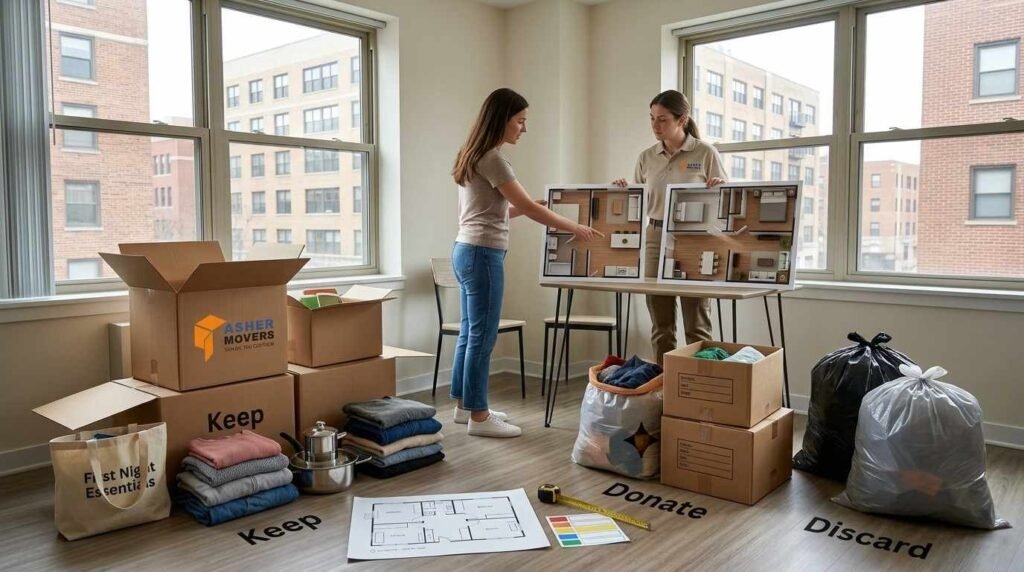
Make a rough floor plan of the new unit. Assign each box a room label based on that plan, not based on where the item lived in your studio.
Why This Move Feels Bigger Than It Looks
People underestimate this move because the total square footage gain seems modest on paper. But you’re not just adding space you’re adding an entire second room’s worth of new decisions: furniture, decor, storage systems, and a layout you’ve never lived with before.
The U.S. Census Bureau reports the average American moves 11.7 times in their lifetime, and upgrades like this one carry more first-apartment-style setup work than a typical lateral move between similar unit types.
Sorting Your Belongings Before the Move
Sorting before packing saves real time and money, since fewer boxes means a faster, cheaper move overall.
What to Keep, Donate, or Toss
Run every item through three questions: did you use it in the last year, does it fit the new layout, and does it serve a real purpose in the one-bedroom version of your life. Anything that fails two out of three goes in the donate pile.
Studio living forces ruthless minimalism, so most people moving up already own less clutter than average. Use that momentum instead of refilling boxes with things you kept only because your studio had no room to notice them.
Set up three zones in your current space: keep, donate, toss. Work room by room, or in a studio’s case, zone by zone sleeping area, kitchen, closet, entry.
New Furniture and Room-Specific Planning
A one-bedroom needs furniture your studio never required. A real dining setup, a dedicated desk, actual bedroom furniture separate from your living room seating.
Decide what you’re buying new versus what moves with you before packing day. This prevents you from wasting box space and moving budget on furniture that gets replaced within a month anyway.
Packing Guidelines for a Studio-to-1BR Move
Packing order matters more on this type of move because you’re organizing for two rooms instead of one continuous space.
Room-by-Room Packing Order
Pack the room you’ll set up last, first. For most people that’s the bedroom, since kitchens and living areas get used daily right up until moving day.
Label every box with its destination room in the new unit, not its origin zone in the studio. This single habit prevents the most common complaint I hear after these moves: boxes piled in the wrong room with no clear system.
Use a color-coded label system one color per destination room. Movers sort faster, and unpacking day goes noticeably smoother.
Fragile, Valuable, and Specialty Items
Wrap fragile items individually and pack them in smaller, well-cushioned boxes rather than one large box crammed full. Weight distribution matters here; a box that’s too heavy risks breaking at the bottom seam.
Keep valuables, documents, and irreplaceable items in a personal bag that travels with you, not with the moving truck. This includes jewelry, passports, prescription medications, and anything with no replacement value.
Items Movers Cannot Transport
Every licensed moving company follows federal and state restrictions on what goes on the truck, and these rules exist for real safety reasons.
Prohibited Household and Hazardous Items
Movers cannot transport flammable liquids, propane tanks, aerosol cans, corrosive chemicals, or ammunition. This includes common household items people forget about: nail polish remover, cleaning supplies with bleach, and gasoline for lawn equipment.
The Federal Motor Carrier Safety Administration maintains strict hazardous materials transport rules that apply directly to household movers, and violating them creates liability for both the mover and the customer.
Perishable food, plants, and pets also don’t travel on the moving truck. These need separate transportation arrangements you handle yourself.
How to Handle Restricted Items Safely
Dispose of hazardous chemicals at your municipality’s designated collection site rather than tossing them in regular trash. Skokie residents can check the village’s household hazardous waste guidelines before moving day to avoid last-minute scrambling.
Transport plants, pets, and perishables in your own vehicle. Pack these last so they’re the last thing loaded into your car, not sitting out for hours before departure.
Moving Day Timeline and Final Checklist
A clear timeline in the two weeks before your move prevents the scramble that causes most moving-day delays.
Two Weeks Out to Moving Day
Confirm your moving date and any parking or elevator reservations your new building requires. Many Skokie apartment buildings require advance notice for elevator use during move-in, and skipping this step causes real delays on arrival.
Finish packing everything except essentials by three days before the move. Keep a clearly labeled “first night” box with toiletries, chargers, and a change of clothes separate from everything else.
Avoiding Delays and Last-Minute Surprises
Walk through your studio one final time before movers arrive, checking closets, cabinets, and any storage you might forget. Confirm the new unit’s access details buzzer codes, parking instructions, loading dock hours the night before, not the morning of.
Have cash or a payment method ready for movers, and keep your phone charged for coordination throughout the day.
Conclusion
Upgrading from a studio to a one-bedroom means packing for two rooms instead of one continuous space. Sorting early, following a clear packing order, and knowing what movers cannot transport keeps the whole process predictable.
Skokie’s mix of studio and one-bedroom buildings makes this upgrade common, and a little planning turns a bigger move into a manageable one. Timelines matter just as much as boxes when it comes to avoiding delays.
We handle studio-to-one-bedroom upgrades across Skokie every week, and our crews know how to pack for the transition without wasted trips. Reach out to Asher Movers Local & Long Distance to book your move and get a crew that already understands this exact upgrade.
Frequently Asked Questions
How long does a studio-to-1BR move take?
Most studio-to-one-bedroom moves take four to six hours with a professional crew. The timeline depends on packing readiness and building access like elevators or parking restrictions.
Do I need more boxes for a one-bedroom than a studio?
Yes, expect roughly 30 to 50 percent more boxes since you’re now organizing belongings across two distinct rooms. New furniture purchases also add to the total count.
Can movers transport house plants?
No, movers cannot transport plants on the truck due to liability and temperature control issues. Plants need to travel in your personal vehicle instead.
What items are illegal to pack for a move?
Flammable liquids, propane tanks, aerosol cans, corrosive chemicals, and ammunition are prohibited on moving trucks. These fall under federal hazardous materials transport restrictions.
Should I buy new furniture before or after the move?
Buy new furniture after you’ve measured the actual bedroom and living space in your new unit. This prevents wasted purchases on pieces that don’t fit the new layout.
How far in advance should I book movers for this type of move?
Book movers two to three weeks in advance, especially during peak moving months. Skokie buildings with elevator or loading dock requirements often need advance notice too.Moving from a studio to a one-bedroom apartment in Skokie means more space, more rooms, and honestly, more decisions than most people expect. I’ve watched this exact upgrade catch people off guard because a studio move and a one-bedroom move are not the same job. The extra square footage changes how you pack, what you need, and how much time you should set aside.
This move usually happens because life changed. A new job, a partner moving in, or just wanting a real bedroom door that closes. Skokie renters make this jump constantly between the village’s studio-heavy buildings and its one-bedroom stock near Oakton and Golf Road.
I’ll walk you through what changes about this specific upgrade, how to sort your belongings before boxes come out, the packing order that keeps you organized, which items movers legally cannot transport, and a moving day timeline that keeps the whole thing on schedule.
What Changes When You Move From a Studio to a One-Bedroom
A studio is one open room doing five jobs at once. A one-bedroom splits those jobs into separate spaces, and that single fact changes your entire packing strategy.
Space and Layout Differences That Affect Packing
Your studio furniture served multiple purposes because it had to. That murphy bed, that ottoman with storage inside, that bookshelf acting as a room divider none of that logic carries over cleanly.
I always tell people to measure the new bedroom before they pack a single box. A one-bedroom in Skokie averages more square footage than a studio, but the room split means your bedroom might actually be smaller than your old sleeping nook.
Make a rough floor plan of the new unit. Assign each box a room label based on that plan, not based on where the item lived in your studio.
Why This Move Feels Bigger Than It Looks
People underestimate this move because the total square footage gain seems modest on paper. But you’re not just adding space you’re adding an entire second room’s worth of new decisions: furniture, decor, storage systems, and a layout you’ve never lived with before.
The U.S. Census Bureau reports the average American moves 11.7 times in their lifetime, and upgrades like this one carry more first-apartment-style setup work than a typical lateral move between similar unit types.
Sorting Your Belongings Before the Move
Sorting before packing saves real time and money, since fewer boxes means a faster, cheaper move overall.
What to Keep, Donate, or Toss
Run every item through three questions: did you use it in the last year, does it fit the new layout, and does it serve a real purpose in the one-bedroom version of your life. Anything that fails two out of three goes in the donate pile.
Studio living forces ruthless minimalism, so most people moving up already own less clutter than average. Use that momentum instead of refilling boxes with things you kept only because your studio had no room to notice them.
Set up three zones in your current space: keep, donate, toss. Work room by room, or in a studio’s case, zone by zone sleeping area, kitchen, closet, entry.
New Furniture and Room-Specific Planning
A one-bedroom needs furniture your studio never required. A real dining setup, a dedicated desk, actual bedroom furniture separate from your living room seating.
Decide what you’re buying new versus what moves with you before packing day. This prevents you from wasting box space and moving budget on furniture that gets replaced within a month anyway.
Packing Guidelines for a Studio-to-1BR Move
Packing order matters more on this type of move because you’re organizing for two rooms instead of one continuous space.
Room-by-Room Packing Order
Pack the room you’ll set up last, first. For most people that’s the bedroom, since kitchens and living areas get used daily right up until moving day.
Label every box with its destination room in the new unit, not its origin zone in the studio. This single habit prevents the most common complaint I hear after these moves: boxes piled in the wrong room with no clear system.
Use a color-coded label system one color per destination room. Movers sort faster, and unpacking day goes noticeably smoother.
Fragile, Valuable, and Specialty Items
Wrap fragile items individually and pack them in smaller, well-cushioned boxes rather than one large box crammed full. Weight distribution matters here; a box that’s too heavy risks breaking at the bottom seam.
Keep valuables, documents, and irreplaceable items in a personal bag that travels with you, not with the moving truck. This includes jewelry, passports, prescription medications, and anything with no replacement value.
Items Movers Cannot Transport
Every licensed moving company follows federal and state restrictions on what goes on the truck, and these rules exist for real safety reasons.
Prohibited Household and Hazardous Items
Movers cannot transport flammable liquids, propane tanks, aerosol cans, corrosive chemicals, or ammunition. This includes common household items people forget about: nail polish remover, cleaning supplies with bleach, and gasoline for lawn equipment.
The Federal Motor Carrier Safety Administration maintains strict hazardous materials transport rules that apply directly to household movers, and violating them creates liability for both the mover and the customer.
Perishable food, plants, and pets also don’t travel on the moving truck. These need separate transportation arrangements you handle yourself.
How to Handle Restricted Items Safely
Dispose of hazardous chemicals at your municipality’s designated collection site rather than tossing them in regular trash. Skokie residents can check the village’s household hazardous waste guidelines before moving day to avoid last-minute scrambling.
Transport plants, pets, and perishables in your own vehicle. Pack these last so they’re the last thing loaded into your car, not sitting out for hours before departure.
Moving Day Timeline and Final Checklist
A clear timeline in the two weeks before your move prevents the scramble that causes most moving-day delays.
Two Weeks Out to Moving Day
Confirm your moving date and any parking or elevator reservations your new building requires. Many Skokie apartment buildings require advance notice for elevator use during move-in, and skipping this step causes real delays on arrival.
Finish packing everything except essentials by three days before the move. Keep a clearly labeled “first night” box with toiletries, chargers, and a change of clothes separate from everything else.
Avoiding Delays and Last-Minute Surprises
Walk through your studio one final time before movers arrive, checking closets, cabinets, and any storage you might forget. Confirm the new unit’s access details buzzer codes, parking instructions, loading dock hours the night before, not the morning of.
Have cash or a payment method ready for movers, and keep your phone charged for coordination throughout the day.
Conclusion
Upgrading from a studio to a one-bedroom means packing for two rooms instead of one continuous space. Sorting early, following a clear packing order, and knowing what movers cannot transport keeps the whole process predictable.
Skokie’s mix of studio and one-bedroom buildings makes this upgrade common, and a little planning turns a bigger move into a manageable one. Timelines matter just as much as boxes when it comes to avoiding delays.
We handle studio-to-one-bedroom upgrades across Skokie every week, and our crews know how to pack for the transition without wasted trips. Reach out to Asher Movers Local & Long Distance to book your move and get a crew that already understands this exact upgrade.
Frequently Asked Questions
How long does a studio-to-1BR move take?
Most studio-to-one-bedroom moves take four to six hours with a professional crew. The timeline depends on packing readiness and building access like elevators or parking restrictions.
Do I need more boxes for a one-bedroom than a studio?
Yes, expect roughly 30 to 50 percent more boxes since you’re now organizing belongings across two distinct rooms. New furniture purchases also add to the total count.
Can movers transport house plants?
No, movers cannot transport plants on the truck due to liability and temperature control issues. Plants need to travel in your personal vehicle instead.
What items are illegal to pack for a move?
Flammable liquids, propane tanks, aerosol cans, corrosive chemicals, and ammunition are prohibited on moving trucks. These fall under federal hazardous materials transport restrictions.
Should I buy new furniture before or after the move?
Buy new furniture after you’ve measured the actual bedroom and living space in your new unit. This prevents wasted purchases on pieces that don’t fit the new layout.
How far in advance should I book movers for this type of move?
Book movers two to three weeks in advance, especially during peak moving months. Skokie buildings with elevator or loading dock requirements often need advance notice too.
