
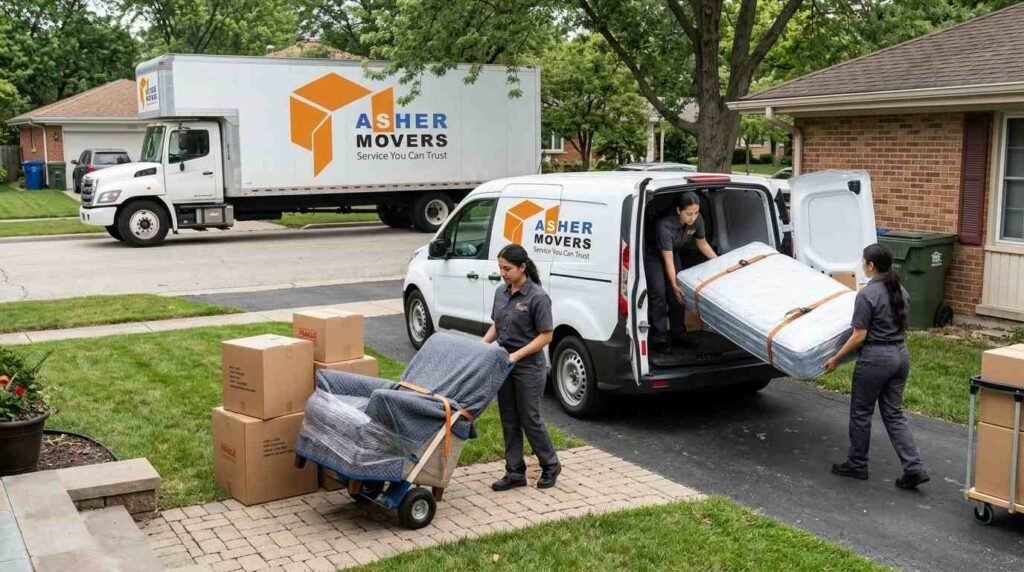
A shuttle service fee gets added to your bill when a full-size moving truck cannot reach your home directly. Movers use a smaller vehicle to bridge the gap, and that extra trip costs money. I see this most in dense neighborhoods, older buildings, and streets with tight turns or low clearance.
This fee catches people off guard because nobody mentions it until moving day arrives. A narrow driveway or a strict HOA policy in Skokie can trigger it fast, and the charge shows up on your final invoice instead of your quote.
I’ll walk through what a shuttle fee actually covers, when Skokie movers apply one, what it typically costs, and how you confirm truck access ahead of time so nothing surprises you later.
What Is a Shuttle Service Fee in a Local Move?
A shuttle service fee is a charge that a moving company applies when a large moving truck cannot park close enough to a home to load or unload directly. The crew transfers belongings into a smaller truck or van, drives it to the site, and moves everything the rest of the way by hand or dolly.
This isn’t a made-up add-on. It’s a real operational cost. The crew works longer, uses a second vehicle, and burns extra hours getting your things from point A to point B.
Why Movers Use Shuttle Trucks on Local Jobs
Full-size moving trucks run 26 feet or longer and need real clearance to park and operate a ramp safely. A shuttle truck is smaller, more maneuverable, and fits where the big rig physically cannot.
I’ve watched crews attempt tight turns into cul-de-sacs and simply run out of room. A shuttle isn’t a convenience at that point. It’s the only way the move gets finished that day.
How Shuttle Fees Differ From Standard Moving Charges
Standard moving charges cover labor, mileage, and truck time based on your inventory and distance. A shuttle fee sits on top of that as a separate line item tied specifically to the extra vehicle and extra hands needed.
Movers don’t fold this into the base rate because it doesn’t apply to every job. Only certain addresses trigger it, so it gets billed separately when it happens.
When Skokie Movers Charge a Shuttle Fee
Skokie’s mix of older single-family streets, newer condo developments, and multi-unit buildings creates plenty of situations where a full-size truck simply can’t get close enough to your front door.
Narrow Streets and Access Restrictions
Older residential blocks in Skokie were built before 26-foot trucks were common, and some streets stay too narrow for safe parking or turning. Overhead tree limbs, tight cul-de-sacs, and low bridges near certain intersections create the same problem.
A crew that can’t legally or safely park the main truck within a reasonable carry distance has one option left: bring in a shuttle.
Building and HOA Restrictions in Local Neighborhoods
Condo buildings and HOA communities often cap the size of delivery vehicles allowed in their lots, and some require a permit for anything larger than a standard box truck. I’ve seen HOAs flatly deny access to 26-foot trucks regardless of the situation.
Loading docks add another layer. Some only fit smaller vehicles, which forces the shuttle step even in an otherwise easy-access building.
How Much Shuttle Service Typically Costs
Shuttle fees generally add $200 to $600 to a local move, though the final number depends on distance, crew size, and how many extra trips the shuttle truck makes.
Flat-Rate vs. Hourly Shuttle Charges
Some companies quote a flat shuttle fee once they know your address requires one. Others bill it hourly, tacking on the shuttle truck’s time and the crew’s labor at your standard rate.
A flat rate gives you certainty going in. An hourly rate can run higher if the shuttle trip takes longer than planned, so I always ask which model a company uses before booking.
Factors That Increase the Fee
Distance between the parking spot and your front door drives the cost up fast — every extra 50 feet means more carrying time. Heavy furniture, multiple flights of stairs, and a high item count all stack onto that same problem.
Weather plays a role too. Snow and ice slow a shuttle transfer down considerably, and slower work translates directly into a higher bill.
How to Avoid or Reduce Shuttle Fees
Most shuttle fees are avoidable with the right information shared early. Movers can plan around a tight street or restricted lot if they know about it before the truck shows up.
Confirming Truck Access Before Moving Day
Call your moving company and describe your street, driveway width, and any building restrictions in detail. A quick site visit or even a few photos lets the crew determine truck size ahead of time instead of guessing on arrival.
I always recommend checking with your HOA or building management directly, too. They know the parking rules better than anyone, and their answer is final.
Questions to Ask During Your Moving Quote
Ask directly whether your address requires a shuttle and get that answer in writing on your quote. Ask whether the fee is flat or hourly, and ask what triggers it specifically at your location.
A moving company binding estimate locks in most charges upfront, which limits surprises tied to access issues discovered late.
What to Expect on Moving Day With a Shuttle
Knowing the shuttle process ahead of time takes the mystery out of moving day and helps you plan your schedule around it realistically.
How the Shuttle Process Works Step-by-Step
The crew parks the main truck at the closest legal spot, then loads a smaller shuttle vehicle with your belongings. That shuttle drives to your home, unloads directly, and repeats the trip until everything’s transferred.
For a full household, this can mean three or four round trips depending on truck size and total inventory. It’s slower than a direct load, but it gets the job done safely.
Timing and Delay Considerations
A shuttle move takes longer than a standard direct-load move, sometimes by an hour or more depending on distance and inventory size. I tell people to build extra time into their moving-day schedule whenever a shuttle is confirmed ahead of time.
Weather, elevator wait times in condo buildings, and parking availability all add variables on top of the base shuttle timeline.
Conclusion
A shuttle service fee comes down to access, not upselling. Narrow streets, HOA rules, and building restrictions leave movers no choice but to bridge the gap with a smaller truck.
Knowing this ahead of time changes everything about how your moving day unfolds. A quick call before booking saves you from an unexpected line item later.
We walk every Skokie customer through potential shuttle scenarios before quoting a job. Reach out to ASHER MOVERS LOCAL & LONG DISTANCE and we’ll confirm your access situation before moving day arrives.
Frequently Asked Questions
Do all local moves require a shuttle fee?
No, most local moves don’t need one. It only applies when a full-size truck can’t safely park close to your home.
How much does a shuttle fee typically add to a move?
Shuttle fees usually add $200 to $600 to your total bill. The exact amount depends on distance and how many trips the shuttle requires.
Can I avoid a shuttle fee entirely?
Sometimes, yes. Confirming truck access with your mover before moving day lets them plan around tight spots without needing a shuttle at all.
Why do HOA communities often require shuttle service?
Many HOAs restrict large delivery vehicles in their lots or require permits for anything oversized. That restriction forces movers to use a smaller shuttle truck instead.
Is a shuttle fee negotiable?
It depends on the company. Some offer flat rates you can lock in ahead of time, while others adjust based on actual time spent, so it’s worth asking directly.
Does bad weather affect shuttle fees?
Yes, snow and ice slow down the transfer process significantly. Slower work on a shuttle move can increase the final labor cost.
Will my mover tell me about a shuttle fee in advance?
A reputable mover flags this during your quote once they know your address. Always ask directly if you’re unsure your street or building qualifies.
