
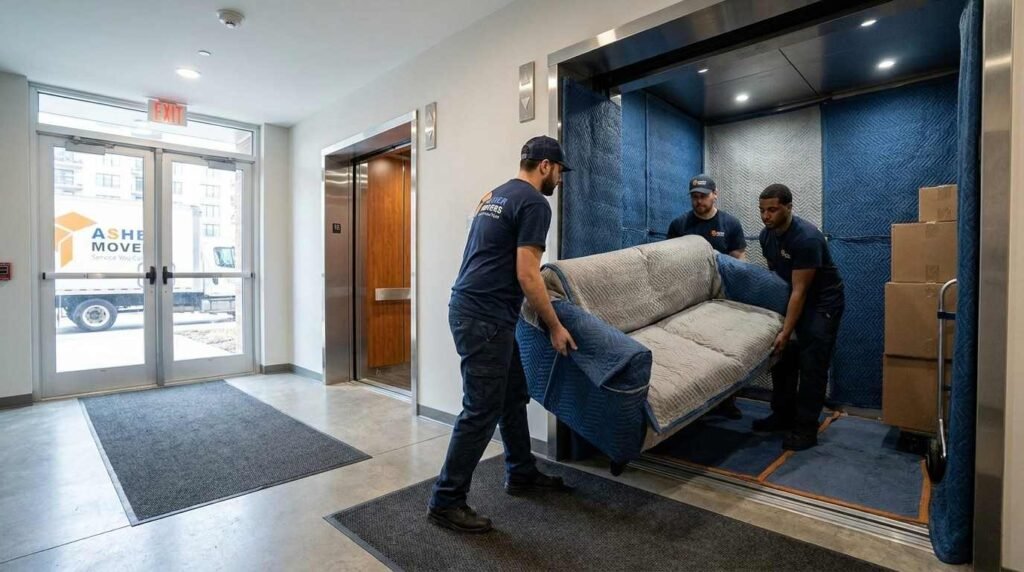
I get asked about elevator fees more than almost any other line item on a moving estimate. Most local movers charge between $50 and $150 extra when a building requires elevator use, and that number climbs fast in high-rises with strict freight schedules.
Skokie has plenty of mid-rise condos and apartment buildings where this fee catches people off guard. Nobody reads their lease looking for moving day logistics, and by the time the truck shows up it’s too late to plan around it.
I’ll walk through what elevator fees are, how the pricing actually breaks down, freight versus passenger elevator rules, and how you book access with your building ahead of time. By the end you’ll know exactly what to expect on your invoice.
What Are Elevator Fees and Why Movers Charge Them
An elevator fee is a surcharge that a moving company adds to a job when movers have to use a building’s elevator instead of stairs or a ground-level entrance. It exists because elevator access changes the physical logistics of the entire move.
I’ve worked jobs where a crew waited twenty minutes just for one elevator car because a building only runs one for freight. That’s paid labor time nobody planned for, and it stacks up fast on an hourly rate.
Buildings also restrict when and how movers can use elevators. Some require a padded, reserved car. Others limit moving hours to weekday mornings only.
How Elevator Access Affects Labor and Time
Every trip up and down an elevator takes longer than carrying furniture through a ground-floor door. Crews have to load the car, wait for transit, unload at the unit, then repeat the whole cycle for every piece.
A move that takes three hours on the ground floor can stretch to five or six hours on the twentieth floor. That extra time gets billed, and the elevator fee often exists specifically to account for it upfront rather than surprising you with inflated hourly totals later.
How Much Do Elevator Fees Typically Cost in Skokie, IL
Elevator fees in Skokie generally run $50 to $150 for standard residential buildings with a single passenger elevator. High-rise buildings downtown Chicago-adjacent to Skokie with dedicated freight elevators sometimes charge more, especially when building management requires a certified elevator operator on-site.
Some buildings bill the fee directly to residents rather than letting the moving company absorb it. I always tell clients to check their lease or condo association rules before moving day, because that fee sometimes shows up on your building account instead of your moving invoice.
Factors That Change the Final Price
Several variables push elevator fees higher or lower on any given job. Floor number matters most, since higher floors mean longer wait times and more round trips per hour.
Building elevator count matters too. A single-elevator building creates bottlenecks that a two-elevator building simply doesn’t have, and movers price that risk into the fee.
Move volume changes things as well. A studio apartment needs far fewer elevator trips than a four-bedroom unit, so movers often scale the surcharge to the size of the job rather than charging a flat rate for every building type.
Freight Elevators vs. Passenger Elevators During a Move
A freight elevator is a large, reinforced elevator built specifically to carry heavy loads, equipment, and furniture without damaging the elevator car or building infrastructure. Passenger elevators are built for people, with lighter weight limits and finished interiors that scratch or dent easily under moving equipment.
Buildings with freight elevators almost always require movers to use them instead of the passenger cars, and many charge separately for reserving that access. I’ve seen management companies fine tenants who move furniture through a passenger elevator when a freight option exists on-site.
Passenger-only buildings create a different problem. Movers have to pad walls and floors to protect the finished interior, and that setup time gets folded into your total cost even when there’s no separate “elevator fee” line item.
How to Avoid Surprise Elevator Charges on Moving Day
The single best way to avoid an unexpected elevator charge is asking about it during your initial moving quote, not after the crew arrives. A detailed in-home or virtual walkthrough estimate accounts for elevator access from the start instead of guessing at it over the phone.
Confirming your building’s elevator policy with property management before booking saves real money too. Some buildings require 48 to 72 hours notice to reserve freight elevator time, and missing that window can delay your entire move or force a reschedule fee on top of the elevator fee itself.
Booking a padded elevator reservation early locks in your time slot and your price.
Questions to Ask Your Moving Company in Advance
Ask whether the elevator fee is a flat rate or based on hourly labor time, since that changes how predictable your final bill will be. Ask whether the fee covers both loading and unloading buildings if your move involves elevators at both locations.
Confirm whether the quote already includes elevator access or whether it gets added once the crew sees the building in person. That single question prevents most of the surprise charges I hear about after the fact.
Booking a Reserved Elevator Slot With Your Building
Most managed apartment buildings and condos require tenants to submit a moving elevator request through their property management office or online portal. This typically needs a certificate of insurance from your moving company, a specific date and time window, and sometimes a refundable damage deposit held until the move is complete.
Submitting this request early matters more than most renters realize. Popular moving days like weekends and the first of the month fill elevator slots fast, and a missed reservation window can push your entire moving timeline back.
Getting your certificate of insurance from your moving company early keeps this whole process moving. We handle certificate of insurance requests routinely and can usually turn one around within 24 to 48 hours when you book with us ahead of time.
Conclusion
Elevator fees reflect real labor time, not arbitrary upcharges, and understanding that changes how you plan your move. Skokie’s mix of mid-rise and high-rise buildings makes this cost a common line item worth budgeting for early.
Confirming your building’s elevator policy and requesting freight access ahead of time protects your moving day timeline and your final invoice. We build elevator logistics into every Skokie estimate from the start, so there’s no guessing involved.
Reach out to ASHER MOVERS LOCAL & LONG DISTANCE for a detailed quote that accounts for your building’s elevator requirements before moving day arrives.
Frequently Asked Questions
Do all buildings charge an elevator fee for moving?
No, not all buildings charge this fee directly. Some moving companies build the cost into their hourly rate instead, while others bill it as a separate line item depending on building policy.
How far in advance should I reserve a freight elevator?
Most buildings require 48 to 72 hours notice for a freight elevator reservation. Popular moving dates fill up faster, so booking a week ahead is safer.
Can I use a passenger elevator instead of paying a freight fee?
Buildings with a dedicated freight elevator usually require movers to use it, and using a passenger elevator instead can result in a fine from property management. Passenger-only buildings don’t have this restriction.
Does the elevator fee cover both my old and new address?
It depends on the moving company’s pricing structure. Some charge a single flat fee per move, while others apply the charge separately at each address that requires elevator access.
What happens if I don’t reserve elevator time and my building requires it?
Movers may be turned away by building security or forced to wait for an open slot, which delays your move and can trigger additional hourly charges. Reserving elevator time in advance avoids this entirely.
Is a certificate of insurance always required for elevator reservations?
Most managed buildings require a certificate of insurance from your moving company before approving elevator access. We provide this documentation as a standard part of booking your move with us.
