
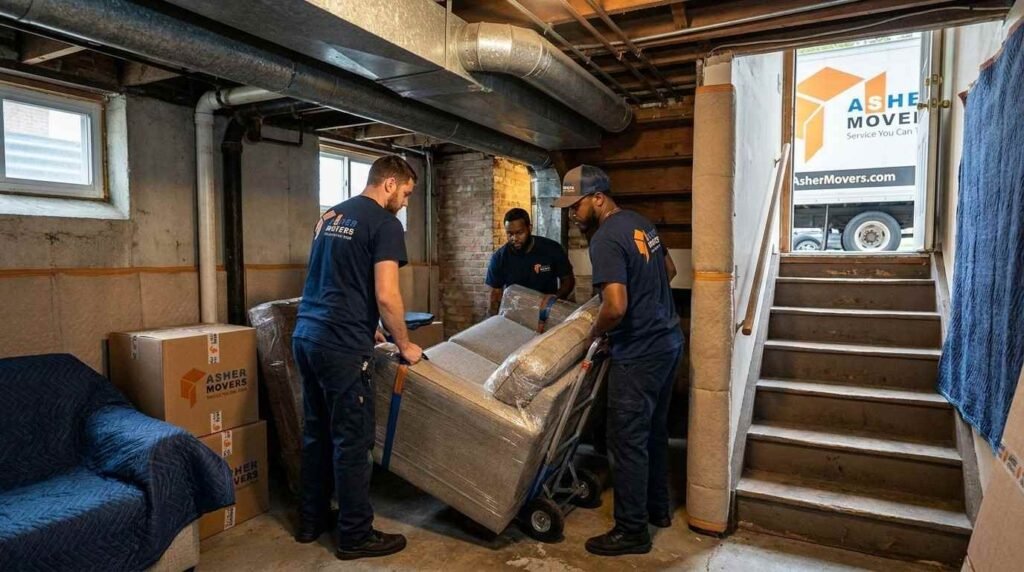
Basement apartments come with tighter stairwells, lower ceilings, and access points that most movers don’t see in a typical ground-floor job. I’ve watched plenty of moving days slow to a crawl because nobody measured the stairwell first. Skokie has a lot of older buildings with basement units, and the logistics inside them are genuinely different from a street-level apartment.
That difference shows up fast on moving day. A couch that clears a normal doorway can get stuck on a basement turn, and a rushed crew starts making decisions that risk your walls, your furniture, or somebody’s back.
I’ll walk through what makes these moves different, how to plan the access points, which items need special packing attention, the safety issues that come up in tight spaces, and how a mover experienced with basement units keeps the day on schedule.
What Makes Basement Apartment Moves Different
Basement apartment logistics center on one core issue: reduced clearance. Stairwells run narrower, ceilings sit lower, and turns get tighter than anything found in a standard first-floor move.
I see this play out constantly in Skokie’s older multi-family buildings, where basement units were often converted from storage space decades ago. The doorframes and stair angles were never designed with modern furniture dimensions in mind.
Narrow Stairwells, Doorways, and Low Clearances
A basement stairwell is usually steeper and narrower than a main staircase, and it often turns at an angle that eats up maneuvering room. Furniture that moves easily through a front door can jam completely on a basement turn.
Low overhead pipes and ductwork add another obstacle most people forget about. I always tell clients to check ceiling height along the entire path, not just at the doorway, because HVAC lines drop unexpectedly in older basements.
Limited Elevator or Ramp Access in Skokie Buildings
Most basement units skip elevators entirely, which means every box and piece of furniture travels by hand up a stairwell. Buildings that do have service elevators frequently size them too small for larger furniture pieces.
Ramps are rare outside of newer construction. That absence changes how a crew loads heavy items and how much extra time the move realistically needs.
Planning Access Points and Move-Day Logistics
Planning starts well before the truck arrives. Every basement move benefits from a walkthrough that maps the exact path items will travel, from the apartment door to the truck.
I recommend doing this walkthrough with a tape measure in hand, not just an estimate by eye. Guesswork is where basement moves go wrong.
Measuring Doorways, Stairs, and Furniture Before Moving Day
Measure every doorway width and height along the path, plus the stairwell width at its narrowest turn. Compare those numbers directly against your largest furniture pieces, including depth, not just width and height.
Sofas, mattresses, and dressers cause the most problems because their dimensions rarely match a basement stairwell’s tightest point. A piece that seems fine standing upright often needs to travel on its side or diagonally, and that changes the clearance math completely.
Parking, Loading Zones, and Building Permissions in Skokie, IL
Skokie’s residential streets often restrict parking near multi-unit buildings, and a moving truck needs a realistic loading zone close to the basement entrance. Long carry distances between the truck and the door add time and increase the chance of dropped or damaged items.
Check with the building manager or landlord about permit requirements for oversized vehicles or extended parking. Some properties also require advance notice before movers can use shared entrances or hallways.
Packing Guidelines for Basement Apartment Belongings
Basement units carry packing risks that ground-floor apartments generally don’t. Moisture exposure, tight carrying angles, and limited staging space all affect how items should get boxed and wrapped.
Packing decisions made with these factors in mind prevent most of the damage I see on basement move days.
Protecting Items From Moisture and Low-Clearance Damage
Basements run damper than upper floors, even in well-maintained buildings, and items stored there for any length of time can absorb humidity. Books, electronics, and fabric-covered furniture need moisture-resistant wrapping before the move, not just standard packing paper.
Fragile items also need extra padding at corners and edges. Tight stairwell turns mean boxes bump against walls and railings more than they would in an open hallway.
Items Movers Cannot Transport From Basement Units
Certain items are off-limits for movers regardless of the apartment type, and basement units are no exception. Propane tanks, aerosol cans, paint, gasoline, and other flammable materials cannot go on the truck due to federal transportation safety regulations.
Movers also generally decline perishable food, plants in extreme temperatures, and irreplaceable valuables like cash or important documents, which are better transported personally. Checking this list against your basement storage area early prevents a last-minute scramble on moving day.
Safety Considerations for Tight-Space Moves
Tight stairwells and low clearances raise the physical risk for everyone involved in a basement move. Safety planning here isn’t optional. It directly affects how smoothly the day goes.
A crew that respects these conditions moves slower on purpose, and that’s exactly the right call.
Preventing Injuries on Stairs and in Narrow Hallways
Basement stairs see more slips and strains than any other part of a typical move. Clear the path completely before lifting begins, remove loose rugs or debris, and make sure lighting is adequate on every step.
Never rush a turn on a basement staircase. Awkward angles are exactly where fingers get pinched and backs get strained.
Handling Heavy or Bulky Furniture Safely
Heavy furniture needs proper lifting technique and, often, specialized equipment like furniture dollies or moving straps built for stairwell use. Two people lifting incorrectly can cause more damage than one person using the right tool.
Disassembling large furniture before attempting a basement stairwell reduces both injury risk and property damage. A dresser with drawers removed is lighter, narrower, and far easier to angle through a tight turn.
Working With Professional Movers for a Smooth Basement Move
Basement apartment moves benefit from movers who’ve handled these conditions before. Experience with tight stairwells and low clearances changes how a crew plans the day from the start.
I always encourage people to ask specific questions before booking, because a generic moving quote rarely accounts for basement-specific challenges.
Questions to Ask Before Booking a Local Skokie Mover
Ask directly whether the company has handled basement units before and how they price extra time for tight-access moves. Confirm whether they bring specialized equipment like stair-rated dollies or furniture straps as standard practice.
Also ask about their policy on prohibited items and moisture-sensitive belongings. A mover who explains this clearly upfront is one who’s dealt with basement logistics more than once.
How ASHER MOVERS Plans Around Basement-Specific Challenges
We walk every basement job through a pre-move assessment that maps access points, stairwell angles, and parking logistics before the truck ever shows up. That planning step is what keeps a tight basement move on schedule instead of running into surprises halfway through.
Our crews carry the equipment basement moves actually require, and we brief every team on the specific building layout in advance.
Conclusion
Basement apartment moves demand more precise planning than a standard relocation, from stairwell measurements to moisture-aware packing. Skokie’s older buildings make these logistics especially important to get right the first time.
Careful preparation now prevents damaged furniture, injured backs, and delayed moving days later. The details matter more than they seem to at first glance.
We handle basement moves throughout Skokie every week, and we plan around these exact challenges. Reach out to ASHER MOVERS LOCAL & LONG DISTANCE to schedule a walkthrough before your moving day.
Frequently Asked Questions
Why are basement apartment moves harder than ground-floor moves?
Basement moves involve narrower stairwells, lower ceilings, and no elevator access in most buildings. Every item travels by hand through tighter clearances, which slows the process and raises injury and damage risk.
What items can’t movers take from a basement apartment?
Movers cannot transport flammable materials like propane, gasoline, paint, or aerosol cans due to federal transportation regulations. Perishable food and important documents are also better handled outside the truck.
How do I measure my basement apartment for moving day?
Measure every doorway’s width and height along the path, plus the stairwell’s narrowest turning point. Compare those numbers against your largest furniture, including depth, not just height and width.
Does moving from a basement apartment cost more?
Basement moves often take longer due to tight clearances and manual carrying, which can affect total labor time. Ask movers directly how they price extra time for tight-access conditions.
How do I protect my belongings from basement moisture damage?
Wrap books, electronics, and fabric furniture in moisture-resistant materials before the move, especially if items sat in the basement for a while. Extra corner padding also protects against stairwell wall contact.
Should I disassemble furniture before a basement move?
Disassembling large pieces like dressers and bed frames makes them lighter and narrower for tight stairwell turns. It reduces both injury risk and the chance of wall or furniture damage.
What should I ask a mover before booking a basement apartment move?
Ask if they’ve handled basement units before, how they price tight-access time, and whether they bring stairwell-rated equipment. Also confirm their policy on prohibited and moisture-sensitive items.
