
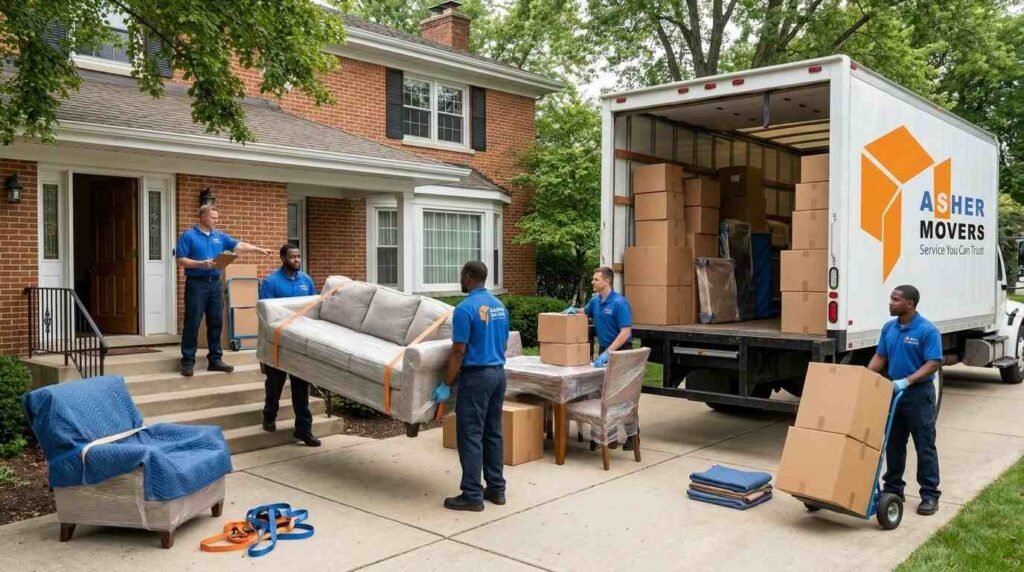
A 3-bedroom house local move typically takes 6 to 10 hours with a 3-to-4 person crew, depending on furniture volume and how many stairs the crew has to navigate. I’ve walked enough families through this exact move to know the timeline questions come up before anything else. Cost, packing order, and what you’re not allowed to pack all follow right behind.
Skokie homes range from tight bungalows to larger splits with finished basements, and that difference changes your moving day math fast. Nobody wants a crew running past dinner because a couch didn’t fit through a doorway. Getting the timeline, budget, and packing plan right up front prevents that.
This walkthrough covers how long your move takes, what it costs locally, an 8-week packing schedule, which items movers legally cannot transport, and what actually happens on moving day itself.
How Long a 3-Bedroom Local Move Actually Takes
A 3-bedroom home averages 8,000 to 10,000 pounds of household goods. That’s roughly a full 26-foot truck for most families with a garage and basement in use.
Local movers generally quote this job in hours, not days. A four-person crew loads, drives, and unloads a typical 3-bedroom house in one working day.
Timeline by Crew Size and Home Layout
A 2-person crew runs 8 to 12 hours on a 3-bedroom home. A 4-person crew cuts that down to 5 to 7 hours for the same load.
Stairs add real time. Every flight without an elevator adds roughly 30 to 45 minutes to loading, based on standard crew productivity benchmarks used across the moving industry.
Basements and attics stretch the clock too. I always tell people to mention finished basements when booking, because crews price and staff differently once they know that space is in play.
What It Costs to Move a 3-Bedroom House Locally
Local moves get priced hourly, and a 3-bedroom home with a 4-person crew generally runs $600 to $1,800 for the day, depending on total hours and distance between homes. That range covers most Skokie moves under 25 miles. Reviewing a local moving cost guide before you book helps you compare quotes without getting surprised by hidden fees.
Interstate movers have to price differently. The Federal Motor Carrier Safety Administration requires movers crossing state lines to provide binding or non-binding estimates based on weight, not just hours, which is one reason local and long-distance quotes look so different side by side.
Factors That Push the Price Up or Down
Packing services add cost but save time. Full-service packing on a 3-bedroom house typically adds $400 to $900 depending on how much you’ve already boxed yourself.
Fewer boxes and lighter furniture load faster. I’ve seen the same house price out $300 apart just based on whether closets were pre-packed before the crew arrived.
Weekend and month-end dates cost more everywhere. Booking a Tuesday in the middle of the month is the easiest discount you’ll find without negotiating anything.
The 8-Week Packing and Prep Timeline
Packing a 3-bedroom house properly takes longer than most people plan for. Eight weeks gives you room to sort, purge, and box without a rushed final weekend. A full packing supplies checklist makes this stretch a lot less overwhelming once you’re staring down eight weeks of boxes.
Weeks 8 through 6 are for decluttering and gathering supplies. Weeks 5 through 3 cover non-essential rooms. The final two weeks handle daily-use items and the moving-day essentials box.
Room-by-Room Packing Order
Start with rooms you touch least: garage, attic, guest bedroom, storage closets. These pack weeks ahead of moving day with zero disruption to daily life.
Move to shared spaces next. Living room decor, books, and dining room items pack easily since most households don’t need them daily during a move window.
Save kitchens and bedrooms for last. I always recommend a clearly labeled “open first” box per bedroom so the first night in the new house doesn’t turn into a box-hunting exercise.
Items Movers Cannot Transport (Prohibited & Restricted)
Movers cannot legally transport hazardous materials, and this rule applies to every mover regardless of company size or service area. Propane tanks, gasoline, paint thinner, aerosol cans, and pool chemicals all fall under this restriction.
This isn’t a company preference. It’s a federal and state safety regulation tied to how household goods carriers are permitted to operate.
Hazardous, Perishable, and High-Value Exceptions
Perishable food, frozen goods, and opened liquids typically get left behind or moved separately in your own vehicle. Movers avoid these because spoilage and leaks damage other belongings in transit.
High-value items like cash, jewelry, and important documents fall into a gray area. Most movers accept them but limit liability coverage on anything not itemized in advance, so I recommend transporting these yourself.
Plants often get restricted too, especially on longer routes. Local moves are more flexible here, but a quick call to confirm avoids a surprise on moving day.
Moving Day Walkthrough What Actually Happens
The crew arrives, does a walk-through of the home, and confirms the inventory before loading starts. This step protects both sides if a damage claim comes up later.
Loading follows a pattern: heavy furniture first, then boxes, then fragile items last so nothing gets crushed underneath. A four-person crew splits into loaders and wrappers to keep the truck moving efficiently. Following a complete moving day checklist keeps this part of the process from turning chaotic once the truck actually pulls up.
Final Walkthrough Checklist Before Movers Leave
Check every closet, cabinet, and drawer before the truck pulls away. It’s the single most common source of “we forgot something” calls.
Confirm the bill of lading matches what actually got loaded. This document is your receipt and your protection if anything goes missing.
Walk the new home with the crew lead before they leave. Point out where boxes go by room so unloading matches your labeling system exactly.
Conclusion
A 3-bedroom local move comes down to timeline, budget, packing discipline, and knowing what movers legally can’t carry. Get those four pieces right and moving day runs the way it should.
Skokie’s mix of bungalows, splits, and larger homes each move a little differently, but the fundamentals here apply across all of them.
We handle 3-bedroom local moves through Asher Movers Local & Long Distance every week, and we’re glad to walk your specific home through this process before you book.
Frequently Asked Questions
How much does it cost to move a 3-bedroom house locally?
Most 3-bedroom local moves in the Skokie area run $600 to $1,800 for a full day with a 4-person crew. Distance, stairs, and packing needs shift that range up or down.
How long does it take to move a 3-bedroom house?
A 3-bedroom house typically takes 6 to 10 hours to move locally with a standard crew. Larger crews finish faster, and extra stairs or a finished basement extend the timeline.
What items can’t movers take on a local move?
Movers cannot transport hazardous materials like propane, gasoline, paint thinner, and pool chemicals under federal and state safety rules. Perishables and certain high-value items are typically excluded or handled separately too.
How far in advance should I start packing a 3-bedroom house?
Eight weeks gives most families enough time to declutter, pack non-essential rooms, and finish daily-use items without a rushed final weekend. Starting with garages and storage closets first keeps daily life undisturbed longer.
Do movers pack for you or do I pack myself?
Movers offer full-service packing for an added fee, typically $400 to $900 for a 3-bedroom home. Many households pack non-essentials themselves and let the crew handle fragile or bulky items only.
What happens if movers damage something during a local move?
Reputable movers document your inventory and confirm it against the bill of lading before and after the move. This paperwork is what supports any damage claim, so reviewing it carefully at pickup and delivery matters.
