
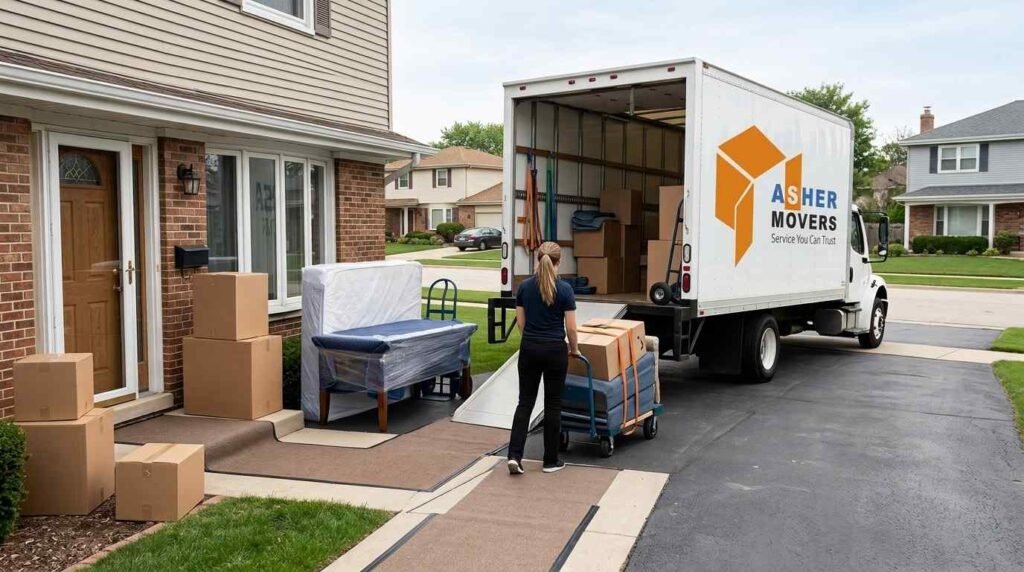
I’ve walked through hundreds of homes in Skokie preparing for moving day, and the question I hear most is simple: what can I actually bring with me? Local moves fail or succeed based on how well you understand packing rules, prohibited items, and mover policies before the truck ever shows up.
Moving day stress usually comes from surprises nobody warned you about beforehand. Skokie families and businesses need clear answers now, not vague advice, before boxes get taped shut.
This guide covers what movers transport, prohibited items, packing steps, and how to avoid delays. We break down liability, policies, and picking the right local crew.
What Local Moving Services Actually Include
A local move typically covers loading, transporting, and unloading household or business items within a limited radius, usually under 50 to 100 miles. It’s different from long-distance relocation in scope, pricing structure, and the regulations that apply.
Most local moving companies in Illinois charge by the hour rather than by weight or distance. That’s a meaningful difference from interstate moves, which fall under federal weight-based pricing rules.
Local vs. Long-Distance Moves Key Differences
Local moves stay within a single state or a tight regional radius. Long-distance moves cross state lines and get regulated by the Federal Motor Carrier Safety Administration, which sets rules on weight, documentation, and driver hours.
Pricing works differently too. Local jobs bill hourly based on crew size and truck count, while interstate jobs bill by shipment weight and mileage.
What’s Typically Covered in a Local Move Quote
A standard local quote includes labor, truck usage, basic furniture blankets, and mileage within the service area. Packing materials, disassembly of large furniture, and stairs or elevator fees often cost extra.
I always tell clients to ask for a written breakdown before moving day. Verbal estimates lead to disputes, and disputes lead to delays nobody wants.
What Movers Can and Cannot Transport
Movers can transport furniture, boxed household goods, appliances, and most personal belongings without restriction. They cannot transport hazardous materials, perishable food, live plants in some cases, or items banned under federal transportation safety codes.
Every reputable moving company gives you a “non-allowable items list” before the move. Read it early. It saves you from repacking boxes at the curb while the crew waits.
Common Household Items Movers Accept
Furniture, mattresses, boxed clothing, kitchenware, electronics, and most decor items move without issue. Movers handle disassembly for large pieces like bed frames and dining tables, usually as part of the standard service.
Artwork and mirrors need extra padding, and most companies provide it. Just mention fragile items when booking so the crew brings the right materials.
Items Movers Are Prohibited From Moving
Federal and state regulations prohibit movers from transporting hazardous materials regardless of company policy. This isn’t a preference; it’s a safety and legal requirement tied to transportation law.
The U.S. Department of Transportation’s Federal Motor Carrier Safety Administration outlines strict rules on what qualifies as hazardous cargo for commercial carriers, and household movers fall under similar safety expectations. Propane tanks, paint thinners, and ammunition sit high on nearly every mover’s banned list.
Hazardous and Non-Allowable Items Explained
Hazardous items include anything flammable, corrosive, explosive, or capable of contaminating other belongings during transport. These items pose real fire and safety risks inside a packed moving truck.
I’ve seen movers refuse entire jobs over a garage full of undisclosed chemicals. Disclosure upfront keeps your move on schedule and keeps everyone safe.
Flammable and Combustible Materials
Gasoline, propane tanks, lighter fluid, and aerosol cans count as flammable materials banned from moving trucks. Fireworks and matches fall into this category too, and most crews check garages and sheds specifically for these items.
The National Fire Protection Association notes that combustible liquids stored improperly account for a significant share of transport-related fire incidents each year. That’s exactly why movers won’t budge on this rule.
Corrosive, Toxic, and Explosive Substances
Pool chemicals, pesticides, ammunition, and car batteries fall under corrosive or toxic material bans. These substances can leak, react, or ignite under vibration and heat inside a moving truck.
Nail polish remover and some cleaning products count too, even in small quantities. When packing the garage or laundry room, set these items aside for separate transport by you, not the moving crew.
Special-Handling Items That Need Advance Notice
Some items aren’t banned outright but need advance notice so the crew plans properly. Pianos, safes, and fine art fall into this category because they need specialized equipment or extra manpower.
Telling your mover about these items during booking, not on move day, prevents scheduling problems and additional fees.
Valuables, Documents, and Irreplaceable Items
Cash, jewelry, passports, and legal documents should travel with you personally, not on the moving truck. Most moving contracts explicitly exclude liability coverage for these items regardless of how they’re packed.
Family photos and heirlooms fall into a gray area. I always recommend hand-carrying anything irreplaceable rather than trusting it to a box, even a well-labeled one.
Plants, Pets, and Perishables
Live plants often can’t survive the transit time in a closed truck, and many companies decline to move them for liability reasons. Perishable food and frozen items spoil during transport and get left off nearly every mover’s accepted list.
Pets never travel by moving truck. Arrange separate transportation for animals well before your move date.
How to Pack Your Belongings for a Local Move
Proper packing prevents damage, speeds up loading, and keeps your move within its estimated timeframe. Boxes need to match their contents in size and weight, and everything needs clear labeling by room.
Underpacked boxes collapse. Overpacked boxes become impossible to lift safely. Getting the balance right matters more than people expect.
Packing Supplies You’ll Actually Need
Sturdy boxes in multiple sizes, packing paper, bubble wrap, and heavy-duty tape form the core supply list. Wardrobe boxes save time on clothing, and dish barrels protect kitchenware far better than standard boxes.
Skip the free boxes from grocery stores when possible. Produce boxes weaken fast and rarely hold up under a stack of other items.
Room-by-Room Packing Tips
Start with rooms you use least, like a guest room or garage, and finish with daily-use spaces like the kitchen. Label every box with its destination room and a general content description, not just “misc.”
Kitchen items need extra padding between plates and glasses. Bedrooms move fastest when clothes stay in drawers or wardrobe boxes instead of getting individually folded into new containers.
Avoiding Delays and Complications on Moving Day
Most moving-day delays trace back to poor preparation rather than the moving company itself. Blocked driveways, unpacked closets, and missing paperwork slow down even the most experienced crews.
I tell every client the same thing: the fastest moves are the ones where nothing surprises the crew.
Common Mistakes That Slow Down Moving Day
Leaving closets and drawers full when the truck arrives forces the crew to stop and pack on the spot. Not measuring doorways or stairwells for large furniture creates bottlenecks that cost real time.
Parking isn’t guaranteed. Reserve a spot near your entrance the night before, especially in busier Skokie neighborhoods with street parking restrictions.
How to Prepare Your Home for the Moving Crew
Clear walkways, disconnect appliances the day before, and set aside a personal essentials bag separate from moving boxes. Confirm your new address and access details with the crew lead before loading begins.
A finished, organized home cuts hours off a typical move. It also reduces the chance of items getting left behind or damaged in the shuffle.
Understanding Moving Company Policies and Liability
Moving companies operate under specific liability terms that determine what happens if items get lost or damaged. Understanding these terms before signing a contract protects you from unexpected costs later.
Every state regulates moving liability slightly differently, and Illinois has its own consumer protection standards through the Illinois Commerce Commission.
Valuation Coverage vs. Full Insurance
Basic valuation coverage, often called released value protection, reimburses at a fraction of an item’s actual worth, sometimes just cents per pound. Full-value protection costs more but covers repair, replacement, or cash value for damaged items.
The Federal Motor Carrier Safety Administration’s consumer guide explains these coverage tiers clearly for anyone comparing mover contracts before booking. Read this section of any contract twice before signing.
What Happens If a Prohibited Item Is Found
Movers typically refuse to load prohibited items once discovered, and some companies charge a disposal or handling fee for improperly disclosed hazardous materials. In rare cases, undisclosed hazardous items found mid-transport can halt the entire move for safety inspection.
Honesty during the initial walkthrough avoids all of this. Tell your mover what’s in every box, especially in garages and utility rooms.
Choosing a Local Moving Company in Skokie, IL
Skokie residents benefit from working with movers who understand local neighborhoods, building access rules, and Cook County regulations. A company with genuine local experience moves faster because they already know the terrain.
We built our process around this exact kind of local knowledge, and it shows up in how smoothly moving day goes for our clients.
Questions to Ask Before Booking
Ask about hourly rates, minimum hour requirements, and whether packing materials come included in the quote. Confirm licensing and insurance details directly, and ask how the company handles items discovered to be non-allowable on move day.
A mover who answers these questions clearly and quickly is usually the one worth hiring. Vague answers upfront tend to mean vague policies later.
Conclusion
Local moving success comes down to understanding prohibited items, packing correctly, and disclosing hazardous materials before moving day arrives. Preparation prevents nearly every common delay.
Skokie movers who know local access rules and Illinois regulations move faster and with fewer surprises. That local expertise changes the entire experience.
We handle local and long-distance moves with the same attention to detail described here. Reach out to ASHER MOVERS LOCAL & LONG DISTANCE and let’s get your move planned right.
Frequently Asked Questions
What items are movers not allowed to transport?
Movers can’t transport hazardous materials like propane, gasoline, paint thinner, or ammunition. These items pose fire and safety risks during transport and violate federal transportation safety rules.
Can movers transport house plants?
Most movers decline live plants due to survival concerns during transit and liability limits. Arrange separate transportation for plants you want to keep.
Do I need to disclose hazardous items before moving day?
Yes, disclosing hazardous items during booking prevents delays and refused loads on moving day. Movers check garages and sheds specifically for undisclosed chemicals.
What’s the difference between local and long-distance moving?
Local moves stay within a limited radius and bill hourly, while long-distance moves cross state lines and bill by weight and mileage. Long-distance moves also fall under federal regulations that don’t apply locally.
Should valuables travel with the moving truck?
No, cash, jewelry, and important documents should travel with you personally. Moving contracts typically exclude liability coverage for these items.
What happens if a prohibited item is found during the move?
Movers usually refuse to load the item and may charge a handling or disposal fee. Undisclosed hazardous materials found mid-transport can pause the move for safety reasons.
How far in advance should I book a local mover in Skokie?
Booking two to four weeks ahead secures better scheduling flexibility, especially during summer months. Peak moving season fills crew schedules quickly across the Chicago area.
