
Weather doesn’t ask permission before it shows up on move day, and in Skokie, that means rain, snow, wind, or a sudden summer storm can all become part of the plan. A weather contingency plan for moving day is a set of procedures movers and customers follow to protect belongings, adjust timing, and keep the move safe when conditions turn difficult. I’ve seen clear mornings turn into soaked driveways by noon more times than I can count.
Skokie sits in a region where weather swings hard between seasons, and that unpredictability raises the stakes for anyone with a scheduled move date.
This guide covers how rain, storms, snow, and extreme heat each affect a local move, how professional movers decide whether to adjust the schedule, what happens step by step if the forecast turns bad, and what you personally can do before move day to stay protected either way.
What Counts as a Weather Contingency Plan for Moving Day
A weather contingency plan is the agreed-upon approach for handling conditions that make moving unsafe or impractical on the scheduled date. It typically covers rescheduling thresholds, protective packing measures, and communication protocols between the moving company and the customer.
I think of it less as a backup plan and more as a built-in expectation. Professional movers factor weather risk into scheduling from the moment a job gets booked, not after a storm shows up unannounced.
Why Skokie’s Seasonal Weather Patterns Matter for Movers
Skokie experiences a full four-season climate, which means movers here plan for humidity and thunderstorms in summer and icy walkways in winter within the same calendar year. That range is wider than what movers in milder climates typically prepare for.
I’ve noticed local crews build extra buffer time into winter bookings specifically because ice removal and road conditions add unpredictable delays that a July move never faces.
How Rain Affects a Local Move in Skokie
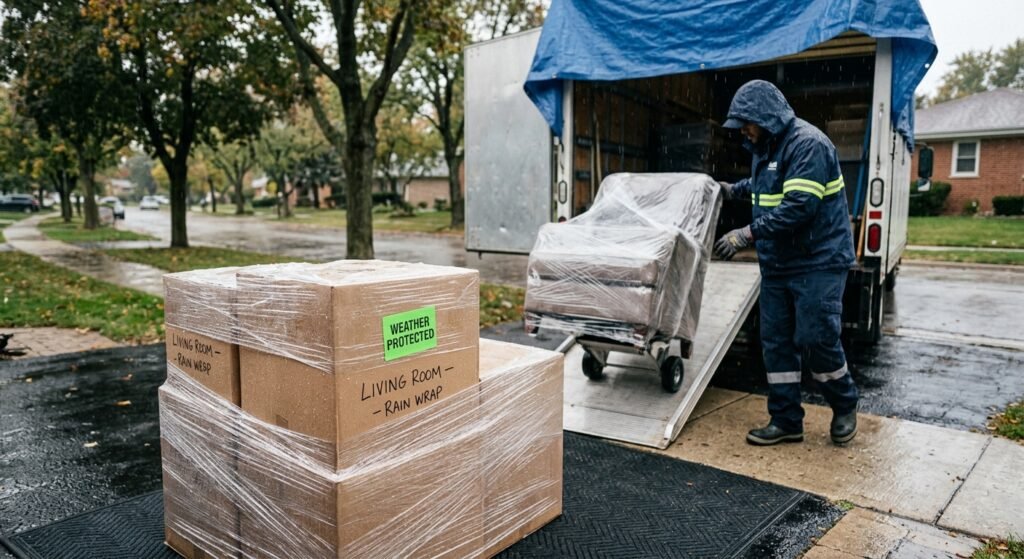
Light to moderate rain rarely stops a move entirely, but it does change how crews handle loading and protect your belongings in transit. Rain mainly threatens cardboard boxes, upholstered furniture, and anything left exposed on a truck ramp.
I always tell customers that rain is manageable, it just slows the pace. Crews use plastic wrap and tarps to keep a steady rhythm going without compromising your items.
Thunderstorms and Severe Weather Delays
A thunderstorm with lightning typically pauses outdoor loading for 20 to 30 minutes at a time until the immediate danger passes. Safety rules, not convenience, drive that pause, since lightning near an open truck or metal dolly is a real hazard.
I’ve waited out storms like this with crews more than once. It’s frustrating in the moment, but nobody wants a crew member struck by lightning over a tight schedule.
Snow and Ice: Winter Moving Considerations in Illinois
Winter moving in Illinois introduces slip hazards, frozen walkways, and the possibility of road closures that can delay a crew’s arrival entirely. Snow accumulation above a few inches often requires extra time for both clearing paths and driving safely between locations.
I push hard on winter prep because a single icy step can turn a routine move into an injury. Crews come prepared with salt and traction mats, but the homeowner’s side of the prep matters just as much.
Driveway and Walkway Safety Before Movers Arrive
Clearing snow and applying salt or sand to your driveway and front walkway before the crew arrives cuts delay risk significantly. Movers can’t safely carry heavy furniture across ice, and a fall can injure both the crew and your belongings.
I ask every winter customer to do this an hour before arrival, not the night before, since fresh ice forms overnight even after shoveling.
Extreme Heat and Humidity on Moving Day
Extreme heat threatens both the movers’ stamina and the condition of heat-sensitive items like electronics, candles, and vinyl records. Humidity above typical summer levels can also warp wood furniture left in a hot truck for extended periods.
I take heat just as seriously as winter storms. Crews need water breaks and shaded loading zones, and your items need to avoid baking in a parked truck for hours.
Protecting Furniture and Boxes From Weather Exposure
Weatherproofing starts with sealing boxes against moisture and wrapping furniture in plastic covers before anything leaves the house. This single step prevents most of the damage that weather-related move complaints actually involve.
I consider this the most overlooked part of moving-day prep. People focus on packing efficiently but forget that a cardboard box left in drizzle for ten minutes can collapse by the time it reaches the truck.
Weatherproof Packing Materials Movers Use
Plastic stretch wrap, moisture-resistant mattress bags, and waterproof tarps form the core toolkit movers rely on for weather protection. These materials cost little compared to the damage they prevent.
I’ve watched a wrapped sofa come through a downpour completely dry while an unwrapped one nearby soaked through in minutes.
Weather-Sensitive Items That Need Extra Precaution
| Item Category | Weather Risk | Precaution Needed |
| Electronics | Humidity, static, cold | Anti-static wrap, climate-controlled transport |
| Wood furniture | Heat warping, moisture swelling | Plastic covers, avoid prolonged truck exposure |
| Cardboard boxes | Rain collapse | Waterproof liners or plastic bins |
| Artwork and photos | Humidity damage | Flat storage, moisture barriers |
| Upholstered furniture | Mold from dampness | Plastic wrap, dry storage |
This table reflects the items I see damaged most often when weather prep gets skipped. Electronics and wood furniture top that list by a wide margin.
How Moving Companies Decide to Reschedule for Weather
Moving companies generally reschedule when conditions create a genuine safety risk, such as lightning, ice accumulation, or wind strong enough to make outdoor loading dangerous. Light rain or overcast skies rarely meet that threshold on their own.
I rely on a few consistent criteria: visibility, road safety, and whether crew members can move safely without risking a fall or injury. Comfort isn’t the deciding factor. Safety is.
Step-by-Step: What Happens If Your Move Day Forecast Turns Bad
- The moving company monitors the forecast starting 48 to 72 hours before your scheduled date.
- If conditions look risky, a coordinator contacts you to discuss options.
- Together you decide whether to proceed with precautions, delay by a few hours, or reschedule entirely.
- The company confirms a new time or date in writing.
- Crews arrive with any extra weatherproofing equipment needed for the revised plan.
I walk customers through this exact sequence on every booking that falls in a weather-risk season. Nobody should find out about a delay the morning of.
Communication Timeline Between You and Your Movers
Most reputable movers reach out at least 24 hours ahead when weather looks questionable, giving you time to adjust your own schedule too. Waiting until the morning of a move to discuss weather creates unnecessary stress on both sides.
I always push for that earlier conversation. It gives everyone room to plan instead of scrambling.
How to Prepare Your Home for Movers in Bad Weather
Clearing walkways, laying down protective floor runners, and keeping doors propped open reduces the number of trips crews need to make in bad conditions. Small adjustments like this speed up loading even when the weather doesn’t cooperate.
I suggest doing a quick walkthrough the morning of your move specifically looking for wet spots, loose rugs, or anything that could become a slip hazard once foot traffic picks up.
What Homeowners and Renters Should Do Before Move Day
Checking the forecast three days out and having a backup plan ready, like reserving an extra storage day, puts you in a stronger position no matter what happens. Renters especially benefit from confirming elevator or loading dock access won’t be affected by weather-related building policies.
I tell every customer the same thing: a five-minute weather check saves hours of stress later.
Moving Contracts, Liability, and Weather Delays
A moving contract typically defines who bears responsibility for weather-related damage and whether rescheduling due to severe weather incurs any fee. Most established movers waive rescheduling fees for safety-driven weather delays, but policies vary by company.
I always recommend reading that specific clause before signing anything. It’s usually a few lines, but those lines matter the one time weather actually interferes.
Weather Planning for Commercial and Office Relocations
Commercial relocations carry added weather risk because equipment, servers, and sensitive documents often can’t tolerate the same exposure that household items can withstand. Business movers typically build in more buffer time between the old and new location specifically for this reason.
I treat commercial jobs with extra caution during storm season since downtime costs a business money well beyond the move itself.
Seasonal Planning: Best and Riskiest Months to Move in Skokie
| Season | Risk Level | Primary Concern |
| Spring (Mar–May) | Moderate | Thunderstorms, unpredictable rain |
| Summer (Jun–Aug) | Moderate | Heat, humidity, occasional storms |
| Fall (Sep–Nov) | Low | Generally mild, some rain |
| Winter (Dec–Feb) | High | Snow, ice, road delays |
This table reflects the pattern I see year after year with local bookings. Fall consistently produces the fewest weather-related complications.
Emergency Weather Day-Of Checklist
- Check the hourly forecast first thing in the morning.
- Confirm your moving company’s weather policy is still in effect.
- Clear and salt walkways if winter conditions apply.
- Keep plastic wrap and tarps on hand for last-minute protection.
- Designate a dry staging area near the door for boxes awaiting the truck.
- Keep your phone accessible for coordinator updates.
I keep this list short on purpose. On a stressful morning, a checklist with twenty steps just doesn’t get used.
Conclusion
Weather touches nearly every part of a local move, from how furniture gets wrapped to whether a crew reschedules entirely. Understanding these patterns helps you plan with confidence instead of anxiety. We built this guide to make that planning easier, and our team at ASHER MOVERS LOCAL & LONG DISTANCE is ready to help you move safely in any forecast.
Frequently Asked Questions
Does rain stop a moving company from working?
Light to moderate rain rarely stops a move entirely. Crews adjust pace and use protective wrapping, but heavy rain combined with lightning typically does pause outdoor loading.
What temperature is too cold for movers to work?
Most movers continue working until temperatures drop low enough to create frostbite risk or ice accumulation, generally below 10°F. Below that threshold, many companies recommend rescheduling for crew safety.
Will I be charged extra if my move is rescheduled for weather?
Most established moving companies waive rescheduling fees when severe weather creates a genuine safety concern. Always confirm this policy in your contract before booking.
Can movers reschedule me on short notice due to a storm?
Yes, movers can reschedule on short notice when a storm poses immediate safety risks. Reputable companies try to give at least 24 hours of notice whenever possible.
How much notice do movers give before a weather delay?
Most movers begin monitoring forecasts 48 to 72 hours ahead and reach out at least 24 hours before a scheduled move if conditions look risky. Earlier notice is standard practice among established companies.
Should I move during the Chicago-area winter at all?
Winter moves are possible and common, but they require extra precautions like walkway clearing and weatherproof packing. Many people move successfully through Illinois winters with the right preparation.
What happens to my belongings if it rains during loading?
Properly wrapped and boxed belongings stay protected even in moderate rain, since movers use plastic wrap and waterproof tarps as standard precautions. Items left unprotected are the ones at real risk.
