
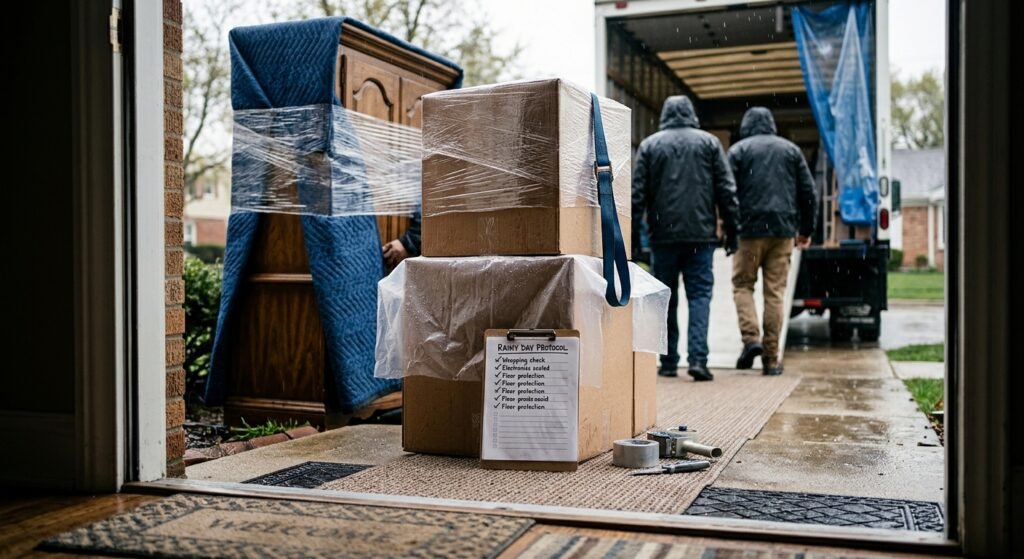
A rainy day move doesn’t have to mean damaged furniture or ruined boxes. I’ve seen moves go smoothly in a downpour when the right materials and timing are in place before the truck even arrives. The difference comes down to preparation, not luck.
Skokie weather shifts fast, and a clear forecast at 8 a.m. can turn into steady rain by noon. That unpredictability puts your belongings at real risk if you’re not ready for it.
I’ll walk through why rain complicates a local move, how to protect furniture and electronics, which packing materials hold up when wet, how to keep walkways safe, and what to do if something does get wet along the way.
Why Rain Changes Your Moving Day Plan in Skokie
Rain adds friction to nearly every part of a move. Floors get slick, boxes lose structural strength, and exposed furniture starts absorbing moisture within minutes.
I plan rainy day moves differently from clear-weather ones. Timing, loading order, and material choices all shift once wet weather enters the picture.
Local Weather Patterns That Affect Spring and Fall Moves
Skokie sees its heaviest rainfall in spring and early fall, with sudden showers common even on days that start sunny. The National Weather Service tracks these shifts closely for the Chicago metro area, and Skokie falls directly within that forecast zone.
I check hourly forecasts the morning of any scheduled move, not just the daily outlook. A short window of clear skies can make or break a smooth loading process.
Protecting Furniture and Electronics from Water Damage
Furniture and electronics take the biggest hit in wet conditions. Wood swells, upholstery holds moisture long after the rain stops, and electronics risk internal damage from even brief exposure.
I treat these items as priority one on any rainy day job. Everything gets wrapped and sealed before it leaves the house, not after it’s already outside.
Wrapping Techniques for Upholstered and Wood Items
Plastic furniture covers go on first, followed by moving blankets for cushioning and extra water resistance. Wood furniture gets a dry wipe-down before wrapping since trapped moisture under plastic causes its own problems.
Electronics get sealed in their original boxes when possible, then wrapped in plastic and placed inside a second protective layer. I never leave a screen or circuit board exposed to open air during a loading pause.
Packing Boxes and Materials That Hold Up in Wet Weather
Standard cardboard weakens fast once it absorbs water, and a soaked box can fail mid-carry. Choosing the right materials upfront prevents that failure before it happens.
I switch to reinforced materials automatically whenever rain is in the forecast. It’s a small cost compared to replacing damaged belongings.
Waterproof Tape, Plastic Bins, and Moisture Barriers
Plastic storage bins replace cardboard boxes for anything irreplaceable or moisture-sensitive, including documents, photos, and electronics. Waterproof packing tape seals every seam on the boxes that do get used, since standard tape loses adhesion when wet.
A plastic sheet or tarp lines the inside of each box as a moisture barrier before anything goes in. That extra layer buys time even if the outer box takes on water during loading.
Safe Walking and Loading Paths During a Rainy Move
Wet floors and slick walkways turn a routine move into a safety hazard fast. Falls and dropped items happen more often in rain, and both carry real cost.
I map out the loading path before the first box leaves the house. A clear, protected route matters as much as the packing itself.
Floor Protection and Non-Slip Precautions for Movers
Floor runners and non-slip mats go down across hardwood, tile, and entryway surfaces before loading starts. These protect the flooring from tracked-in water and give movers stable footing on every trip.
Door mats and towels stay positioned at every entry point throughout the move. I also recommend closed-toe, slip-resistant shoes for anyone carrying boxes that day, movers included.
What to Do If Items Get Wet During Transport
Some exposure happens even with careful planning. Quick action in the first hour after a wet move makes the biggest difference in whether an item survives.
I always address wet items the moment they’re unloaded, before anything gets unpacked into a new space.
Immediate Steps to Prevent Mold and Long-Term Damage
Wet boxes get unpacked immediately rather than left sealed, since trapped moisture speeds up mold growth. Items that got wet need full air-drying in a ventilated space before they go back into storage or furniture.
Electronics that took on moisture need at least 24 hours of drying time before being powered on. The CDC notes mold can begin developing within 24 to 48 hours in damp conditions, which makes fast drying critical after any wet move.
Conclusion
Rainy day moves succeed through preparation, not timing luck. Protecting furniture, choosing the right materials, and securing safe walkways all work together to keep belongings intact.
Skokie’s unpredictable spring and fall weather makes this planning worth doing on every move, not just the ones with rain already in the forecast. A little extra prep saves real cost later.
We handle rainy day moves every season at ASHER MOVERS LOCAL & LONG DISTANCE, with the materials and process ready before the weather turns. Reach out and we’ll plan your move around whatever the forecast brings.
Frequently Asked Questions
Can movers still work safely in heavy rain?
Yes, movers work in heavy rain regularly with the right precautions in place. Floor protection, waterproof wrapping, and careful loading paths keep both belongings and crew members safe throughout the process.
Do I need special boxes for a rainy day move?
Plastic bins and waterproof-taped boxes hold up significantly better than standard cardboard in wet conditions. I recommend them for anything irreplaceable, including documents, photos, and electronics.
Will rain delay my scheduled moving day?
Light to moderate rain rarely causes delays since crews come prepared with protective materials. Severe weather, like thunderstorms with lightning, is the main condition that leads to rescheduling for safety reasons.
How do I protect my mattress from rain during a move?
Mattress bags made of thick plastic provide the best protection, sealed completely before the mattress leaves the house. Avoid thin bags since they tear easily and let moisture through during loading.
What happens if my furniture gets wet during the move?
Wet furniture needs immediate air-drying in a ventilated area away from direct heat, which can warp wood. Upholstered pieces may need a wet/dry vacuum to pull moisture out before mold has a chance to develop.
Should I reschedule my move if rain is forecasted?
Rescheduling usually isn’t necessary for standard rainfall, since proper preparation handles most wet-weather moving days. I only recommend rescheduling for severe weather warnings or conditions that create genuine safety risks.
