
A no-truck-access move happens when a moving truck cannot safely reach your home or building because of narrow streets, low clearance, tight turns, or restricted parking, and it requires movers to use smaller vehicles, shuttle trucks, or extended hand-carrying to complete the job. I see this constantly in older neighborhoods and dense residential blocks where trucks built for suburban driveways simply don’t fit. It changes your moving day logistics, timeline, and sometimes your cost.
Ignoring an access problem until moving day creates real risk. Trucks get stuck, crews run out of daylight, and belongings sit exposed on a sidewalk.
This guide covers how movers identify and survey access problems, the equipment and labor solutions they use like shuttle trucks and dollies, the permits and HOA rules that affect truck placement, how access issues impact your cost and timeline, and how to prepare and choose a mover for this kind of job.
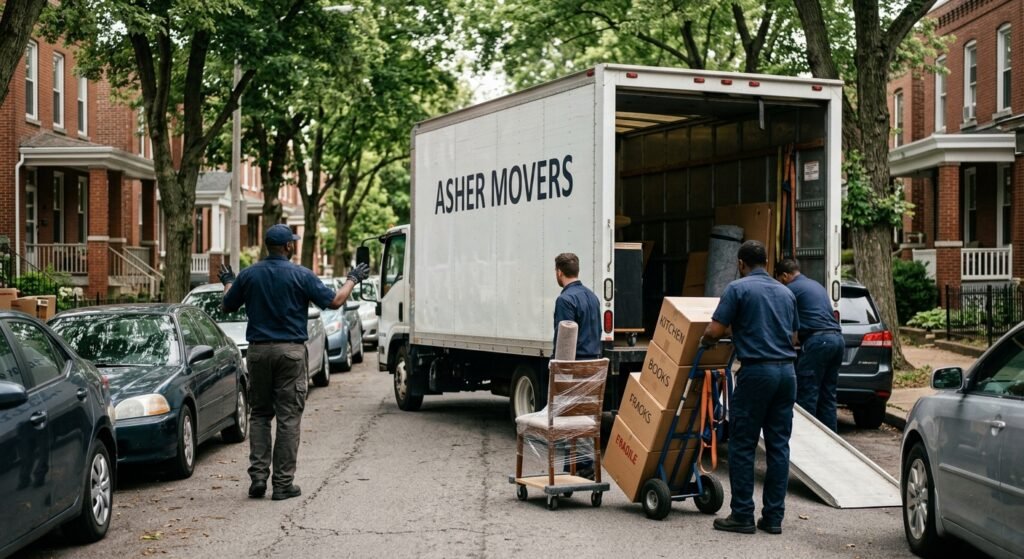
Why Narrow Streets and No-Truck-Access Zones Complicate Moving Day
Narrow streets and no-truck-access zones complicate moving day because a standard moving truck, often 26 feet long, cannot physically turn, park, or maneuver close enough to your front door. I run into this on streets with cars parked on both sides, tight alley entrances, or low-hanging tree branches that block clearance. Older parts of a city built before modern trucks existed are the most common offenders.
The problem isn’t just fitting the truck. It’s the distance between where the truck CAN park and your actual front door, which determines how much extra labor the move requires.
Common Street and Property Access Restrictions in Skokie
Skokie has several residential blocks with mature trees, narrow lot setbacks, and limited curb space that restrict where a full-size moving truck can legally or physically park. Seasonal parking bans and permit-only zones add another layer during certain months. We map these restrictions during the pre-move property survey so there are no surprises.
How Movers Identify Access Problems Before Moving Day
Movers identify access problems before moving day through a property survey that checks street width, overhead clearance, driveway length, and any posted parking restrictions. A trained estimator or dispatcher reviews satellite images, asks detailed questions about the building, and sometimes does an in-person walk-through. Catching the issue early lets the crew bring the right equipment instead of discovering the problem with a truck already on site.
Signs Your Home or Building Has a Truck Access Problem
Signs your home has a truck access problem include permanently parked cars lining both sides of a narrow street, a shared alley entrance with low clearance, a steep or curved driveway, and buildings without a dedicated loading zone. I’ve worked moves where the street looked fine on a map but turned out to have a tree branch canopy too low for a box truck. Older multi-family buildings with narrow side streets are a frequent source of this problem.
If your building requires delivery trucks to park a block away or use a side street, that’s a strong signal your moving truck will face the same restriction.
How Movers Survey Your Property Before Quoting a Narrow-Access Move
A pre-move property survey is the process movers use to evaluate street width, parking availability, overhead clearance, and distance from the nearest legal truck parking spot to your front door before finalizing a quote. This step exists specifically to prevent cost surprises and scheduling failures on the actual move date.
During the survey, an estimator typically checks four things: the width of the street and whether oncoming traffic can pass a parked truck, the turning radius needed for the truck to enter or exit safely, any height restrictions from trees, wires, or parking structures, and whether local regulations require a permit for truck parking in that location.
| Survey Factor | What It Determines |
| Street width | Whether a full-size truck can park at all |
| Turning radius | Whether the truck can enter/exit without damage |
| Overhead clearance | Whether low branches or wires block the route |
| Parking regulations | Whether a permit or special arrangement is needed |
| Carry distance | How much hand-carry or dolly labor is required |
This survey directly determines whether your move needs a standard truck, a smaller truck, or a shuttle truck, and it’s the single biggest factor in an accurate narrow-access quote.
Shuttle Trucks and Why They’re Used for Restricted Access Moves
A shuttle truck is a smaller moving vehicle used to transfer belongings between a home with no truck access and a larger truck parked at a safe distance, adding an extra transfer step to the move. This solution exists because the alternative, a crew hand-carrying every item a quarter mile down a street, is slower and harder on the belongings.
What a Shuttle Truck Is and How It Works
The shuttle process works in three stages: the crew loads a smaller truck at your door, drives it to where the full-size truck is legally parked, and transfers everything into the larger truck for the final transport. This typically adds one to three hours depending on distance and crew size.
How Shuttle Service Affects Moving Cost and Timeline
Shuttle service typically adds $200 to $600 to a local move, according to moveBuddha’s 2024 moving cost analysis, depending on distance and how many additional loading cycles are required. Movers calculate this cost based on extra labor hours and the additional vehicle, not as a flat penalty fee.
Using Smaller Moving Trucks or Multiple Trips Instead of One Large Truck
Some movers skip the shuttle step entirely and instead use a smaller truck, often 15 to 17 feet, that can navigate narrow streets directly, making multiple trips if the full household doesn’t fit in one load. This works well for smaller apartments or studio moves where total volume is limited.
The tradeoff is time. Multiple trips mean more total driving, which can stretch a half-day move into a full day depending on distance between pickup and drop-off locations.
Hand-Carrying and Dolly Transport for Extended Carry Distances
Hand-carrying and dolly transport become necessary when a truck, even a shuttle vehicle, still can’t park close enough to avoid a long walk to the door. Crews use furniture dollies, hand trucks, and carrying straps to move items across courtyards, up long driveways, or down narrow walkways. Extended carry distances, generally anything past 75 to 100 feet, usually trigger an additional labor charge since it slows down loading speed significantly.
I always tell customers that carry distance matters just as much as truck access. A short street with a 150-foot walk to the building entrance can take longer than a slightly wider street with direct curb access.
HOA Rules, Permits, and Parking Restrictions That Affect Narrow-Street Moves
HOA rules and city parking permits can restrict where a moving truck is allowed to park, for how long, and during which hours, independent of whether the street is physically wide enough. A street might be wide enough to fit a truck but still require a temporary parking permit to legally hold that space during loading.
When a Moving Permit Is Required in Skokie
A moving permit is typically required when a truck needs to occupy a public parking space, block a portion of a street, or park in a residential zone for longer than standard visitor limits allow. Permit requirements and processing times vary by municipality, so confirming this with your local public works department before moving day avoids a last-minute parking citation.
How HOA or Condo Building Rules Affect Truck Placement
HOA and condo associations often designate specific loading zones, require advance notice for moving trucks, and restrict move times to certain hours or days of the week. Buildings with shared driveways or limited guest parking are especially strict about this, and failing to notify the HOA in advance can result in the truck being turned away entirely.
Elevator Reservations and Loading Dock Access for Condo and Apartment Moves
Elevator reservations and loading dock access matter when a no-truck-access property is also a multi-story building, since the truck’s parking distance combines with vertical transport time to extend the whole move. Most buildings require advance booking of the service elevator, and some restrict moves to weekday business hours only. Skipping this reservation step is one of the most common causes of moving-day delays in condo buildings.
How Narrow Streets Affect Moving Timelines and Labor Costs
Narrow streets and no-truck-access conditions typically add one to four hours to a local move, depending on carry distance, shuttle requirements, and crew size, according to data cited in the American Moving and Storage Association’s consumer resources. The added time comes from extra loading cycles, longer walks between the truck and the door, and the coordination needed for permits or elevator scheduling.
Labor costs scale with time, so a move that would normally take four hours can run six to eight hours once shuttle transfers and extended carries are factored in. Getting an accurate property survey done ahead of time is what keeps this estimate close to reality instead of ballooning on the day of.
Preparing Your Belongings for a Longer Carry Distance or Shuttle Transfer
Preparing for a longer carry distance means packing boxes slightly lighter than usual, since they’ll be carried farther by hand, and securing loose items that could shift during an extra loading transfer. I recommend keeping box weights under 40 pounds for anything that will be hand-carried a long distance, compared to the usual 50-pound guideline for a direct truck load.
Furniture pads and extra wrapping also matter more here since items get handled one additional time during a shuttle transfer.
Items That Need Extra Protection During Hand-Carry or Multi-Stage Transport
Fragile items, electronics, and furniture with delicate finishes need extra protection during hand-carry or multi-stage transport because each additional handling step increases the chance of a bump or drop. Glassware, mirrors, framed art, and anything with exposed corners benefit from doubled-up padding when a move involves a shuttle transfer or a long carry distance.
- Glass and mirrors: wrap in furniture pads, transport upright
- Electronics: original boxes when available, foam corner protection
- Upholstered furniture: plastic wrap to prevent dirt from extended outdoor carrying
- Lamps and fixtures: separate small-parts bag taped to the base
Alley Access, One-Way Streets, and Seasonal Parking Bans in Skokie
Alley access points, one-way streets, and seasonal parking bans all create timing and routing challenges specific to Skokie moves. A one-way street can force a truck to approach from an unexpected direction, and winter parking bans in certain zones can eliminate curb parking entirely during specific months. Confirming these local conditions during the property survey, rather than discovering them on moving day, prevents last-minute rerouting.
Questions to Ask Your Moving Company About Access Before Booking
Before booking, ask whether the company performs an in-person or virtual property survey, how they calculate shuttle or extended-carry fees, whether they handle permit applications, and what their policy is if a truck can’t access the property as planned. A mover who answers these specifically, rather than vaguely, has handled narrow-access jobs before.
What Happens If a Truck Can’t Access Your Home on Moving Day
If a truck can’t access your home on moving day, the crew typically switches to a backup plan on the spot, bringing in a smaller shuttle vehicle, extending the hand-carry distance, or in rare cases, rescheduling part of the load for a second trip. This scenario is far more manageable when the mover already flagged the risk during the property survey and arrived with a contingency plan rather than discovering the problem cold.
The costliest version of this situation happens when access wasn’t assessed in advance at all. A crew showing up with only a 26-foot truck on a street that can’t fit it loses time figuring out logistics instead of executing a plan.
How to Choose a Mover Experienced With Narrow-Access Properties
Choosing a mover experienced with narrow-access properties means looking for a company that asks detailed questions about your street and building before quoting, owns or regularly uses shuttle trucks, and has clear written policies about extra labor fees for extended carries. A mover unfamiliar with this type of job tends to quote a flat rate without asking a single question about your street.
Conclusion
Narrow streets and no-truck-access properties change the equipment, timeline, and cost of a move, but a proper property survey and the right-sized truck solve most of it in advance. Permits, HOA rules, and shuttle logistics all factor into a smooth moving day. We handle narrow-access moves across Skokie every week, so reach out to ASHER MOVERS LOCAL & LONG DISTANCE for a property-specific quote.
Frequently Asked Questions
What counts as “no truck access” for a moving company?
No truck access means a street, driveway, or parking area is too narrow, too low, or too restricted for a standard moving truck to safely park near the home. This typically requires a shuttle truck or extended hand-carrying to complete the move.
Will I be charged extra for a shuttle truck move?
Yes, shuttle service usually adds $200 to $600 to a local move depending on distance and loading cycles. The exact fee depends on how far the shuttle truck has to travel and how many transfers are needed.
Can movers use a smaller truck on narrow streets instead of a shuttle?
Yes, a smaller truck making multiple trips can sometimes replace a shuttle setup, especially for smaller households. This option takes more total time but avoids the added labor of an extra transfer step.
Do I need a parking permit for my moving truck in Skokie?
You may need a permit if the truck has to occupy a public parking space or block part of a street for an extended period. Checking with your local public works department before moving day prevents parking citations.
How far can movers hand-carry items before charging extra?
Most movers add an extended-carry fee once the distance from the truck to your door passes roughly 75 to 100 feet. The exact threshold varies by company, so confirming it during your quote avoids surprises.
What should I do if my street is too narrow for a moving truck?
Tell your moving company about the street width and parking situation when you book, so they can schedule a property survey and bring the right equipment. Waiting until moving day to mention it risks delays or a rescheduled load.
How do I know if my new address has truck access restrictions?
Check for narrow streets, permanently parked cars, low tree branches, or posted parking restrictions near the building, and ask your building manager or HOA about loading zone rules. Your moving company can also do a property survey of the new address before move day.
