
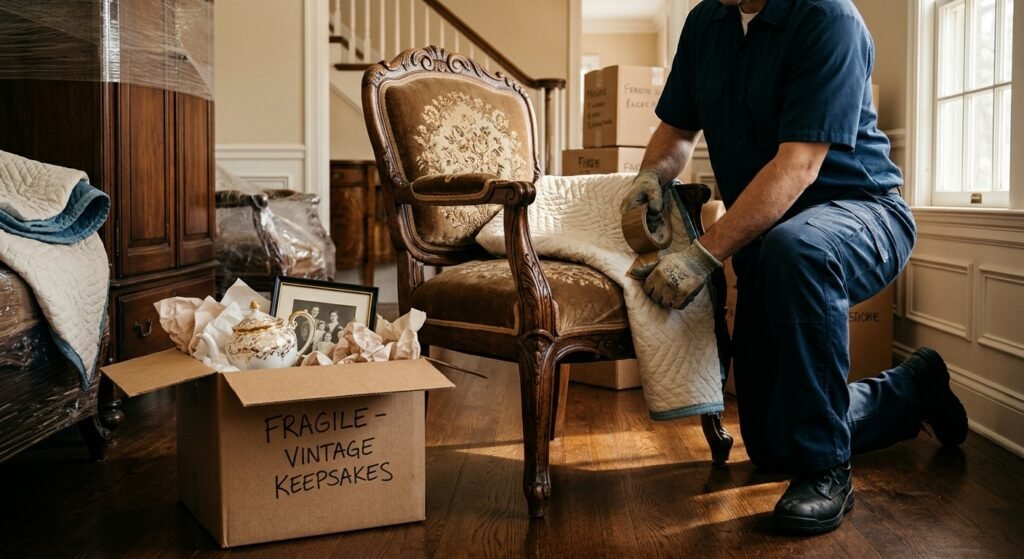
Vintage furniture and family heirlooms need more than bubble wrap and good intentions to survive a move. I’ve seen beautiful antique dressers and fragile china sets get damaged because nobody planned for their specific weight, age, or sentimental value ahead of time. A grandmother’s dining table or a hand-carved armoire isn’t like a flat-pack bookshelf, and treating it that way almost always backfires.
Skokie homes carry a lot of these pieces, passed down through generations or collected over decades. Getting them to a new address intact takes real preparation, not luck.
I’m covering what makes these items different, how to prep them properly, the right way to pack fragile keepsakes, what to look for in a mover, and the mistakes that cause the most damage on moving day.
What Makes Vintage Furniture and Heirlooms Different on Moving Day
Vintage furniture is a piece of furniture typically over 20 years old that reflects the design, materials, or craftsmanship of a specific earlier era. That distinction matters because older wood, finishes, and joinery react differently to stress than modern manufactured furniture.
I treat every antique as a structural question first. Old glue joints dry out. Veneer lifts. Legs that look solid can be one bump away from a crack.
Heirlooms add another layer entirely. A piece doesn’t need to be valuable to be irreplaceable — it just needs to matter to the family carrying it. That emotional weight changes how I plan the move, because there’s no replacing a damaged item with a warranty claim.
Age, materials, and prior repairs all factor into the packing plan. A piece with hidden water damage or previous repairs needs different handling than something structurally sound, and I always ask about history before touching anything.
How to Prepare Vintage Furniture for a Local Move
Preparation starts well before moving day, not the morning of. I inspect every piece for loose joints, wobbly legs, or finish damage that existing stress could worsen in transit.
Removable parts come off first. Shelves, drawers, glass inserts, and hardware get wrapped and labeled separately so nothing shifts weight unpredictably inside a loaded truck.
Dust and clean the piece before wrapping it. Trapped dirt or old polish residue can scratch delicate finishes once pressure and movement are added to the mix.
I measure doorways, stairwells, and hallways at both the pickup and drop-off locations in advance. A heavy vintage armoire that doesn’t clear a turn becomes a liability nobody wants to discover mid-move.
Temperature matters too, especially in a Skokie winter. Sudden cold can make certain woods and lacquers brittle, so I avoid leaving antique furniture sitting in an unheated truck for extended periods.
Packing Heirlooms and Fragile Family Keepsakes the Right Way
Small heirlooms need individual attention, not a shared box with unrelated items. China, glassware, jewelry boxes, and framed photos each get wrapped on their own before anything goes into a container.
I layer soft packing paper first, then bubble wrap, then a snug box with extra padding at the corners. Empty space inside a box is what lets items shift and collide during transport.
Labeling isn’t optional here. Every box containing an heirloom gets marked “fragile,” plus a short note on what’s inside, so nobody stacks something heavy on top by mistake.
For items with deep sentimental value — a wedding dress, military medals, handwritten letters — I keep those separate from the general inventory entirely. Some families prefer to transport those pieces personally rather than load them onto the truck at all.
Climate-controlled storage or transport is worth the extra cost for anything sensitive to humidity or temperature swings, including old photographs, textiles, and certain wood finishes.
Choosing the Right Mover for Antiques and Sentimental Items
Not every moving company handles vintage furniture the same way. I look for movers who ask about age, materials, and condition before quoting a job, because that question signals they actually plan for it.
Insurance coverage matters more here than on a standard move. Standard liability coverage calculates reimbursement by weight, which barely covers a light but valuable antique mirror or a fragile keepsake with no resale value attached.
I ask directly about declared value protection for irreplaceable pieces. The Federal Motor Carrier Safety Administration explains that movers must offer full value protection as an option beyond basic released value coverage, and that distinction becomes critical for heirlooms with no fair market price.
Experience with antiques specifically — not just furniture in general — tells me a crew understands weight distribution, padding techniques, and how to disassemble older joinery without forcing it.
Avoiding Common Moving-Day Mistakes With Irreplaceable Items
The biggest mistake I see is rushing the wrap job because a piece “looks sturdy.” Looks are deceiving on furniture built decades ago with materials and adhesives that have since degraded.
Stacking boxes without checking labels causes a huge share of heirloom damage. A heavy box on top of a fragile one crushes contents in minutes, and it’s completely preventable with proper labeling and loading order.
Skipping the pre-move inventory is a mistake that costs people later. Photographing each vintage piece and heirloom before the move gives a clear record for insurance claims and makes any damage immediately obvious on arrival.
I also see people underestimate transport time sensitivity. Leaving a loaded truck sitting in extreme heat or cold longer than necessary stresses wood, metal, and fabric in ways that aren’t visible until weeks later.
Conclusion
Vintage furniture and heirlooms carry history that can’t be replaced with a receipt. Careful prep, the right packing materials, and a mover who understands antiques make the difference between a smooth move and a heartbreaking one.
We handle these moves every day across Skokie and beyond, and we treat every heirloom like it belongs to our own family. Reach out to ASHER MOVERS LOCAL & LONG DISTANCE and let’s plan your move the right way.
Frequently Asked Questions
How far in advance should I prepare vintage furniture for a move?
I recommend starting at least two to three weeks ahead. That gives enough time to inspect pieces, source proper materials, and address any repairs before moving day arrives.
Do movers charge extra for packing heirlooms and antiques?
Specialty packing for fragile or valuable items often costs more than standard packing. The extra materials, time, and care involved justify the added charge, and it’s worth confirming pricing upfront.
What’s the safest way to move a grandfather clock or large antique?
Grandfather clocks need their pendulum and weights removed and packed separately before the move. A mover experienced with antiques will know to secure internal mechanisms to prevent damage during transit.
Should I buy extra insurance for heirloom items?
Declared value protection makes sense for anything with no replaceable market value. Standard coverage calculates reimbursement by weight, which rarely reflects what an heirloom actually means to a family.
Can vintage furniture be disassembled safely for a move?
Many antique pieces can be partially disassembled by an experienced mover familiar with older joinery and hardware. Forcing modern disassembly techniques on old wood often causes more harm than leaving it intact.
What should I do if an heirloom gets damaged during the move?
Document the damage immediately with photos and compare them to your pre-move inventory. Report it to the moving company right away, since most claims have a limited filing window.
