
A local move goes wrong for the same handful of reasons almost every time, and most of them trace back to decisions made days before the truck ever shows up, not mistakes made on moving day itself. Missed booking windows, vague estimates, prohibited items packed by accident, and mislabeled boxes cause the bulk of delays, disputes, and damage claims movers see. I’ve watched smooth moves and chaotic ones, and the difference is almost never luck.
Skipping these steps costs real money and real time. A single prohibited item found mid-load can stall an entire crew for an hour. One missing document can turn a damage claim into a dead end.
This guide covers the planning decisions that set up a smooth move, the packing habits that prevent damage and delays, and the moving-day logistics that protect your belongings and your schedule. I’ll also walk through documentation and liability coverage, since most disputes start there.
Not Booking Your Moving Company Early Enough
Booking too late is the single biggest driver of bad moving-day outcomes, because it limits which crews and trucks are even available on your date. Local movers in Skokie typically fill their calendars two to four weeks out during peak season, and waiting longer forces you into whatever slot is left rather than the one that fits your timeline.
Booking early also gives the moving company time to ask the right questions before the day arrives. Crew size, truck size, and parking logistics all depend on information gathered during that booking window, and rushed bookings skip steps that later cause confusion at the curb.
Failing to Get a Written, Itemized Moving Estimate
A written estimate is a moving company’s documented, itemized breakdown of services and costs that protects both sides from disputes once the truck is loaded. A verbal quote carries no weight if the final bill comes in higher than expected, and I’ve seen that gap cause real arguments on moving day.
Itemized estimates separate labor, materials, and any specialty item charges before the move starts. That breakdown is what you compare against the final invoice, and without it, you have nothing to point back to.
Not Confirming What Movers Will and Won’t Transport
Movers are legally restricted from transporting certain hazardous, perishable, and high-value items, and not confirming this list in advance is one of the most common sources of last-minute delays. Every moving company operates under the same general restrictions, but the specifics can vary slightly by carrier and by state.
The table below groups the categories that cause the most confusion.
| Item Category | Examples | Why It’s Restricted |
| Flammable/hazardous materials | Propane tanks, gasoline, paint thinner | Fire and transport safety regulations |
| Perishables | Fresh or frozen food, refrigerated items | Spoilage risk during transit |
| High-value/irreplaceable items | Cash, jewelry, important documents | Liability limits don’t cover full replacement |
| Plants | Houseplants, outdoor plants | Temperature sensitivity, state agriculture rules |
| Pets and live animals | Any live animal | Not covered under moving liability at all |
Confirming this list before packing day means nothing gets loaded onto the truck that has to come back off later. That back-and-forth is exactly what causes afternoon moves to run into evening hours.
Packing Prohibited or Hazardous Items by Mistake
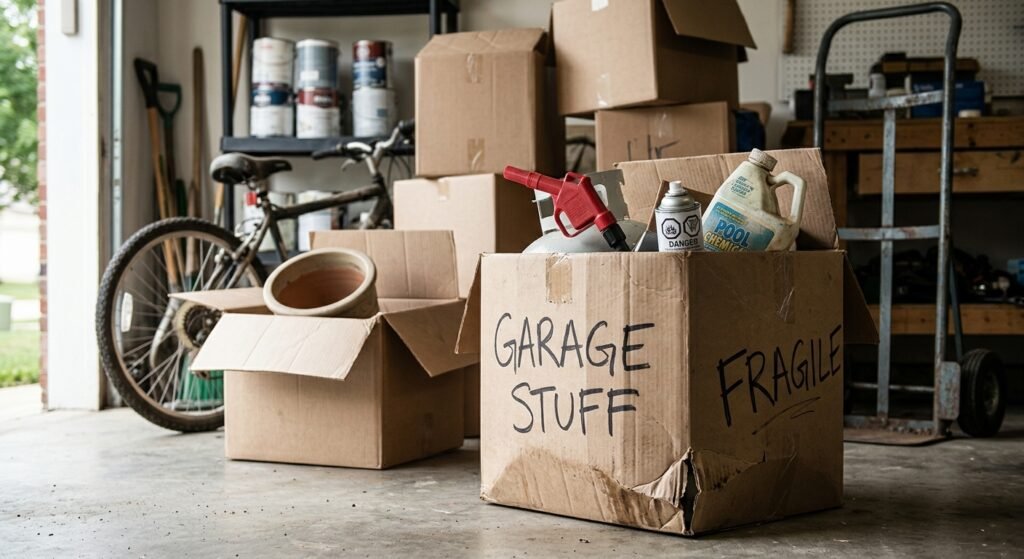
Hazardous materials end up in moving boxes by accident more often than people expect, usually because they were packed quickly without checking what’s actually inside a garage or cleaning cabinet. A box labeled “garage supplies” can easily hide aerosol cans, old paint, or pool chemicals that no mover is permitted to transport.
The categories that most often slip through:
- Aerosols and pressurized containers, including spray paint and cleaning products
- Corrosive chemicals, including pool and pest-control chemicals
- Flammable liquids, including gasoline, kerosene, and lighter fluid
- Ammunition and firearms-related materials, which require separate handling under federal transport rules
- Compressed gas cylinders, including propane and oxygen tanks
- Car batteries and other lead-acid batteries
Checking a room against a prohibited items checklist before boxes get sealed catches most of these before they become a problem at the truck.
Using the Wrong Boxes or Packing Materials
Weak or mismatched boxes are one of the most common causes of item damage during a local move, since boxes that aren’t rated for their contents flex, split, or collapse under weight they weren’t built for. A box that held printer paper is not built the same way as one meant for dishware.
Wrong-size boxes create wasted space that lets items shift during transit. That shifting is where chips, cracks, and scuffs usually happen, not from the truck ride itself.
Overpacking or Underpacking Moving Boxes
A properly packed standard moving box should weigh no more than 50 pounds to stay safe for a single mover to lift without strain or injury. Overpacked boxes split at the seams, and underpacked boxes leave room for contents to shift and break.
Weight distribution matters as much as total weight. Heavier items belong on the bottom of a box with lighter padding materials filling remaining space, which keeps the load stable through loading, transit, and unloading.
Leaving Packing Until the Last Minute
Last-minute packing compresses decisions that normally take days into just a few hours, and that compression is where sorting mistakes, mislabeling, and prohibited items most often slip through. A rushed pack job skips the sorting step that catches hazardous materials before they end up sealed in a box.
A realistic packing schedule breaks the work into stages:
- Three to four weeks out: declutter and sort items into keep, donate, and discard piles
- Two weeks out: begin packing non-essential rooms like guest rooms and storage areas
- One week out: pack most common areas, leaving daily essentials unpacked
- Two to three days out: pack kitchen and remaining essentials, confirm the essentials box
- Moving day: final walkthrough and loading
Not Labeling Boxes Properly
Unlabeled or vaguely labeled boxes force movers to guess where items belong, and that guessing slows down both loading and unloading at the new address. A box marked simply “stuff” tells the crew nothing about contents, weight, or which room it belongs in.
A workable labeling system needs just a few consistent details:
- Destination room written clearly on at least two sides
- A general contents description, not just “misc”
- A fragile marking when applicable, visible from any angle
- A loading priority marking for anything needed within the first day
Not Preparing Your Home for Mover Access
Blocked driveways, reserved elevators that weren’t actually reserved, and narrow hallways all slow a crew down before a single box gets carried. Access problems are entirely preventable, yet they remain one of the most common on-site delays movers encounter.
A short walkthrough the day before catches most of these issues:
- Confirm parking availability directly in front of the entrance
- Reserve service elevators in advance for apartment or condo buildings
- Measure doorways and stairwells for large furniture pieces
- Clear walkways of rugs, cords, or decorative items that could cause a fall
Failing to Separate Essentials and Valuables
An essentials box holds the items a household needs for the first 24 to 48 hours in a new home, separate from everything else loaded onto the truck, and skipping this step is one of the most regretted moving-day mistakes. Without one, basic items like medication, chargers, or a change of clothes end up buried somewhere in a stack of identical boxes.
High-value and irreplaceable items need even more deliberate handling, since most moving company liability coverage does not fully reimburse lost jewelry, cash, or important documents. The safest approach keeps these items with you rather than on the truck.
A working essentials list typically includes:
- Medications and a basic first-aid kit
- Chargers, cables, and a change of clothes for each family member
- Toiletries and a few basic kitchen items
- Important documents, including the moving contract and estimate
- Cash, jewelry, and any small high-value items
Not Documenting Belongings Before the Move
Photographing belongings before loading creates the documentation needed to support a damage claim if something arrives broken or missing. Without a dated record of condition, a dispute over damage usually comes down to word against word.
A simple documentation routine before moving day:
- Photograph furniture and electronics from multiple angles
- Note any pre-existing damage or wear before the move
- Keep a written inventory list of boxes and their general contents
- Save copies of the signed inventory the crew provides, if one is offered
Misunderstanding Mover Liability and Insurance Coverage
Moving company liability determines how much a mover is required to pay if your belongings are lost or damaged, and the default coverage included in most moving contracts is far lower than full replacement value. Confusing the two coverage types is one of the most costly mistakes people discover only after something breaks.
| Coverage Type | What It Covers | Typical Cost |
| Released Value Protection | A set amount per pound per item, often 60 cents per pound | Usually included at no extra charge |
| Full Value Protection | Repair, replacement, or cash value of the item | Added cost based on declared value |
Released value sounds like coverage, but a 20-pound television covered at 60 cents per pound pays out far less than its replacement cost. Reviewing which protection applies before signing the contract prevents a painful surprise later.
Not Communicating Special Requirements to Your Movers
Specialty items like pianos, fish tanks, gun safes, or large artwork often require equipment or crew experience that standard moves don’t include, and not mentioning them during booking can mean the crew shows up unprepared. A piano that needs a dolly and ramp the crew doesn’t have on the truck turns into a delay nobody planned for.
Disclosing these items during the estimate, not on moving day itself, gives the moving company time to schedule the right equipment and staff.
Conclusion
Local moves go wrong at predictable points: late bookings, vague estimates, restricted items packed by mistake, and liability terms nobody read closely.
Planning around these mistakes protects your schedule, your belongings, and your budget on moving day. The right crew and preparation make the difference between a stressful day and a smooth one.
We help Skokie households plan smarter, better-prepared moves. Reach out to ASHER MOVERS LOCAL & LONG DISTANCE to get started today.
Frequently Asked Questions
What items will movers refuse to transport?
Movers refuse hazardous materials, perishables, plants, and live animals due to safety and liability regulations. This includes propane tanks, paint, cleaning chemicals, and fresh food. Confirming this list before packing prevents last-minute delays.
How far in advance should I book a local move?
Most local movers recommend booking two to four weeks before your moving date. Peak season and weekends fill faster, limiting availability. Earlier booking also allows time to plan logistics properly.
What should I keep with me instead of packing it on the truck?
Keep medications, important documents, cash, jewelry, and a change of clothes with you directly. These items either carry limited liability coverage or are needed immediately. An essentials box covers the rest for your first day.
Do movers provide insurance for damaged items?
Movers provide limited liability coverage by default, typically calculated by item weight rather than value. Full value protection can be purchased for better coverage. Reviewing your contract clarifies which protection applies.
How should I label boxes for a local move?
Label boxes with the destination room, general contents, and fragile markings when needed. Clear labeling speeds up both loading and unloading significantly. Vague labels like “misc” slow the entire crew down.
What happens if I’m not ready when movers arrive?
Movers may charge additional fees for wait time or rescheduling if you aren’t prepared. Unprepared access points and unpacked essentials are common causes of this delay. A pre-move walkthrough prevents most readiness issues.
Should I pack my own boxes or let movers do it?
Either approach works, but professional packing reduces damage risk and liability disputes. Self-packing costs less but requires following proper material and weight guidelines. Hybrid approaches work well for fragile or high-value items.
